Tag: Interview

Pakistani Artist Shae Gill Breaks Streaming Records With Viral Hit “Pasoori”

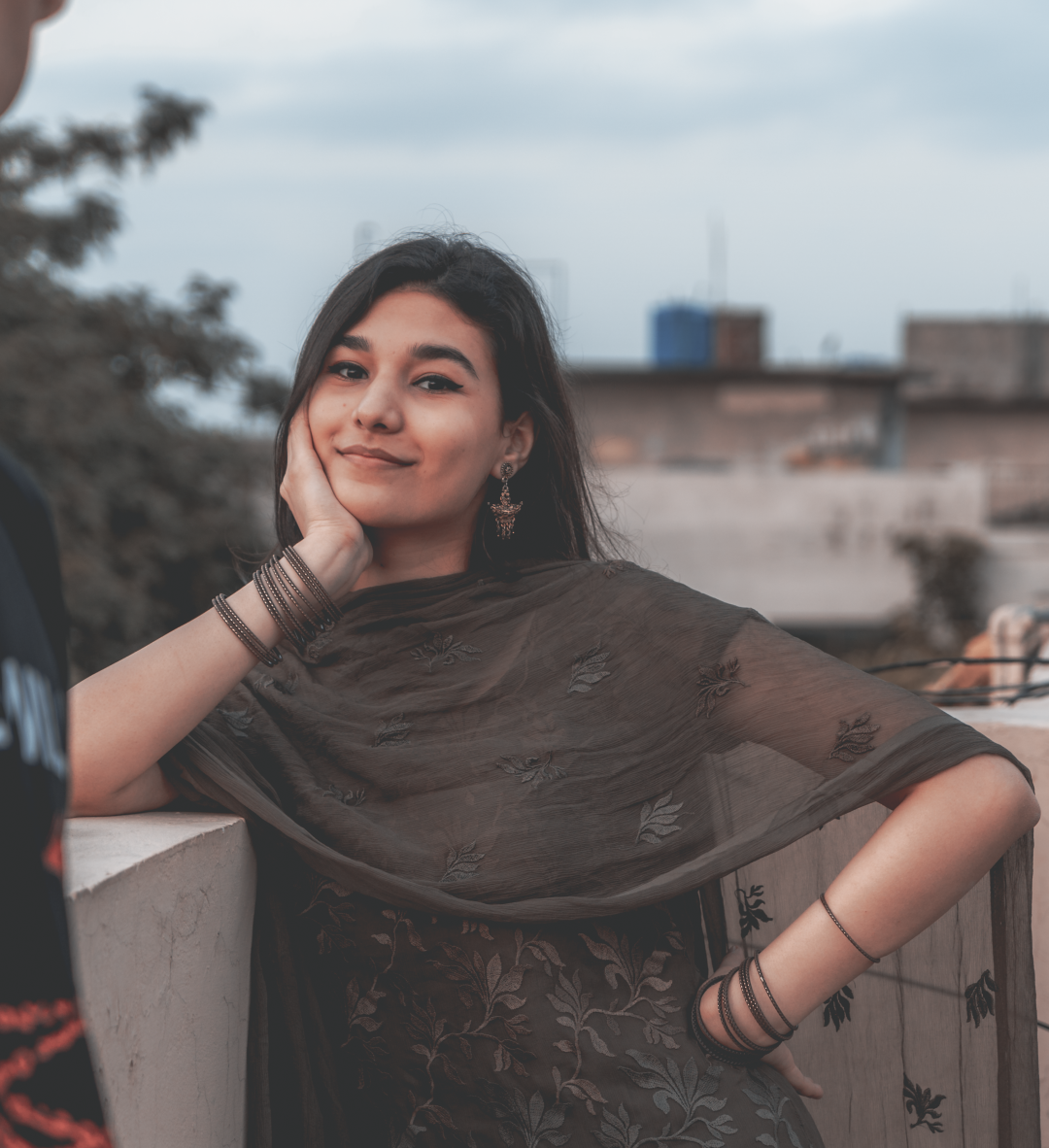
Shae Gill Cover Photo

Last year was quite a big one for Spotify EQUAL artist Shae Gill, who is one of the freshest sensations to come out of the Pakistani music industry in recent years. 

Born and raised in Lahore, Shae kicked off her career in 2019 by posting song covers on Instagram. However, Shae really hit it big with the release of “Pasoori,” a song she collaborated on with fellow artist Ali Sethi in Season 14 of the popular Pakistani television series Coke Studio. The song was a resounding hit all around the world, even appearing in the Disney+ show Ms. Marvel. And the track was the most-streamed Pakistani song on Spotify for 2022, according to the country’s Wrapped results. 

“We are ecstatic that ‘Pasoori’ has surpassed unprecedented milestones, creating a global sensation that listeners thoroughly enjoy,” said Khan FM, Spotify Artist & Label Partnerships Manager for Pakistan, Sri Lanka, and Bangladesh. “At Spotify, we focus on providing listeners with unique experiences. And the triumph of ‘Pasoori’ has been highlighted in abundantly creative ways to reflect the magnificence that it has brought.”

Last year, Shae also released “Sukoon,” a collaboration with the songwriter-singer duo Hassan & Roshaan. The song had audiences reminiscing about the glory days of the “Queen of South Asian Pop,” Nazia Hassan. Shae closed out her record-breaking year as Spotify’s Ambassador for Pakistan as part of the EQUAL Global Music Program, which aims to combat gender disparity in the music industry by amplifying and celebrating the work of women creators around the world.

For the Record caught up with Shae to talk a bit about her career and inspirations.

The artists who have most inspired me are ___.

Nusrat Fateh Ali Khan, ROSALÍA, Diljit Dosanjh, Farida Khanum, Ali Sethi, and so many more.

One piece of advice I’d give other women artists is ___.

Truly know your worth and that you deserve success and appreciation.

Some notable moments in my career have been ___.

So much has happened this past year! The Coke Studio live performance at Dubai in October was unforgettable. My experience recording for Coke Studio has been the most fun so far. Everybody involved in the project was so amazing at what they did, and I was over the moon about the fact that I got to work alongside such incredible people. And when I heard that “Pasoori” was the top track on Spotify in 2022 for Pakistan, I thanked God and was just truly grateful.

My creative process consists of ___.

Composing melodies and writing lyrics on top of them. I generally find creating melodies easier than writing.

One way I’d like to see greater gender equity in the music industry is ___.

By seeing more women being given the opportunity to be at the forefront of performances and music technology roles.

My girl-power anthem is ___.

There are so many girl-power anthems I like, but lately, it has been “Flowers” by Miley Cyrus. I think everyone’s crazy about it these days. I’ve always been a Miley Cyrus fan.

Listen to the record-breaking “Pasoori,” and more South Asian bops, on our Desi Hits playlist.


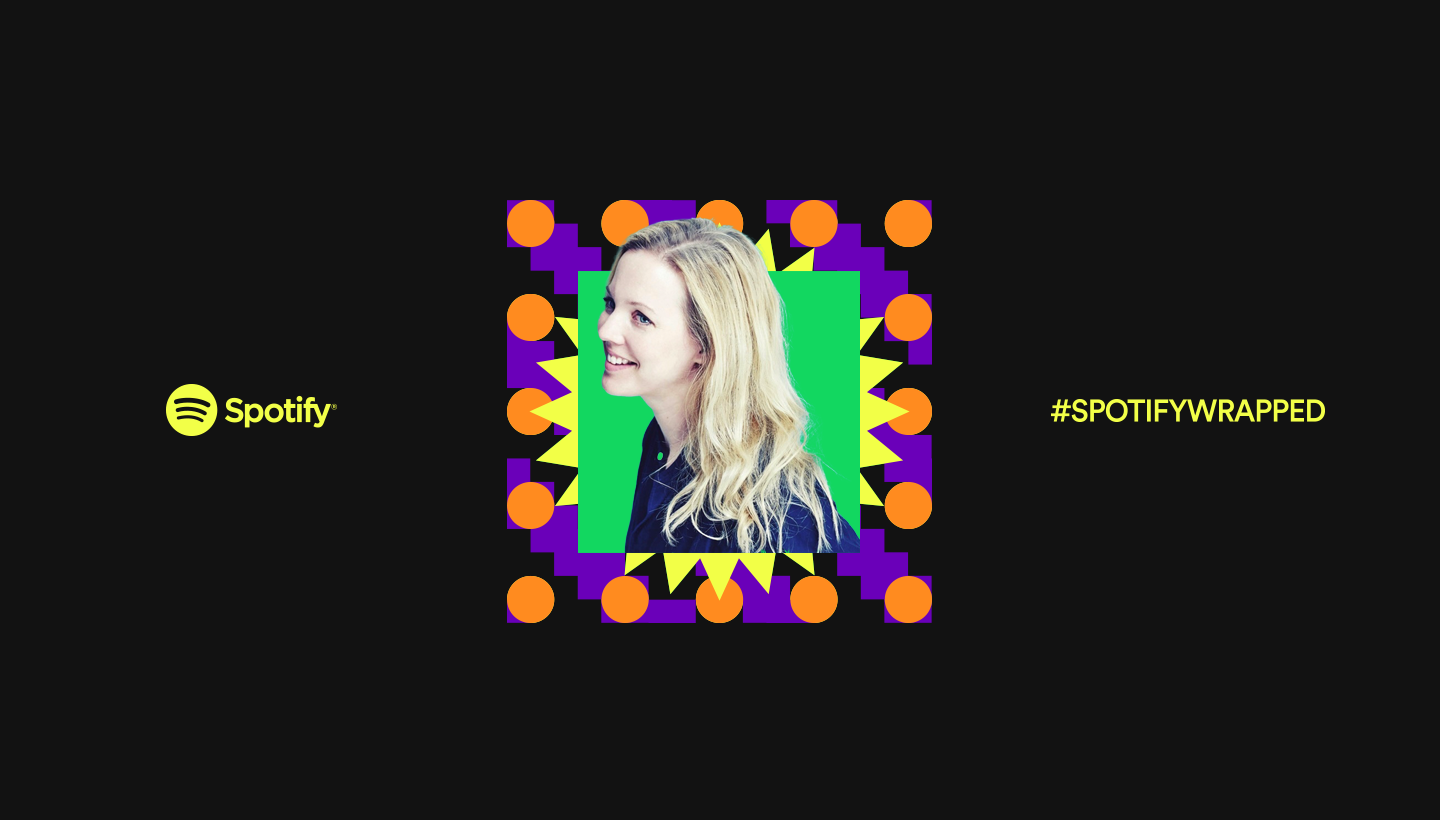
Marie Rönn, Global Group Creative Director, Works Across Spotify To Bring Wrapped 2022 to Life

When you open your 2022 Spotify Wrapped, you’ll notice multicolored and multilayered graphics that are as multidimensional as your listening habits. The team behind Wrapped is just as expansive, with data scientists and engineers, copywriters, designers, music and podcast editors, and more. Uniting it all is Marie Rönn, Global Group Creative Director at Spotify. Throughout the year, she and her team ideate on concepts and collaborates with other teams to bring the project to life. 

Ahead of 2022 Wrapped, For the Record chatted with Marie to learn all about her work on the creative campaign. 

Wrapped has become a bit of a cultural phenomenon, with people anticipating its launch all year. When do you start thinking about the campaign? 

We’ve all started thinking about next year’s Wrapped already—before this year’s Wrapped is even over. Officially, I would say I get involved in conversations in March or April. That’s when we start thinking about the brief and working with the creative strategists. This past year we managed to brief writers, art directors, and designers to have them start thinking about both the design and the platform and all of that fun stuff by the end of May. 

What were some of the considerations for Wrapped this year?

We wanted to open the door to more of a joyous every day. To make sure we captured this new energy that has come out of people emerging from their bubbles and being able to meet up again. And so that’s something we were excited to dig into—to be a little bit more playful and irreverent. To have a bit of fun and encourage people to have fun as well. For the campaign, we wanted to invite people not just to get Wrapped, but to play it.

For the data stories, we asked ourselves, “What are people craving?” They want to know about their audio listening for the year, and tap into what is interesting about it—on a more emotional level. And that’s what we explored as we were starting to ideate. We had a lot of ideas—not all of them were feasible—but we worked super closely with the product team and others before landing on a couple of new data stories for this year that really tap into the more emotional side of listening. 

How did that thinking translate into the new data stories for this year, your Listening Personalities and your Audio Day? 

For the Listening Personalities, we were toying with the idea of how we would be able to talk about what your year-in-listening says about your music tastes. And so our team had all sorts of fun ideas of what we could tell about musical taste in terms of how you listen. The beautiful thing was that when we brought our ideas to the product team, they had already been thinking about a very similar concept, and had done tons of research into it. Great minds and teams came together to collaborate closely. Making sure that the Listening Personalities weren’t just for fun, but that they were insightful for listeners. 

For the Audio Day, again, we had great synergy with the product team. We wanted to get more into moods and aesthetics and move away from genres. Genres don’t give you the nuance of what type of mood you’re in, so what we wanted to do there was to try to tell you a little bit about your musical mood throughout the year. What was your musical mood when you listened in the morning versus in the evening, or at night? The inspiration was to just give people a little bit more of a meaningful experience. Genres go deep, but they’re not the only factor in the way we listen. 

Something that’s also new this year is that we added the day that you streamed your most-listened-to song the most. Peppering in a bit of fun and just a little more specific data for you to look back and think, “What was I doing that day?” Hopefully, people enjoy reminiscing. 

What’s one thing you hope fans walk away with after seeing their 2022 Wrapped? 

Hopefully they discover something about their listening that perhaps was a surprise. And that it also inspires them to keep discovering new music. Like, sure, we give you your year in review, but we also want to inspire you to keep the discovery going. 

We did something new this year to this effect: On your Wrapped playlist are your 100 songs you listened to the most. But this year, we also included one song you didn’t listen to. A playful surprise to encourage you to keep exploring.

Head to our Wrapped story hub to learn more about the new data stories for 2022.

Turkish Artist Aleyna Tilki Makes a Splash as Spotify’s EQUAL Ambassador of the Month

Aleyna Tilki is breaking the mold as she makes a name for herself in the music industry. The edgy Turkish singer-songwriter started her singing career at 14 years old, and now, at the age of 22, she already has multiple hits and high-profile collaborations to her name. Add to that the fact that Aleyna is the first Turkish artist that Warner Music Group has signed for international projects, and it’s clear she’s a musical force to be reckoned with.

Aleyna’s signature vocals—whether she’s singing in her native Turkish or in English—and unique style help her fuse genres in her music. Early last year, she released the highly anticipated single, “Retrograde,” cocreated by an all-star team that included Diplo, Dua Lipa, and King Henry. In October of 2021, Aleyna continued to prove her success with the song “Real Love,” which was a collaboration with producer and DJ Dillon Francis. The track was a hit, debuting at number 24 on the Billboard Dance Club Songs chart.

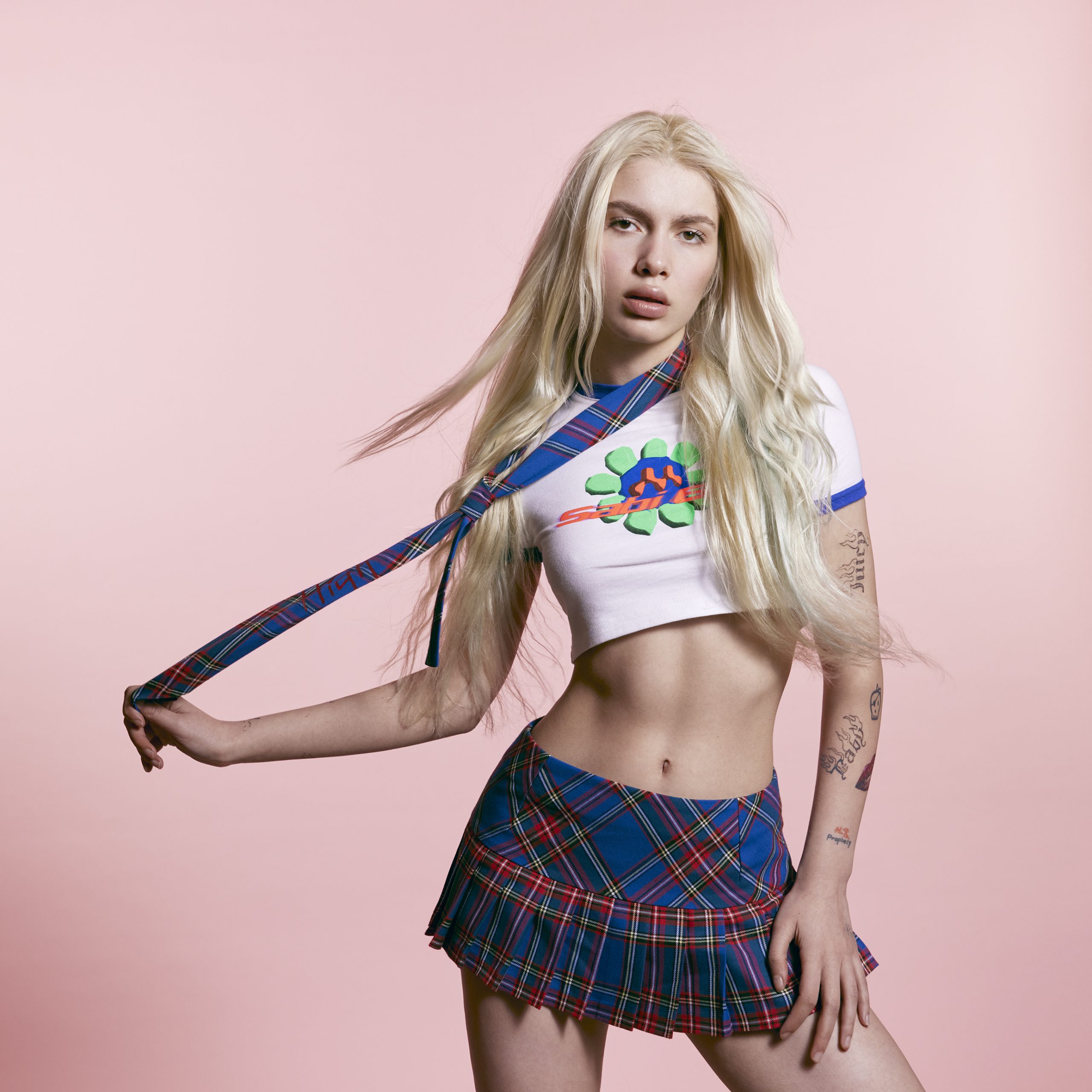
singer aleyna stands in front of a pink backdrop looking directly into the camera.

Now Aleyna continues to gain a global following as the EQUAL Ambassador of the Month for May. Spotify’s EQUAL Global Music Program aims to combat gender disparity in the music industry by amplifying and celebrating the work of women creators around the world. As a part of this month’s spotlight, Aleyna will have her song “Take It or Leave It” at the top of the EQUAL Global playlist, and the artist is featured on the playlist’s cover.

For the Record spoke with Aleyna to learn more about her creative process and some of the notable moments in her career.

The artists who have most inspired me are ____.

Freddie Mercury, Ozzy Osbourne, Billy Idol, and Michael Jackson.

One piece of advice I’d give other women artists is ____.

Your body is your area of freedom. Be free to explore it for your art. Being open about your body does not mean you are open to being abused by anyone.

One notable moment in my career so far is ____.

Being able to collaborate with great artists and big labels for my music, even though it’s really tough to break through globally from my country.

My creative process consists of ____.

Psychoanalysis. It helps me to go deeper into human psychology. But this is not about empathy, rather it’s about how it helps me to express myself in my art.

One way I’d like to see greater gender equity in the music industry is ____.

By people accepting that everything is not about masculinity.

Some women artists I’m excited to watch are ____.

ROSALÍA, Doja Cat, GAYLE, Billie Eilish, and Jessie Ware.

My girl-power anthem right now is ____.

Beyoncé’s “Run the World (Girls)” (of course).


Listen to music from Aleyna, as well as other strong women, on the EQUAL Global playlist.


Through Breakups and Heartbreaks, TOMORROW X TOGETHER Shares All the Feels in Its New Spotify Enhanced Album

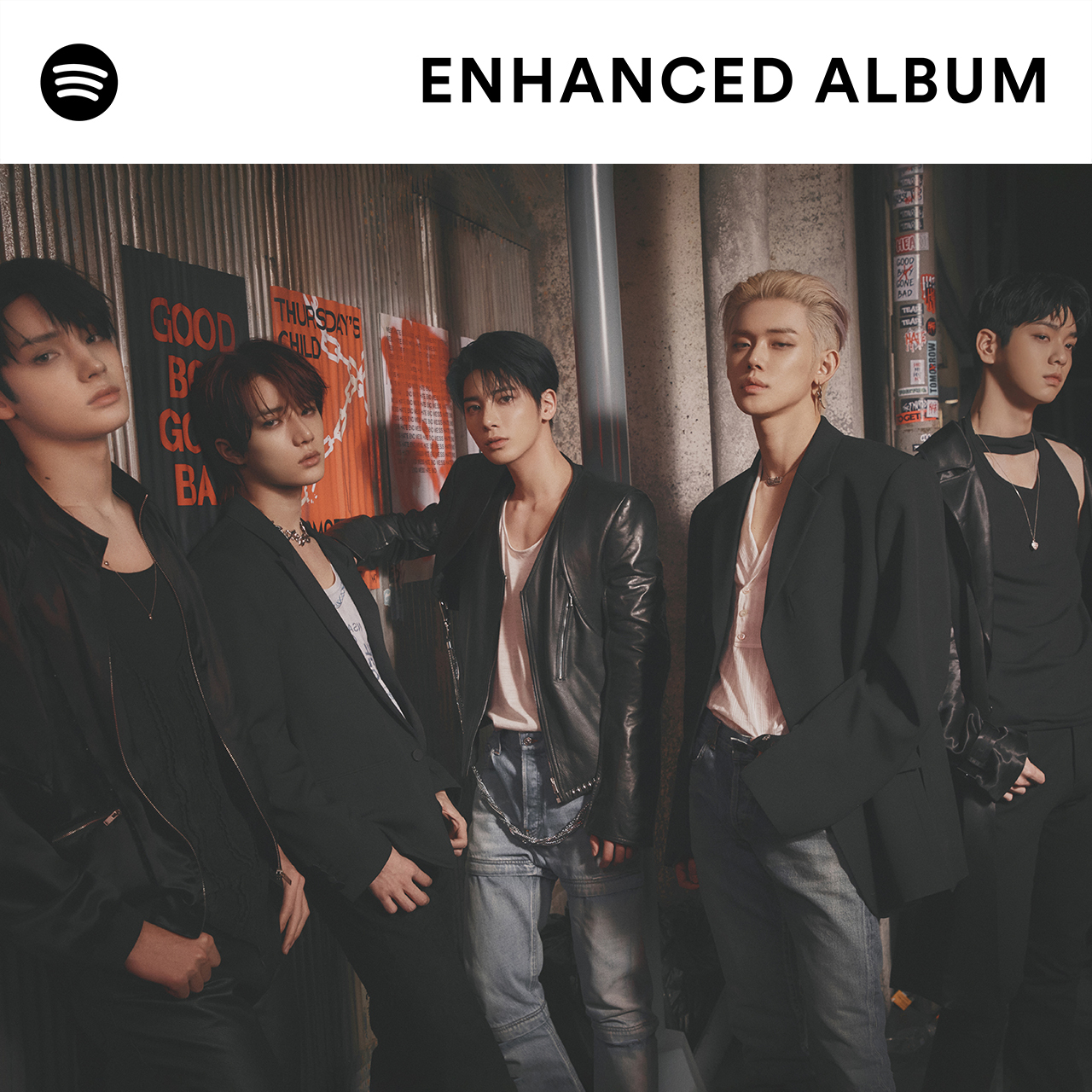
K-Pop fans, Spotify has a treat for you. Today, South Korean boy band TOMORROW X TOGETHER is releasing its fourth mini album, minisode 2: Thursday’s Child, and Spotify listeners have access to an exclusive enhanced version of the album.

This new five-track album follows the story of the boy who fell in love in the band’s previous album series, The Chaos Chapter. In minisode 2: Thursday’s Child that boy experiences a breakup with his first love. Fans will experience three themes (hate, end, mess) as they listen to the group’s tracks, which feature a mix of hardcore rock, hip-hop, and R&B.

The enhanced album, available only on Spotify, includes never-before-seen content. Fans have access to new videos, storylines (which are personal written commentaries from the band on each track), and audio liners, where the band members give insight into the songs. The enhanced album also features videos of the individual members of the group talking about the fun they had and the memories they shared while creating the new music.

the playlist cover art for tomorrow x together's enhanced album which depicts TXT in red and black on a beige background

“We are thrilled to present this new, immersive content to MOA and all listeners on Spotify,” said TOMORROW X TOGETHER’s leader, SOOBIN. “We put tremendous effort into making our new album and collaborating with Spotify, so we hope you enjoy the special behind-the-scenes experience and feel a deeper connection through our exclusive, personally curated content.”

For the Record chatted with members of TOMORROW X TOGETHER to learn more about their new album.

What can fans expect in the new album, minisode 2: Thursday’s Child

SOOBIN: Through this new EP, we showcase a side of ourselves that we’ve never shown before. We tried to express how one could be corrupted and changed by his first heartbreak. The lead single “Good Boy Gone Bad” has some fantastic choreography that’s sure to make a lasting impression in your minds, so be sure to check it out!

In what ways does the enhanced album share more about the intent behind your new music for fans and new listeners worldwide?

SOOBIN: I hope our fans, MOA [Moments of Alwaysness], will be able to dive deeper into the EP as they listen to the behind-the-scenes stories and the episodes that we reveal for the first time.

YEONJUN: We all had a great time discussing the album in such depth. In the process, I’ve definitely grown more attached to every song.

BEOMGYU: We had a heart-to-heart talk on each of the tracks from the album, and I hope our MOA will love it too. Also, I really enjoyed thinking back to the emotions I had while working on and recording each song. 

TAEHYUN: It’s some great content. We go into detail about how each member tackled the recording process. Listening to how each song came to be definitely makes me appreciate them more. 

HUENINGKAI: I have so much love for this EP, especially with all the effort and passion we all put into it. It’s our first unit track, so the producer and YEONJUN and I talked a lot about how we want this track to feel. I hope our intentions are delivered to you successfully. 

What messages do you want people to take from your music? 

SOOBIN: Through music, we always strive to give voice to what many people feel and experience throughout their lives. We pursue music that many people can empathize with and relate to. We would like to be remembered as artists who are not confined by genre. We want to become artists who linger on in your minds even as time goes by. 

What figures have most influenced your music and your artwork? 

SOOBIN: I watched a lot of shows that deal with love and heartbreak. I took these works as inspiration to delve into and understand these emotions with more depth.

HUENINGKAI: Since I was a child, I have admired my dad. And I have been inspired by many artists, like Bruno Mars and Christopher, since I was a trainee.

YEONJUN: For this album, I was inspired by Post Malone’s music.

BEOMGYU: I referenced some TV shows as well, but I also think all people go through heartbreak or farewell in one form or another, whatever that may be. While working on this album, I tried to think back and put myself in those shoes.

TAEHYUN: I was inspired by The Weeknd’s albums and by a friend who had recently been through a breakup. 

As you look to TOMORROW (the future), what are your goals as a group TOGETHER?

As a group, we still want to meet and enjoy being with MOA from all over the world.


View this post on Instagram


A post shared by Spotify News (@spotifynews)


Start streaming TOMORROW X TOGETHER’s minisode 2: Thursday’s Child, the enhanced album, below:


Creators and Experts Talk the Future of Podcasting at Spotify’s All Ears Summit in Berlin

graphic image that says the conference name "all ears" in big font

What can we learn from podcast analytics? What’s the future of podcasts? What are podcasts doing to drive change? These are just a few of the questions addressed yesterday at Spotify’s All Ears Summit in Berlin, Germany. Creators, producers, publishers, advertisers, and more convened for a conference to talk about the local and global podcast market.

The daylong summit had something for everyone. Fans had the opportunity to hear interviews from popular podcast producers and hosts like Sarah Koenig (Serial), Ira Glass (This American Life), and Tommi Schmitt (Gemischtes Hack). 

  • “I think for the kind of work I do, which is being a journalist, people have to believe that I am telling them what I know to the best of my knowledge. They have to trust me that I’ve done my homework as a reporter. . . . They have to trust you, that you’ve done your job well. That is huge for the kind of work I do.” – Sarah Koenig

In ‘Looking for Esther’ One Woman Searches for Answers to Her Past

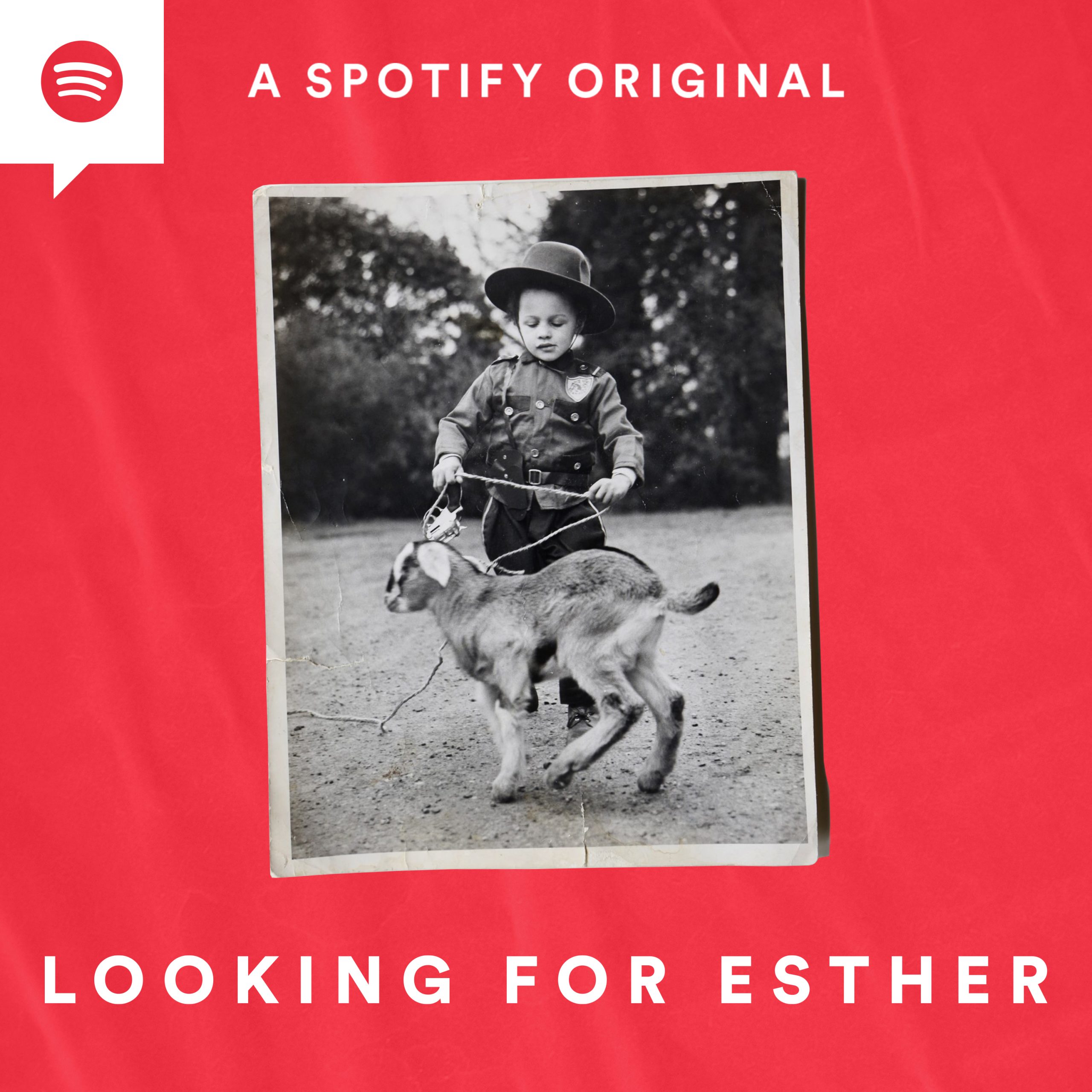
the cover art for the podcast looking for esther

Esther Robertson wasn’t born an “Esther.” In fact, the Scottish woman had three different names before she was three years old. This is just one of the unusual circumstances surrounding Esther’s adoption—and readoption—in the 1960s. Now, in a new Spotify Original podcast, Looking for Esther, she’s ready to discover the truth about her past.

The idea for the series was born out of Spotify’s 2019 Sound Up program, in which Esther was a participant. During the intensive, weeklong U.K. program, Spotify provides education, mentorship, and support to train the next generation of underrepresented voices in podcasting. Esther used this time to polish the idea for her podcast, learn from other successful podcasters, and even acquire hands-on experience with the equipment that would help bring her voice to life.

Over the last two years, Esther and Gayle Anderson, the series writer, executive producer, and Esther’s partner, have been on a search for the answers that make up Esther’s past. What they found is detailed in the eight-episode series. “What a journey it’s been working with Esther Robertson on bringing her remarkable story to life,” shared Natalie Tulloch, Sound Up Global Lead. “Our longstanding Sound Up program is all about supporting underrepresented voices in podcasting—whether in front of or behind the mic. We are so excited that the world finally gets to listen to her remarkable story.”

For the Record had the opportunity to chat with Esther about her personal journey and the challenges she faced along the way.

What prompted you to embark on this journey to discover more about your past?

A cancer diagnosis in 2018. I was told that I had stage four ovarian cancer. It was a huge shock and it gave me time to reflect on my life. I found I had a few regrets and one of my biggest regrets was not finding my birth mother. I’d made a few attempts to trace her over the years, but every time I tried, it opened up another can of worms. I suppose I was too afraid to follow it through. But this time it was different. The way I see it is, if you can face up to cancer, you can face up to pretty much anything. I’m currently in remission, by the way, and loving life.

Considering how much time had elapsed since your adoption, what challenges did you face as you searched for answers?

I had a bag full of old social work notes that I’d been given when I was in my early twenties and pretty much nothing else. I didn’t even have any pictures of me as a baby and I still don’t. Gayle and I had to basically become private investigators to try to piece the jigsaw together. This was made even more challenging as a lot of it was done during COVID restrictions. We contacted the social work department, the Church of Scotland, the Moving Image Archive of the National Library of Scotland, and hundreds of other people and organisations. I reconnected, too, with my siblings, the Robertsons, and also my Uncle Eddie Lindenberg. They were all really helpful and were able to shed light on a lot of things—but not by any means everything. 

a school photo of esther robertson at the age of 11 or 12What made you want to document your story in a podcast format?

Because I feel that it’s a very powerful medium and this is a very powerful story. The immediacy of it would allow listeners to join me on my journey, share my happiness and my disappointments along the way. They’d get a sense of the urgency of this real-time search for my mum. I’m a huge podcast fan and listen to hundreds of them. I was working on an outline for a podcast series for my story when I happened to read a tweet about Sound Up U.K. in 2019. The rest, as they say, is history!

The series writer and executive producer is your partner, Gayle Anderson. What was it like working on this project with someone you’re so close with? 

I’m not going to lie, we both found it extremely challenging at times. We’ve been together over 13 years. Getting through the cancer diagnosis and treatment had made our relationship stronger, but we did need to draw on those reserves to get us through making the podcast series. To keep it real and demonstrate just how much stress we were under, we even use a phone conversation of one of our rows in an episode. I’d accidentally recorded and we just decided to put it in. We’re totally fine now, of course, and we have zero regrets about doing it. We’re both very, very proud of what we’ve managed to produce. 

What advice do you have for anyone else who’s been in a similar situation and feels they either don’t belong or have unknowns about their past?

My advice would be, don’t be afraid to face up to the truth. It’s better to know than not to know. A sense of identity is vital. Without it, life can feel so rootless, so transient. Be yourself and speak your truth. And remember, it’s never too late to begin your journey.  

If you could rewrite the adoption or foster care systems, what are some of the changes you would make to help kids today have easier access to their histories? 

Huge changes have already been made. We talk to social workers in the podcast to find out if what happened to me in Scotland in the early 1960s could happen now, and we’re pleased to report that it definitely couldn’t. There’s a whole system of checks and balances to ensure that everyone understands the child’s circumstances and identifies the right solution for them. If that’s adoption then that’s absolutely great, but prospective adopters now require a real understanding of the impact adoption might have on a child. The preparation prospective adopters go through is really thorough. These days, many adopted children also receive “later life letters.” These are written by social workers to a child who’s being adopted to help the child make sense of their past. But they’re kept and read later in the child’s life when they’re old enough to process it all. What a wonderful idea! 

esther robertson as a flower girlCan you tell us about your experience with the Sound Up program? What part of it did you find the most valuable?

It was a week of intense podcast boot camp—but I loved it. My cohort was full of creative, talented, and super supportive women. There was a real feeling of camaraderie. Hearing their personal stories and listening to their pitches was incredibly inspiring. 

Learning to pitch was invaluable. Things like, how to get your idea across clearly and concisely, how to make it stand out, and how to make it memorable. We received lots of advice on this from established podcasters such as Tolly T from The Receipts and Chantelle Miller from the Island Girls Rock Podcast. How to use the Zoom H5 recording equipment that was supplied was incredibly important too—we recorded all of Looking For Esther on it. I left the week exhausted but with renewed confidence and determination to make Looking For Esther happen.

Now that you’ve wrapped this podcast, what are you looking forward to working on next?

First of all, this has been super emotional so I’m planning a looooooong break. Gayle and I are off to Turkey for six whole weeks in early June. We can’t wait. I’m hoping that my next project could be to trace my birth father. All I know is that he was an African American Air Force man called Bob Hubbard who was based in Scotland in 1960-1961. I do a shout-out for information on the podcast and I’m hoping it leads somewhere. I still very much need to find out about my paternal heritage.


Join Esther on her journey by streaming the first episode of her podcast below:

‘Sounds Like A Cult’ Podcast Gets Its Own Fervent Following as It Rises in the Charts

With more than 3.2 million podcasts on Spotify, it’s impossible for listeners to know every show that drops. Fortunately for fans, our Podcast Editorial team is here to help. They follow the trends, listen to new episodes, and determine what shows should be recommended to Spotify users across a variety of genres. By highlighting different shows and topics—such as true crime—the team gives podcast creators a way to build new audiences while helping listeners discover a new binge.

So when Sounds Like A Cult was placed in the coveted spot on Spotify’s main podcast page, it was thus propelled into the earbuds of new listeners.

Cohosted by Isa Medina and Amanda Montell, Sounds Like A Cult offers a humorous take on the true crime genre as each episode examines modern-day “cults.” From cheerleading to astrology, they analyze what it is about the topics, people, and companies that results in such a loyal fanbase. And it seems that the creators struck a chord with listeners because their show soon made its way onto Spotify’s Top 50 charts and even ranked in the top 10 in the Comedy category. 

Fans have been craving more from Isa and Amanda, so Spotify worked with the duo to create a new curated playlist called The “Cults” We All Follow. The collection features some of their favorite episodes across a variety of podcasts, giving listeners who love Sounds Like A Cult new shows to check out. For the Record recently spoke with the hosts to learn more.

What gave you the idea for this podcast?

The podcast initially stemmed from Amanda’s book Cultish. There were so many fascinating “cults” from pop culture and the zeitgeist that didn’t make it into the book, and we wanted to explore them in a fun and conversational, but still insightful, way. We were inspired by the juicy-meets-bantery format of “cult-followed” podcasts like My Favorite Murder and Be There In Five, so Isa’s hilarity combined with Amanda’s nerdiness felt like the perfect way to cover the “cults” we all follow!

When it comes to the people and things who are at the center of these “cult” groups, are there any shared characteristics or qualities that lend themselves to this level of fan worship?

You can’t earnestly compare the “cults” of Trader Joe’s (which happens to be our favorite cult that we’ve covered) and The Bachelor franchise to flat earthers and multilevel marketing schemers, but that’s why we have our three cult categories—Live Your Life, Watch Your Back, and Get the F*ck Out—which we use to classify the “cult” of the week at the end of every episode. 

As a broad generalization, though, what these different groups offer is the promise of belonging, ritual, and meaning, which are fundamental human drives that a lot of us find ourselves sorely lacking during this turbulent time in history. Some groups mostly deliver on their promises, but some become powerful by way of deception and exploitation. We genuinely hope these conversations make people feel better equipped to engage in life’s “cultiness” the healthy way. That’s why our sign-off at the end of every episode says, “Stay culty . . . but not too culty!”

How has working with Spotify helped you broaden your audience reach?

Spotify is the perfect platform for us. The core Spotify listener seems savvy and curious, and that’s exactly the type of listener who vibes with our show. We would not be where we are today without Spotify’s support. Almost 90% of our listenership comes from Spotify.

How was having your podcast featured on Spotify’s “True Crime Scene” section on the main podcast page impactful?

The Spotify true crime feature was vital for us. True crime fans are always thirsting for new pods, but it’s becoming harder to find ones that add something new to the mix—not to mention, in these tough cultural times, we don’t always want to listen to a pod that’s going to make us feel worse! We basically made this show for Spotify’s true crime listener demo, and Spotify’s audiences really trust their playlists, so getting that exposure was like lightning in a bottle for us.

After the Spotify feature, we saw a significant uptick in streams and shares on social media. Appearing in this section seems to have caused a word-of-mouth snowball effect, and we’re so grateful for it.

What are some ways you’ve seen success with the podcast? 

Sounds Like A Cult wound up on Spotify’s Top 50 charts (and Top 10 in the Comedy category), and after gaining some traction, we were able to sign with the podcast network All Things Comedy to receive production help and actually start earning revenue from the pod! Up until a couple weeks ago, we just made the whole thing on our own in our bedrooms for free. We’ve also seen a flood of new followers engaging with us on social media. Our listeners are so engaged, constantly messaging us and recommending episode topics.

You recently announced that the podcast is moving to a weekly format. What factored into the decision to release episodes more frequently?

The least we can do for our supportive listeners (or “culties,” as we call them) is to use these new resources to deliver the show weekly! Our team agrees it’s also just better for the growth of the podcast not to have long mid-season breaks. Consistency is everything.

Can you tell us about the curated playlist you made for Spotify? What podcasts made the list?

We wanted to curate a diverse mix of episodes from shows that you might not think of as “cult” podcasts but that comment on the cultiness and scaminess in various corners of everyday life in a smart, entertaining way.


All you “culties” out there, are you ready for more? Check out what shows made it onto Isa and Amanda’s The “Cults” We All Follow playlist.


Filipino Boy Band SB19 Brings P-pop to the World With Their New EP

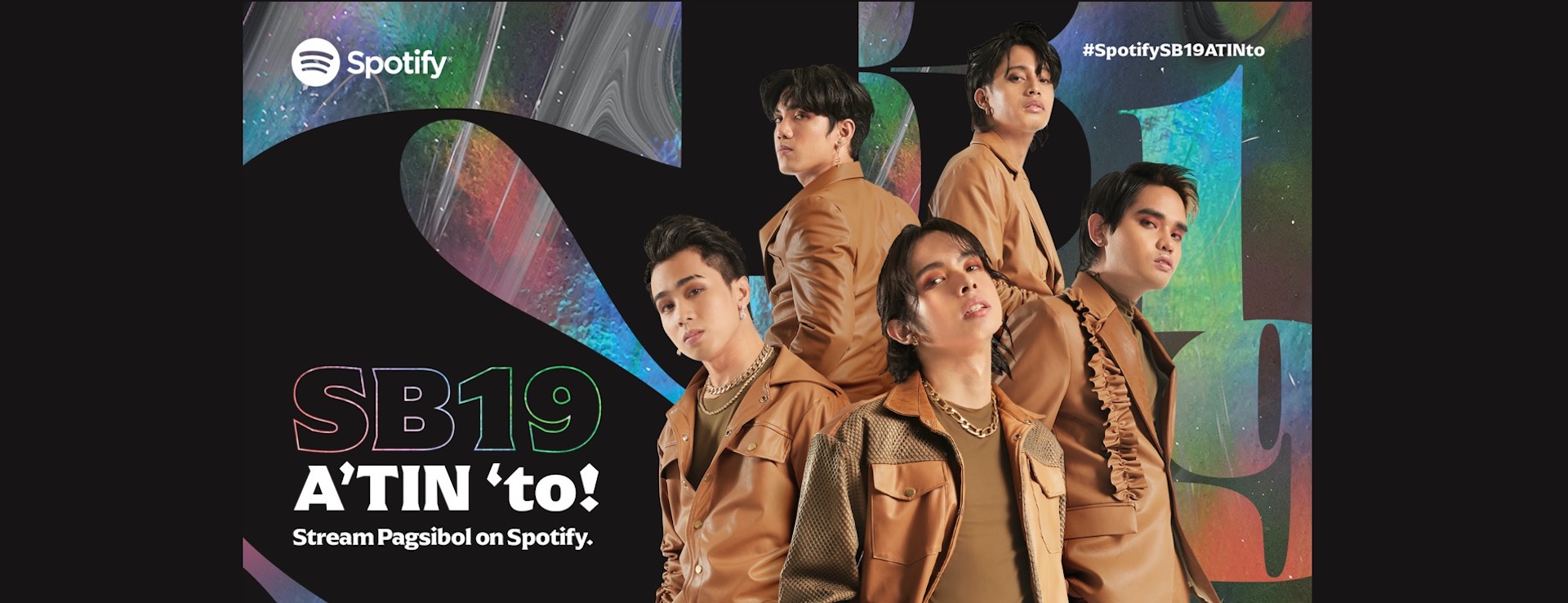
Pablo, Josh, Stell, Ken, and Justin, the five members of Filipino boy band SB19, are leading the Philippine-style pop movement known as P-pop with lively hits and coordinated dance moves. The band has seen increased popularity around the globe from 2020, when they joined RADAR, our emerging artist program that spotlights rising talent from around the world, to 2021, when they were nominated for a Billboard Music Award. 

With Spotify’s RADAR support, SB19 has found new listeners in markets like the U.S., the United Arab Emirates, and Australia to add to their ever-growing fan base. The popularity of SB19’s music is representative of a love for the genre of Filipino pop music. There’s a growing appreciation and pride for local Filipino music, and Spotify’s Tatak Pinoy playlist has more than 1.3 million followers, with streams continuing to increase year over year. 

Now, SB19 is ready to take the world by storm with their latest EP, Pagsibol. “Pagsibol,” a Filipino word that translates to “germination” in English, celebrates the band’s journey in the music industry. It’s representative of how seeds grow into plants, or germinate. The EP’s tracks symbolize SB19’s beginnings—their roots. 

To celebrate Pagsibol through audio and visual art, Spotify and SB19 collaborated with six Filipino visual artists to bring the EP to life on jeepneys—the iconic Pinoy mode of public transportation. Each jeepney’s design is inspired by a track from Pagsibol. Fans can also look forward to exclusive SB19 content on Spotify’s Tatak Pinoy playlist. 

For the Record chatted with SB19 to learn more about their new EP and the creative process that went into recording it.

What can fans expect from Pagsibol?

SB19: Listeners will get to witness a more bare SB19 as we share our humble beginnings and how we persevere through hardships. Fans will get a glimpse of our paths and what we went through. We consider this EP to be very meaningful as everything is from us: the conceptualization, the creative process, everything in this product. Even though this is our “Ikalawang Yugto” or “Second Chapter,” we regard this as our brand-new start as artists. Also in this EP we offer different types of music to cater to various listeners. We hope to inspire and reach a bigger audience with Pagsibol.

What are the lyrical themes that you’ve tackled in the EP? 

SB19: Since the EP is about our beginnings, the themes we’ve incorporated are everything that got us to where we are right now. We first introduced “What?” as an empowerment song. This was followed by “MAPA,” which is a song for people who have been there with us since the start—our parents. There’s also “SLMT,” which is a play on the Filipino word “salamat” that means “thank you.” This song is dedicated to our fans, who we are eternally grateful for. Each single tackles different subjects, but they all still stay true to the theme of our origination. 

How does the group work together creatively? 

SB19: We are very hands-on with all our art. We make sure that what we release is genuine. The creative direction is mostly by Justin, and then we as a group conceptualize and find our common ground. Pablo will start on the formulation of our songs and we collaborate from there. Since this whole creative process is tedious, we make sure to support each other, hear everyone’s suggestions, and make it an easygoing and cooperative environment. 

What advice would you give fellow Filipino artists and bands looking to make their presence more global? What do you see for the future of P-pop?

SB19: Just YOLO! Find your strength and love what you do. Put your mind and soul in it. You’ll be successful in no time. We see P-pop as another strength for our country to show the world what we are capable of. 

Stream SB19’s new EP, Pagsibol, below.

Panamanian Artist Boza Brings His Local Sounds to the Global Stage With RADAR

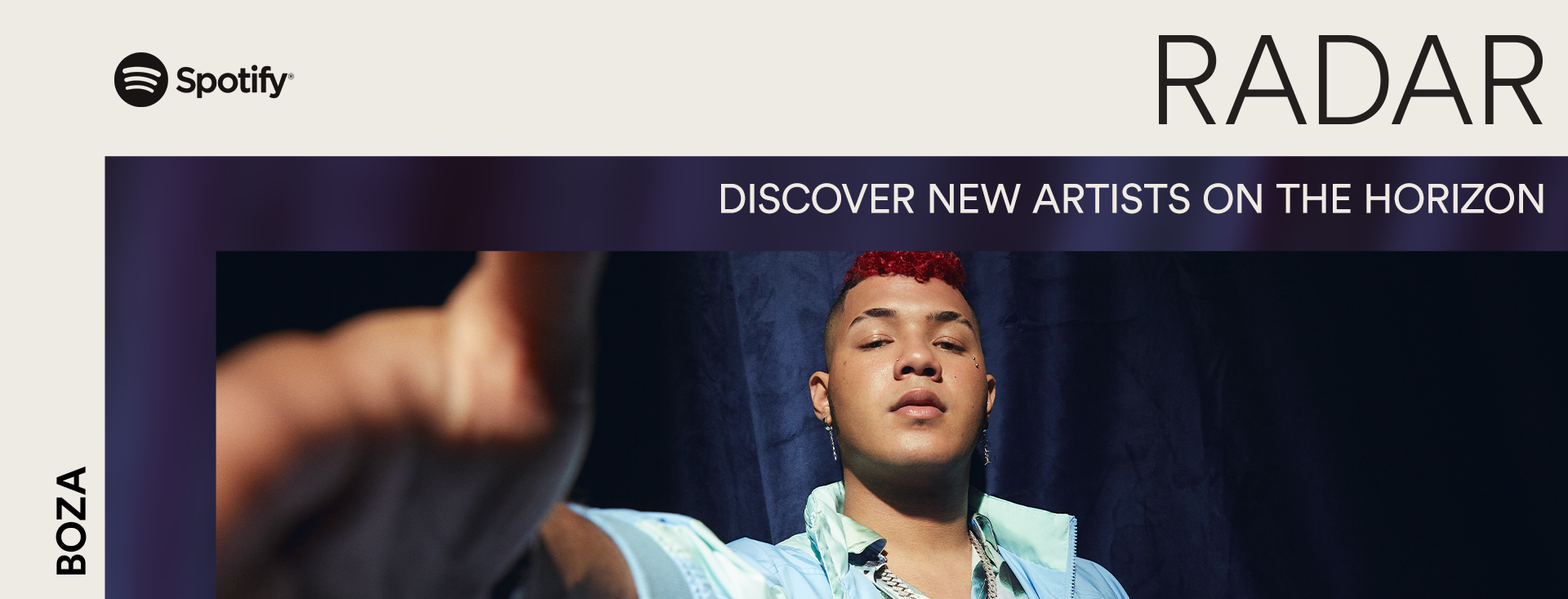
Panamanian artist Boza is making waves far beyond his geographical roots, and as the latest artist to join Spotify’s RADAR roster in the United States, his rise may very well continue.

The singer-songwriter is the newest RADAR artist in the U.S., but he’s no stranger to the program, which spotlights emerging talent from around the globe. In 2020, Boza was chosen as the first March RADAR artist of the month for the Central America and Caribbean region. Listeners quickly gravitated toward his music, and his success in the program is what led him to be picked as a 2021 RADAR artist for the U.S. region. Boza’s tracks can be found on over 80 Spotify playlists and he has nearly 12 million monthly listeners. Fans particularly love his song “Hecha Pa’ Mi,” which has racked up more than 330 million streams. On his debut album, Mas Negro Que Rojo, listeners will find sounds that follow a mix of dancehall, reggaetón, R&B, and more.

“Over the last two years we have witnessed Boza develop one of the strongest fan bases in all of Central America, which has quickly scaled throughout the rest of Latin America and Europe,” shares Jose Nova, a Spotify Senior Editor for Latin America. “Boza consistently provides his fans with unique storytelling through his lyrics that have deep connections with audiences around the world.”

Through RADAR, Boza will be featured on the RADAR playlist and will record music for our Spotify Singles program, and Spotify will provide a full suite of on- and off-platform marketing and promotional support. Spotify also worked with the artist to release a mini documentary, out today. Taking place in his hometown of Panama City in the La Meri neighborhood, the film gives viewers an intimate look at Boza and his journey from the streets to the stage. 

Watch the documentary in Spanish.

For the Record caught up with Boza to ask a few questions about his first album release, his musical style, and how he’s using Spotify to reach fans all over the world.

The last year has been quite busy for you, with your first full album release and the popularity of the song “Hecha Pa’ Mi.” What has it been like to see your career take off? 

Seeing my career take off with “Hecha Pa’ Mi” marks a before and after. To really see a track like this hit the whole world is what every artist dreams of. Seeing that they write to me from countries where they don’t even speak Spanish is so exciting.

Your music includes elements of the Panamanian style “canela.” How would you describe this sound to new listeners?

Canela is a little bit of Panama in my music. It is “The Hood” (El Barrio) and represents my friends, my experiences, and my life experiences in words.

What artists have inspired you the most, in terms of their sound and lyrics?

I really like Bad Bunny. I also like Kafu Banton from Panama—he is one that I always listen to, and I like his way of composing. El Roockie was also an influence. I also like all kinds of music such as salsa, merengue, Haitian, and rock and roll. I learn, gain knowledge, and take elements from everything that I listen to.

You’ve been working with Spotify’s RADAR program since 2020, when you were named  RADAR artist of the month for Central America & the Caribbean. Now you’re expanding as a U.S. RADAR artist. What has this experience been like?

This is another dream that I didn’t think would come so soon. It is very important to connect and see this happening in my country and in Central America, but as an artist, to come to the United States and see that my music is sneaking in everywhere, it’s wonderful. This is going to help me to grow that dream!

Your music has found international popularity in countries like Spain and Italy. Do you think working with Spotify and the RADAR program has helped introduce your music to other areas of the world, outside of Latin American?

The data available to artists on the platform allows me to know how many people are streaming my music in real time, how the number of listeners change over time, where they live, and to also be able to know which of my songs are liked the most. It’s incredible.

You can’t imagine my, and all my team’s, excitement when we saw we were number three in Spain. We were jumping with joy, because really when we entered the top 200 it was already an achievement, then at 100, and then at 50 we said, “Wow, the dream came true.” But when we got to number three, it is one of those moments that you thank God and reflect on all the effort and sacrifice, because it is not easy. It is almost impossible to have a number three in Spain with so many good artists there. In Italy, we asked ourselves, “How did it reach number seven when the song is in Spanish?” That is where one learns that music has no borders. 

What advice do you have for fellow emerging artists?

The best advice I can give you is to be prepared, and to 100% create your own style and your own music. Learn every day from everything you can in studios, in meetings—listen and know that your future depends on many things but the main one is that it depends on yourself.


Check out the latest music from Boza below and keep an eye out for his new track, “En La Luna,” coming out June 25.

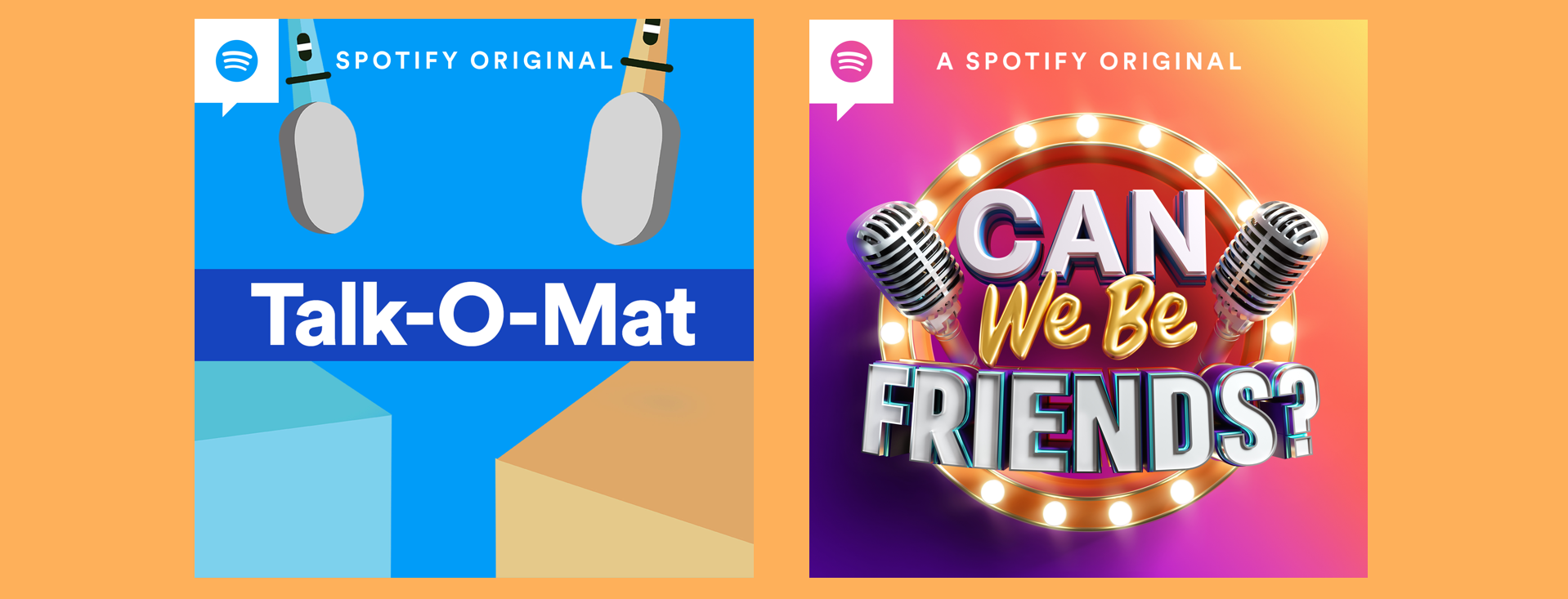
Popular German Podcast ‘Talk-O-Mat’ Brings Its Unique Format to the U.S. With ‘Can We Be Friends?’

What happens when you put two unprepared celebrity strangers in a room together and ask them to talk about random topics? The result is great entertainment—and a lot of surprising moments.

This concept is the premise behind Talk-O-Mat, a popular German Spotify Original podcast. In each episode, two celebrities arrive at a studio without any idea of whom they will be talking to or what questions they will be asked. The discussion topics are randomly determined by an artificial intelligence system named Talk-O-Mat. 

The unique format of the show made it a hit with listeners in Germany, and the podcast is set to kick off its fifth season in June. And recently, the series saw such success that a new version of the podcast called Can We Be Friends? just launched in the U.S. The English version involves blindfolds for the guests and a friendly AI system who goes by Ruby. Some unexpected pairings that listeners will find for season one include Chelsea Handler and Bobby Berk, Ray-J and Tabitha Brown, and Margaret Cho and Adam Rippon. In this version of the podcast, the conversation between the celebs is analyzed by Ruby, and she ultimately determines if the duo would make for suitable friends outside of the studio.

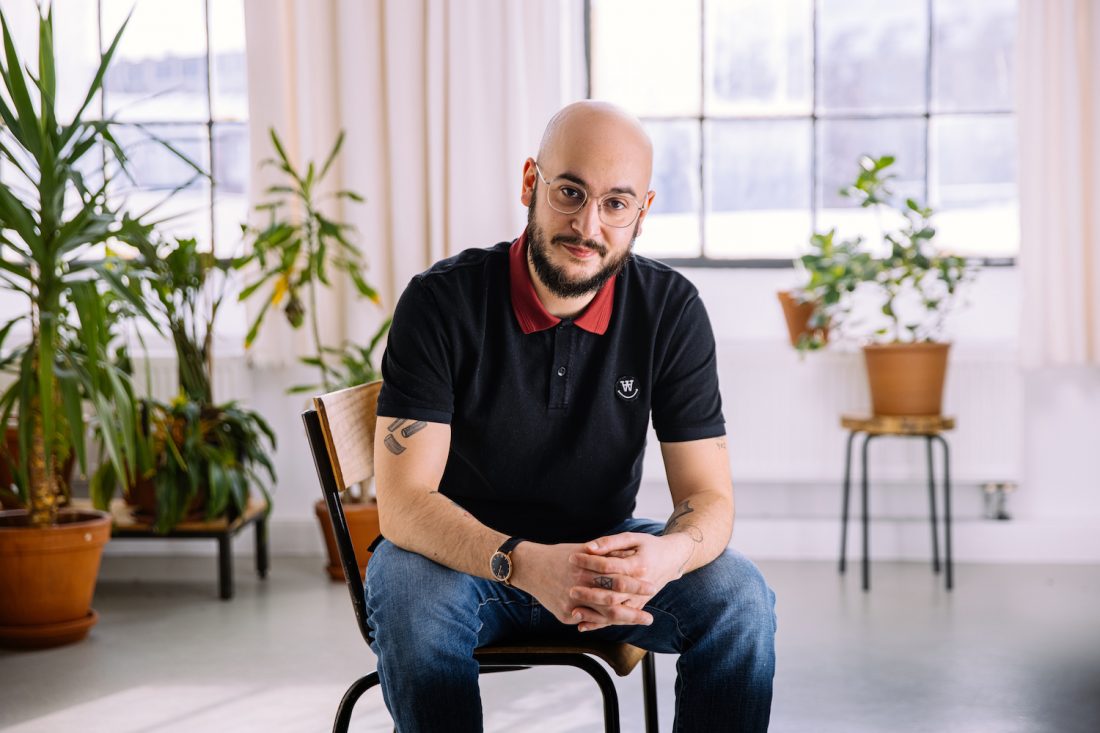
To dig into this creative and unlikely podcast format, For the Record interviewed the man behind the original German concept, Daniel K. Nikolaou. Daniel is an executive producer at Spotify and the cocreator of the Talk-O-Mat series. What’s it been like for him to see the show flourish and expand beyond the German border? Learn that, and more, below.

How did you come up with this unique format for a podcast?

Spotify is in such a unique position to tell artist stories and shed light on creators in a new way—especially with podcasts. When we created Talk-O-Mat back in 2017, that idea was at the center of the show development. We really wanted to create something that helped fans connect with the artists they love in a different way and allow them to get to know another side of them, a side that they don’t get to show on TV or on social media. 

Why do you think this podcast format is so interesting and engaging for listeners?

I believe that what makes the show so exciting is that listeners really feel the thrill of the artists that are in the studio. You can almost literally hear the tension in the room. It’s such an exciting moment and encounter for the listeners, the artists, and the creators.

You’re about to embark on season 5. How has the show changed or evolved over the past 50+ episodes?

I’ve always found the more unlikely pairings the most fun. Hearing how two people who at first sight might not have that much in common and then witnessing how they do start to connect is always special to me. We also definitely learned a lot about the way people connect with each other, more specifically, what kind of topics or questions make them connect faster or on a deeper level. A secret that I’m not ready to reveal yet…

Do you have a favorite episode/celeb pairing from a past episode?

One of my favorite episodes is the one featuring Fynn Kliemann and Chilly Gonzales because Fynn is such a big fan of Chilly and was completely blown away. I also still love our very first episode with rapper Maeckes and model Micaela Schäfer. It was such a quirky pairing, and the birth of a very dumb running joke that led to a lot of celebrities talking about yogurt in countless episodes.

This show is now being adapted into an English version for U.S. audiences as Can We Be Friends? What was your reaction when you heard the news? 

I couldn’t be prouder! I’ve always believed that the concept of the show had potential for other markets because it’s so pure and fresh. I’m very excited to see how the U.S. audience responds to it! 

What are some opportunities for this show format now that it’s being brought to a new market and audience? 

I’m very excited to see original audio intellectual property not only traveling from the U.S. to other markets, as it is with most content and media, but the other way around. I think that the cross-border adaptation of audio IP to local cultures will open a lot of new creative opportunities and pathways for the future.

Whether you’re interested in the German format or the American version, either podcast will provide you with laughs. Check them out below.

Masked Wolf Brings His Flare of Fast Rap to Australian Hip-Hop

Rapping about personal struggles is one thing Harry Michael, musically known as Masked Wolf, isn’t afraid to do. The artist’s song “Astronaut in the Ocean” touches on what it’s like to not fit in: “I really wanted to express the meaning of feeling out of place. I had the suit on but wasn’t in the right environment,” Harry shared recently with For the Record. “It really speaks about the mental struggles from that specific situation.”

The song is resonating with listeners in a big way. Since its release, “Astronaut in the Ocean” has amassed more than 240 million streams on Spotify. “It has felt a bit weird, to be honest,” Harry said, when describing what it’s like seeing his song rise on the charts. “You never expect the moment to actually happen, and now it has. I honestly haven’t had time to relish the moment because it is full steam ahead.”

The Australian is finding fans far beyond the geographical boundaries of his region. In fact, Spotify data shows that the top three countries listening to the rapper are the U.S., Germany, and India. His single has also appeared on over 100 editorial playlists, including Today’s Top Hits, Hot Hits Australia, Hot Hits Turkey, and Viral Hits.

This global audience comes as a surprise to Harry. “In no way did I think I would reach these kinds of areas or levels. It has really, really shocked me.”

His thoughts on why his music has been so well received? It’s relatable to everyone. “It’s not just about the cars, jewelry and fame … It’s about how people are currently feeling,” explains Harry. “Astronaut in the Ocean” isn’t the artist’s only single that references mental health. Lyrics from other songs touch on topics of anxiety and peer pressure—things Harry feels his audience can relate to. “I never was like these are things I must speak about. It was more about me speaking about my own personal troubles and trying to give people the courage to speak about their own.”

Inspired by artists like Joyner Lucas, SAINt JHN, Hopsin, and Kevin Gates, Harry describes his sound as “authentic and original, with a flare of fast rap.” Hear it for yourself by listening below.

5 Questions (and Answers) with David Sang Wook Park, Spotify Korea Managing Director

In 2014, Spotify debuted our first K-Pop playlist, K-Pop Daebak, on the platform. From that day on, we’ve served as a global stage and partner for Korean artists and helped them introduce their music to the world. We doubled down on that commitment in 2015 with the launch of our K-Pop hub, enabling us to further introduce Korean music—including K-Pop, hip-hop, indie, OST, and R&B—to fans globally. 

Then, this February, Spotify launched in South Korea, creating an opportunity to amplify Korean musicians and spread their music to listeners like never before. And that opportunity expanded even more when, just 50 days later, Spotify became available across 80+ more markets for a total of 178.

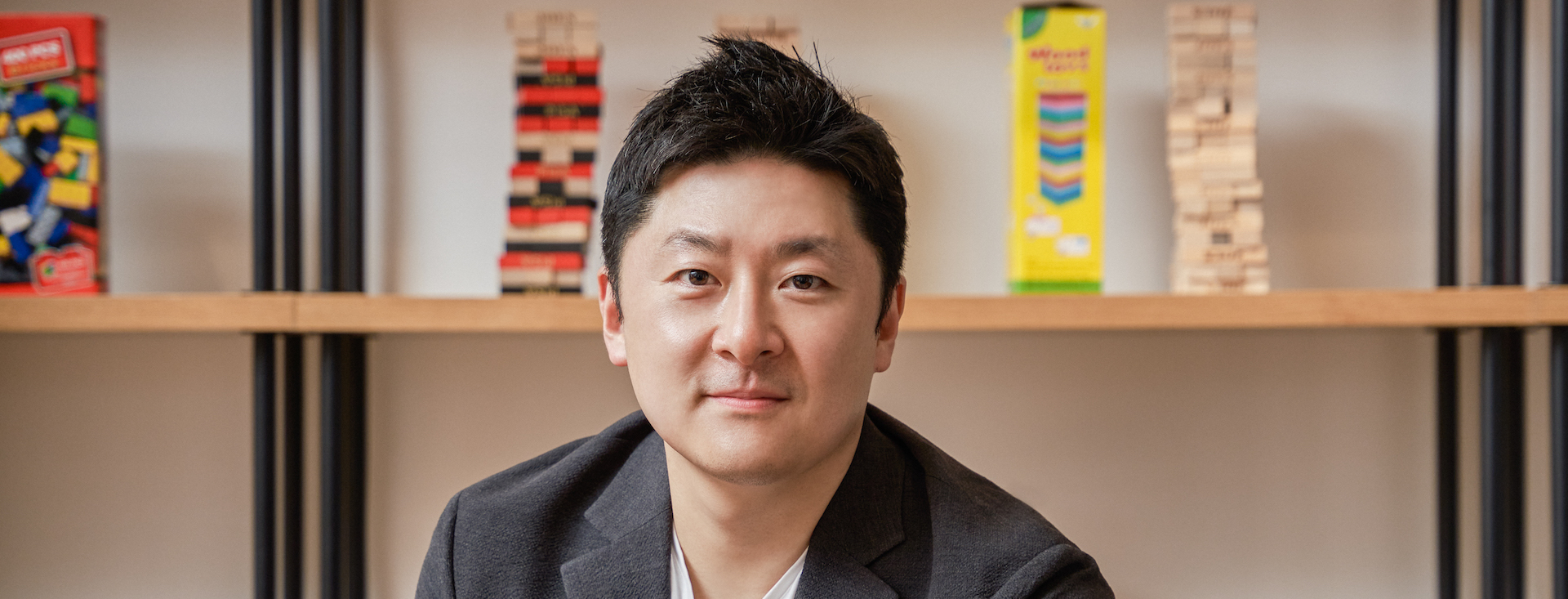
For the Record caught up with David Park, Spotify Korea Managing Director, to talk more about why now was the right time to launch in South Korea, his own background supporting content creators, and Spotify’s mission to connect artists to fans in Korea and across the world. 

It’s been 50 days since Spotify launched in South Korea. What are some initial reactions you can share?

We’re taking into account feedback both from listeners and artists, constantly working to improve and innovate our service. From the artist community, we have generally received a warm welcome and positive feedback that our launch has activated the local music streaming market. We’re hoping that more listeners will be able to connect with a more diverse range of artists and music genres, both in Korea and around the world. Our team on the ground is deeply committed to this. 

From listeners, we continue to get extremely positive feedback on our unmatched personalization and discovery technologies. They’re seeing a very high level of music-related editorial input, powered by data and the depth of our algorithmic machine learning. We already see how listeners are discovering new artists and music, expanding their listening range and experience.  We believe in Spotify as more than a listening platform, but as a tool that brings the world of audio to you.

Tell us about your professional background prior to Spotify. How did that prepare you for your current role?

I’ve worked in the intersection of content media and IT/tech throughout my career, most recently founding a startup and setting up a business in Korea for a global company. One of the highlights during my career was definitely fostering and nurturing the video creator community and ecosystem in the APAC region. Helping Korean creators boost their presence not just in Korea but around the world—through the support of tools and data—was one of the key experiences that helped set me up for this role. There was one fact prevalent throughout the different roles I had taken: that content is king.

Spotify has been avid in serving as K-Pop’s bridge to the world years before launch. Can you talk about the timing of this launch? Why was now the right time?

While Spotify’s been very active in serving Korea’s music streaming market, it is a highly mature, unique, and complex one. With that, we had to invest an immense amount of time, resources, and research years before the launch. In every country we enter, we have to take market specificities into consideration and align with the local industry. 

All in all, building up a strong foundation to our long-term vision in Korea took some time, and we’re taking a step-by-step, hyper-sophisticated approach by considering market specificities and all relevant stakeholders. Our focus is on democratizing audio and music in the long run, and helping to accelerate the growth of Korea’s entire music streaming ecosystem, benefitting creators, labels, distributors, and fans. It’s a marathon, not a sprint. 

How will Spotify support Korean artists, both through launch and going forward?

We’re now hoping to take Korean music and artists’ global popularity to another level. Just recently we saw a variety of different artists, such as ROSÉ, DPR IAN, SHINee, Epik High, CHUNG HA, and more landing in the top 10 of the global Spotify debut charts. Korea’s music industry has been the epicenter of new cultural trends and music for many years, and it’s important for us to embed even further into this unique market, forging closer relationships with even more artists and labels and connecting them with fans across the globe. An example is our Spotify for Artists master classes, which we’ve proactively held for labels and artists so that they can better leverage our data and tools alongside our music team’s guidance and support. We want to empower them to connect with even larger audiences—both local and global.

What’s Spotify’s ultimate vision and goal in Korea?

Our ultimate goal is to provide the best audio experience to our listeners in Korea, and to continue to connect artists and fans on a scale that has never before existed. For listeners, we are committed to creating an environment in which they can enjoy a personalized experience tailored for their lifestyle, as well as diverse new content from all over the world. 

We see ourselves as a catalyst for additional growth in the market, with discovery of new artists and music being a key strength. We’re proud of that and are actively refining our algorithms to enable even more fan discoveries of new artists each month. We’re also confident that there is ample room for Korea’s music market to grow further as listeners’ audio and music consumption habits transform gradually. The shift has already begun. It’s only a matter of time and we’re working hard to speed things up. As our CEO, Daniel Ek, mentioned at Stream On, “It’s just the beginning.”

Ready to discover music and playlists for yourself? Check out David’s top working playlists—Lo-Fi Beats, Lo-Fi Cafe, and Lo-Fi House—or one of his new favorite playlists, In The K-Indie. “Recently, youra is a new gem I discovered through it. There’s just so much musical talent like youra in Korea that needs to be heard both in Korea and globally.”