
Tag: Interview

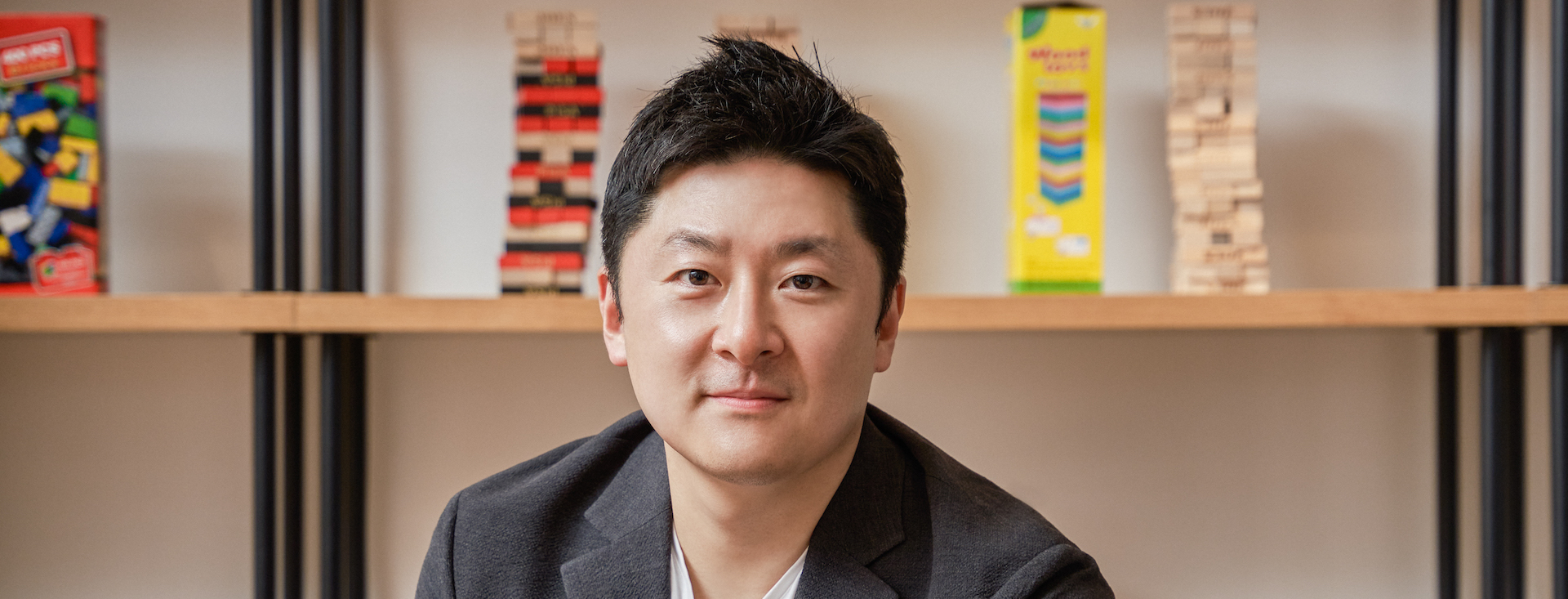
런칭 50일 기념 박상욱 스포티파이 코리아 매니징 디렉터와의 5문 5답

스포티파이는 2014년 선보인 최초의 K팝 플레이리스트 ‘K팝 대박(K-Pop Daebak)’을 기점으로 한국의  아티스트 및 음악을 전 세계 청취자에게 소개하는 글로벌 무대 및 파트너의 역할을 해왔습니다. 2015년부터는 한국 음악 플레이리스트들을 총망라한 K팝 허브(K-Pop Hub)를 런칭, K팝, 힙합, 인디, OST, R&B 등 다양한 한국의 음악장르와 아티스트를 전 세계에 적극 소개해왔습니다. 

그리고 올 해 2월, 스포티파이가 드디어 한국에 런칭했습니다. 런칭 당시 93번째 국가였는데, 그로부터 겨우 50일이 지난 지금, 178개 나라에서 스포티파이를 만나볼 수 있게 되었습니다. 한국의 아티스트와 음악이 전 세계 178개 국가의 청취자 그리고 수십억명의 잠재적 신규 청취자들과 연결될 수 있게 된 것입니다. 

스포티파이 뉴스룸 ‘포더레코드(For the Record)’에서는 국내 론칭 50일을 기념해 박상욱 스포티파이 코리아 매니징 디렉터와 5문 5답 인터뷰를 진행했습니다.

한국에 스포티파이가 진출한지 겨우 50일이 되었습니다. 이제 막 발을 디디기 시작했는데, 초기 반응은 어떤가요?

수 많은 피드백을 항상 경청하고 서비스를 혁신해 나갈 수 있도록 집중하고 있습니다. 스포티파이의 런칭이 국내 음원 스트리밍 시장에 활력을 불어넣어준다는 긍정적인 피드백과 함께, 아티스트 커뮤니티로부터 따뜻한 환영을 받았습니다. 스포티파이를 통해 보다 다양한 아티스트와 음악이 조명 받을 수 있기를 기대하며, 더 많은 한국의 아티스트와 폭넓은 음악이 한국을 포함한 전 세계 청취자와 이어질 수 있도록 팀에서 최선을 다할 계획입니다.

청취자로부터는 저희의 독보적인 개인화(personalization)와 발견(discovery) 기술에 대해 ‘역시나’ 라는 호평이 많았습니다. 음악팀의 에디토리얼 전문성과 스포티파이의 독보적인 데이터, 알고리즘·머신 러닝 기술의 결합으로 이뤄진 결과물인 만큼, 전례 없는 서비스임을 저희 모두 자신합니다. 개인의 취향에 따라 새로운 아티스트와 음악을 발견하는 즐거움 외에도 듣는 음악의 스펙트럼을 넓혀준다는 피드백도 있었습니다. 분명한 것은 스포티파이는 단순 음원 플랫폼이 아닌, 전 세계의 오디오·음악 생태계를 청취자에게 선보이는 기술 서비스라는 것입니다. 

스포티파이 이전의 이력에 대해 말씀해 주세요. 이전의 경력이 지금의 역할에 어떻게 도움이 되었나요?

컨텐츠 미디어와 IT기술이 교차하는 분야에서 주로 경력을 쌓아왔고, 가장 최근엔 스타트업이나 글로벌 기업의 한국 지사 설립을 총괄한 경험이 있습니다. 아태지역 비디오 크리에이터 커뮤니티가 하나의 생태계로 자리 잡을 수 있도록 기여했던 경험도 중요하게 생각합니다. 당시 한국의 크리에이터들이 각종 기술, 툴과 데이터를 기반으로 한국 뿐만 아니라 전세계에서 존재감을 드러낼 수 있도록 지원했었는데, 그러한 경험이 스포티파이에서의 제 역할과 관련해 핵심요소 중 하나로 작용할거라 예상합니다. 

스포티파이는 한국 론칭에 앞서 이미 수년 전부터 K팝을 전세계와 잇는 교두보의 역할을 해왔습니다. 한국에서의 서비스 런칭은 왜 지금이 적기라고 판단했나요?

한국의 음원 스트리밍 시장은 특수하고 복잡한 편이며, 시장 자체의 성숙도도 매우 높습니다. 스포티파이는 수년간의 시장조사를 포함해 방대한 리소스와 시간을 투자하여 한국의 음원 스트리밍 시장을 연구해왔습니다. 더불어 어느 나라든, 해당 시장이 지닌 특수성을 고려해 서비스를 런칭해야 하는 것도 중요한 부분입니다. 

우리는 오디오·음악 산업의 수평화(democratizing audio and music)라는 장기적 목표이자 거시적 비전에 집중하는 기업입니다. 이 같은 비전을 한국에서도 이행하기 위해 오랜 시간 준비한 만큼, 앞으로도 다양한 이해관계자, 한국시장만의 특수성 등을 고려해 전진할 것입니다. 단계별로 정교하게 접근해 나감으로써 한국 음원 스트리밍 생태계의 동반성장에 함께할 수 있도록 최선을 다할 것입니다. 단거리 경주가 아닌 장거리 마라톤입니다. 

스포티파이는 한국에서의 런칭을 통해 앞으로 어떤 방식으로 한국 아티스트를 지원할 예정인가요?

더 다양한 한국의 음악과 아티스트들이 글로벌 인지도를 높일 수 있도록 기여하고 싶습니다. 얼마 전 로제, DPR IAN, 샤이니, 에픽하이, 청하 등 다양한 아티스트들이 스포티파이의 각종 글로벌 차트 탑10 안에 들었던 사례가 방증하듯, 한국의 음악은 전 세계와 통한다고 생각합니다. 한국의 음악 산업은 다년간 새로운 문화 트렌드와 음악의 중심지 역할을 해왔습니다. 한국이라는 특별한 나라에 스포티파이가 더욱 깊이 정착하고, 더 많은 아티스트·레이블과 협업하여 이들을 전 세계 청취자에게 소개하고자 합니다. 아티스트·레이블을 대상으로 진행해온 스포티파이 포 아티스트 (Spotify for Artists) 마스터 클래스 역시 다양한 노력의 일환입니다. 실제로 국내 런칭 후 더 많은 이들이 스포티파이의 아티스트 전용 플랫폼인 Spotify for Artists의 데이터와 각종 툴을 적극 활용하기 시작했습니다. 앞으로 많은 국내 아티스트들이 스포티파이의 기술을 통해 한국을 포함한 전 세계 178개 국가의 글로벌 청취자, 그리고 음악팬들과 연결될 수 있도록 하고 싶습니다.

한국에서 스포티파이의 궁극적인 비전과 목표는 무엇인가요?

궁극적으로는 한국의 청취자에게 최상의 오디오 경험을 제공하고, 계속해서 전례 없는 규모로 아티스트와 팬을 연결해 주는 것입니다. 청취자에게는 개인의 라이프스타일에 맞춰진 개인화(personalization) 경험과 전 세계의 다양한 신규 음원을 마음껏 즐길 수 있는 환경을 제공할 수 있도록 매진할 것입니다. 그리고 오디오·음악 산업의 수평화라는 장기적 목표이자 거시적 비전의 실현에 집중할 것입니다. 

한국에서 스포티파이는 ‘새로운 아티스트와 음악의 발견’을 강점으로 삼아 음원 시장 전체의 성장을 도모하는 촉매제의 역할(catalyst)을 하고자 합니다. 청취자의 오디오·음악 소비 패턴도 점진적으로 변화함에 따라 한국의 음악 시장 역시 더욱 성장할 것입니다. 변화는 이미 시작되었고 가시화는 시간의 문제이며, 스포티파이는 이러한 패러다임의 변화를 가속화하도록 전념할 것입니다. 최근 스트림 온(Stream On)에서 CEO 다니엘 엑(Daniel Ek)이 강조했듯, 스포티파이는 이제 겨우 시작점에 섰다고 할 수 있습니다 (“It’s just the beginning”). 

다양한 음악과 플레이리스트를 경험하고 싶은가요? 박상욱 매니징 디렉터가 업무 중 즐겨 듣는 Lo-Fi Beats, Lo-Fi Cafe, Lo-Fi House, 그리고 요즘 가장 좋아하는 In The K-Indie 플레이리스트를 확인해보세요. 유라(youra)처럼 원석 같은 아티스트들을 In The K-Indie를 통해 발견했다고 합니다. 박상욱 매니징 디렉터는 “한국에는 국내외 청취자와 전 세계 팬들에게 소개되어야 할, 유라와 같은 재능 넘치는 아티스트들이 너무나 많다”고 강조했습니다. 
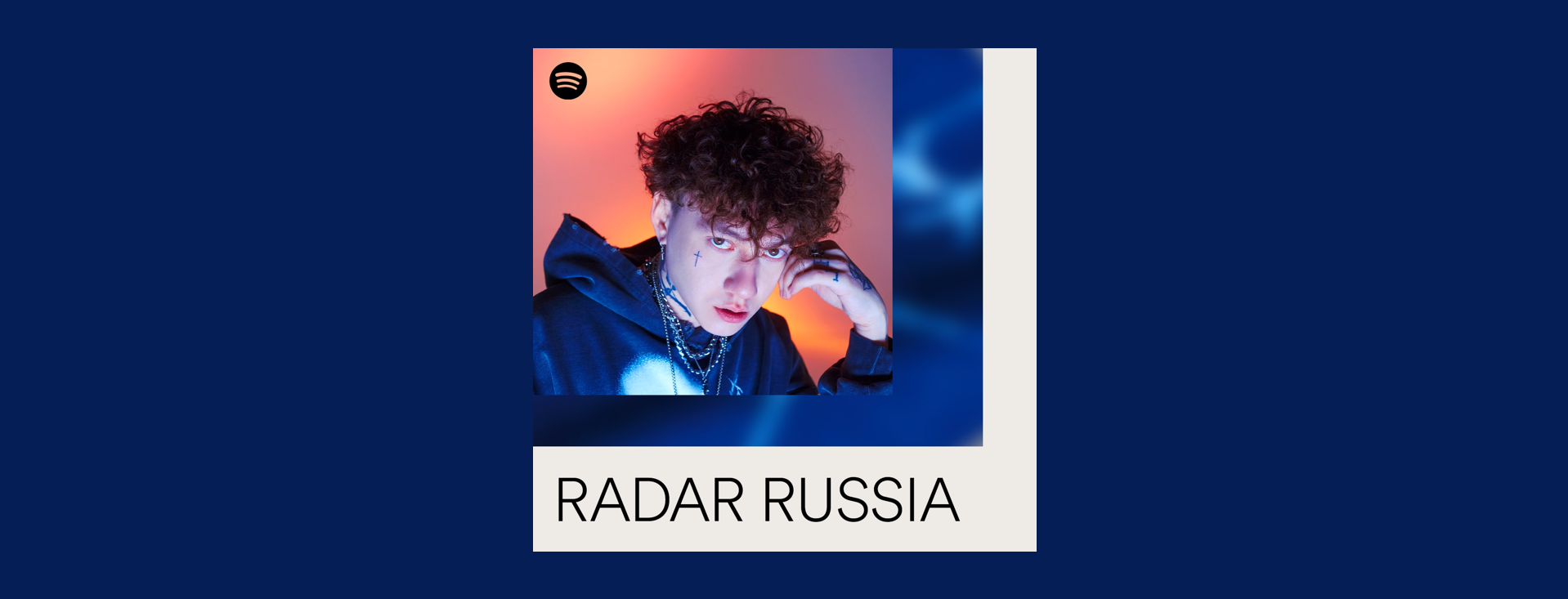
Spotify’s Emerging Artists Program, RADAR, Kicks Off in Russia

Last year Spotify launched RADAR, our emerging artist program that spotlights rising talent from around the globe. RADAR’s goal is to help up-and-coming artists in all stages of their development as they connect with new audiences. Now, after working with creators in the U.S., New Zealand, Spain, and many other markets, the program is ready to launch in Russia.

Since Spotify’s launch in Russia in 2020, we’ve seen tremendous success with subscriber growth and service adoption. According to our 2020 Q3 results, Russia has been our most successful new market launch to date and represented the largest portion of subscriber outperformance for the quarter. 

With RADAR, we will amplify emerging artists in the region through ongoing marketing and editorial support. Artists will be featured in the local creative marketing campaigns, and their tracks will be added to the RADAR RUSSIA playlist in the global RADAR hub, helping fans from all over the world discover their music. For the Record had the opportunity to chat with two bands that are a part of Russia’s RADAR program.

Сёстры (pronounced “sestry,” translation: Sisters) is an indie pop duo that debuted their first album, Когда были волны (When There Were Waves), in October of 2020. The group has already seen success, including having recently performed on a popular Russian late-night talk show.

Три дня дождя (pronounced “tri dnia dozhdia,” translation: Three Days of Rain) is an alternative band that released their first album in February of last year. Their most popular track, “Не киряй,” has racked up more than 4.5 million streams on Spotify.

Read what the bands had to say about their music, their experience, and more below.

What are you looking forward to as a Spotify Russian RADAR artist?

Сестры: We have been watching the RADAR program for a long time now, as it’s helped us discover many talented foreign artists, and it is very unlikely we would have discovered them without it. Now, through RADAR, it’s amazing that many more listeners will learn about us—our tracks will become a part of Spotify’s global ecosystem, and our songs will be heard by many people all over the world. We are just at the beginning of getting to know our audience, and it is so important for us to develop strong relations with our fans. 

Три дня дождя: We have big plans and ambitions going forward, and we hope the support of Spotify can help us with establishing our name not only in Russia but also abroad. We are honored to have been chosen as one of the first artists to take part in the program in the country. Russian rock is not dead and we’d love to prove it! We are hopeful that RADAR can help us bring our art to the new audiences.

What advice do you have for fellow emerging artists?

Сестры: Trust yourself and your vision, work hard, and carry on no matter what.

Три дня дождя: First of all, don’t ever give up. Ever! And practice as often as possible. Secondly, try to minimize all factors that restrain you from doing what you love. Lastly, always believe in yourself and your art.

What message do you want people to take from your music?

Три дня дождя: With my music I’d love to convey the emotions everyone is familiar with. And about showing the listeners that love can be a very dangerous thing at times. 

This past year presented many unprecedented challenges. How has it changed the way you approach your musical career?

Сестры: 2020 is exactly the year when our music career began developing. The music industry turned to online, but it somehow brought us all even closer together. We are definitely looking forward to the day when live concerts and performances become possible again, but our approach to our music career has not changed a bit. We will continue gathering at home or at the studio to make new music together.


Ready to give these Russian artists a listen? Check out the new RADAR Russia playlist below.

Meet Flo Milli, the Alabama Rapper Speaking to Gen Z—and Spotify’s Fourth U.S. RADAR Artist

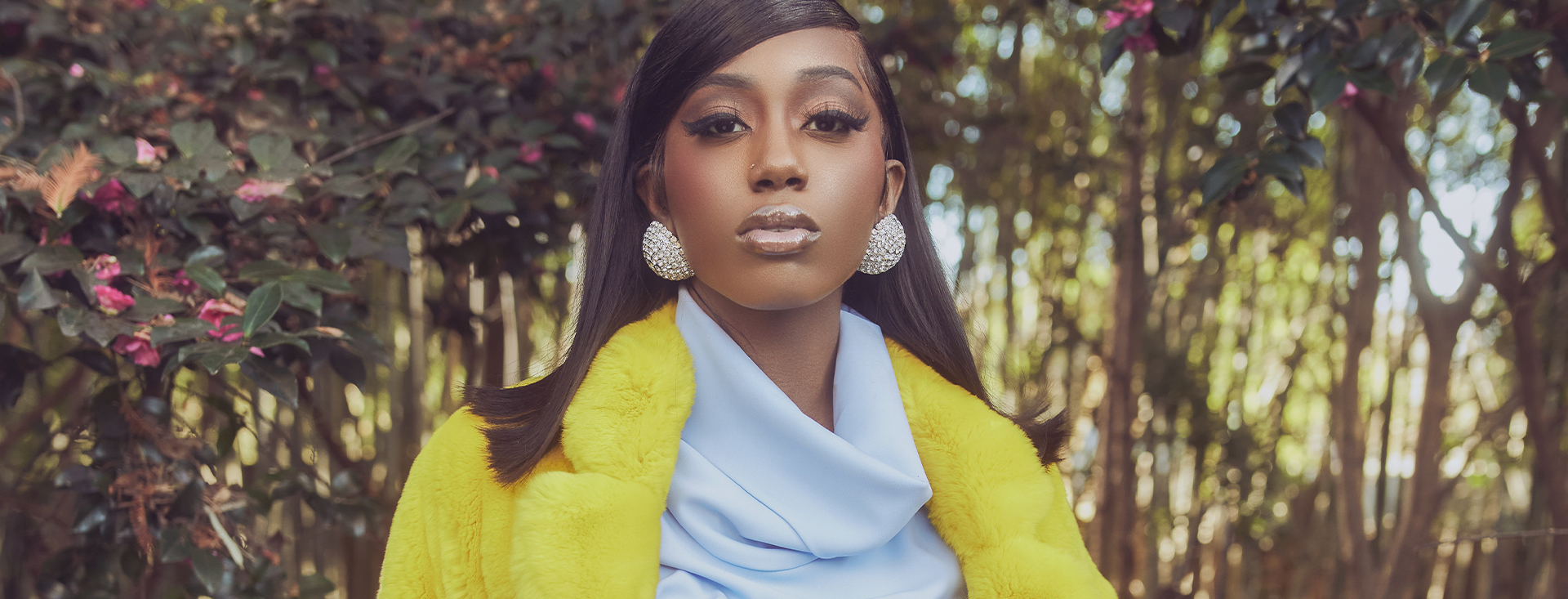
Stream rapper Flo Milli’s mixtape and you’ll hear simultaneously bubbly and assertive tracks covering the 21-year-old’s take on money, men, self-empowerment, and jealousy. The Atlanta-based Alabama native, who grew up singing in her church choir, has been using her voice for some time. “It was mandatory for me to be in the choir,” Flo told For the Record. “My mom used to sing all the time, so did my sister. I guess I was the only one who wanted to rap, though.”

Today Flo was named Spotify’s newest U.S. RADAR artist. Spotify created RADAR to help artists across all stages of their careers use the strength of our platform to deepen connections to their audiences. Now listeners can stream the 175 RADAR-affiliated emerging artists around the world in one palace on the RADAR Global Hub

As the latest RADAR artist, Flo will be featured in the RADAR playlist and create a Spotify Singles recording. She’ll also receive promotional support for her upcoming releases, a full suite of marketing, and social promotion. Flo Milli’s campaign will furthermore include a forthcoming mini-documentary to premiere later this year. Also out today is Flo’s glamorous new single “Roaring 20s,” which shows off the star power of the RADAR artist.

Flo’s long-standing musical aspirations were fueled by R&B TV show 106 & Park and the work of Nicki Minaj. These propelled Flo to record her own tracks as a high schooler. Her first two, “Beef FloMix” and “In the Party,” went viral among Gen Zers on social media and enabled Flo to release her first mixtape, Ho, why is you here? in 2020. It has now seen over 192 million streams on Spotify.

“Since the release of ‘Beef FloMix’ on Spotify in 2019, we’ve watched Flo Milli’s exponential growth with excitement,” says Ned Monahan, Spotify’s Head of Global Hits. “Her magnetism is indisputable, and she’s one of the most exciting new rappers in the game right now. We are beyond thrilled to partner with Flo as our next RADAR artist and can’t wait to see what’s next.”

For the Record chatted with Flo about her inspirations, accomplishments, and recommendations to young women looking to do what they love. 

Both your music and fashion have been compared to that of ’90s rappers. What about that decade excites or inspires you?

I think it’s interesting. As I’ve been going in my career, I’ve started to discover how times were back then. I didn’t, of course, grow up around that time. But I see clips all the time of the ’90s and how the music industry was just different. And I do admire it because I think it’s cool to see how everything has changed and how social media plays a big part into today’s music industry. But I wouldn’t have minded coming up in that era either. 

In the past two years, female artists have sung shamelessly about money or wealth in their songs, examples including Cardi B, Arianna Grande, and you. Why do you think it’s important to bring this topic into conversation?

I believe that whatever you put out into the universe, that’s what you’re going to get. So if you’re speaking about these things, you’re conjuring them up. Who doesn’t want to live a lavish lifestyle, especially when you come from nothing? 

Those things are power, and I think it’s important to make it a habit to speak the things that we want and let everybody know, especially young girls, that they can have those things. You can reach your goals and you can be great. You can get anything you want if you put your mind to it. 

Tell us a little bit about your creative process. 

It took me a long time to really learn my best process for making music. It was hard trying to find my niche. So I like to have fun. I just need to be in a space where I’m alone and I’ve got a variety of beats. I like to be myself and free and have my own space. That’s how I create. 

Your single “Beef FloMix” had success on social media before hitting the number two spot on Spotify’s Viral 50 in April 2019. What changes did you observe after being featured on the playlist?

I think my streams went up even more, of course. I got more fans and just a lot of added traction towards my music and videos, everything. So I think it helped a lot. It’s dope to be put on those playlists, because a lot of like youth of course have Spotify and they listen on the app, and those playlists influence them. 

What would you say to aspiring young female rappers who aren’t sure where to begin?

I would encourage them to always follow what they feel strongly about. Don’t let anybody come in between your opinions about your craft and what you create and build. Stick to what you think is cool, because only you know what’s good. Surround yourself with people who have your best interests and never give up.

It’s a unique time for everyone. How have you stayed positive in spite of everything the year has thrown at us?

I just started to learn how food can affect you and your mood. I’ve also been going to sleep saying positive affirmations. There’s hella videos where you could just play them while you’re going to sleep. And like all those affirmations go into your subconscious mind. And before you know it, you’re going to have all these affirmations in your head. I would just encourage everybody to do that with everything going on in the world. 

What are you looking forward to as Spotify’s current U.S. RADAR artist?

I’m looking forward to just my hard work being highlighted. My goal is to get the messages of the songs across in the best way and to keep the ball rolling the entire year. 

Stream Flo Milli’s mixtape, Ho, why is you here? below. 

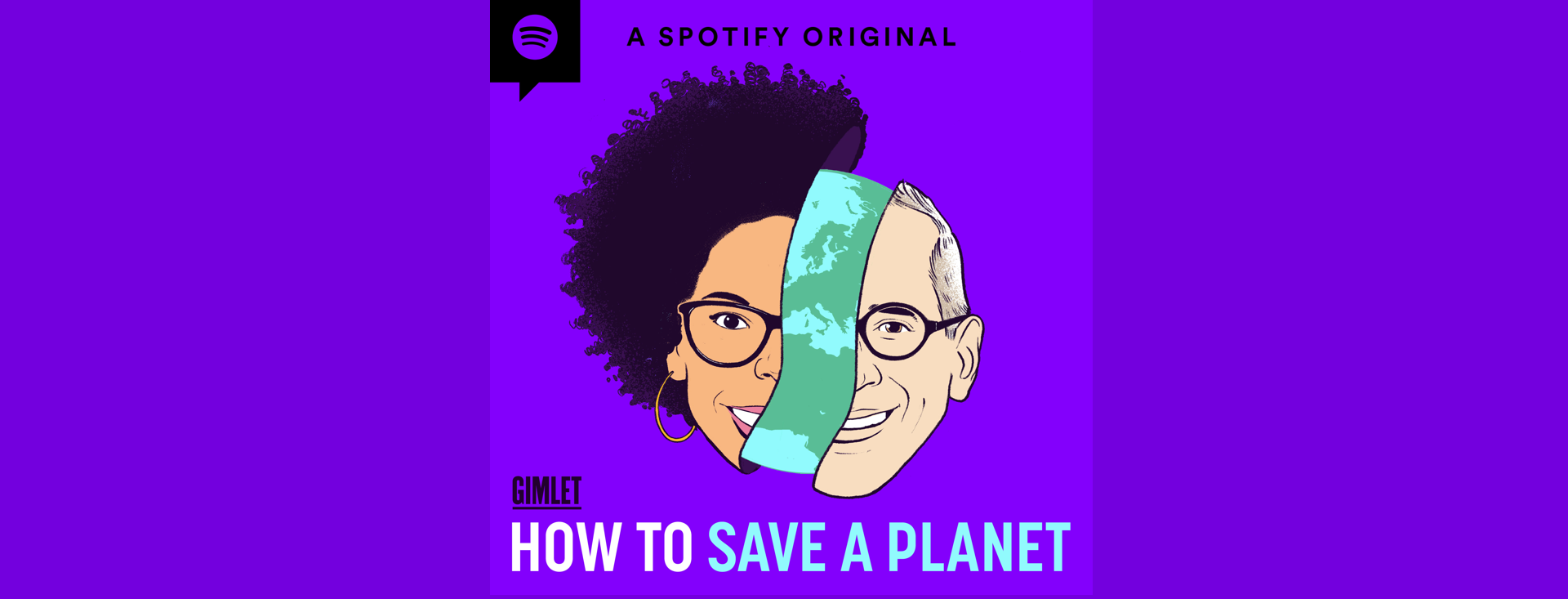
Join Dr. Ayana Elizabeth Johnson and Gimlet’s Alex Blumberg as They Discuss ‘How to Save a Planet’ in Their New Podcast

Anyone can search “10 things I can do to help save the planet.” And according to marine biologist, policy expert, and Urban Ocean Lab founder Dr. Ayana Elizabeth Johnson, that’s a problem. “People feel satisfied when they’ve bought their reusable bag and water bottle and ride their bike everywhere.” It’s not enough, she says. To mitigate the effects of climate change, we need to take collective action by transforming electricity, transportation, construction, manufacturing, agriculture, and land use, to name a few.

So where to begin? That’s the question that Dr. Ayana Elizabeth Johnson and Gimlet cofounder Alex Blumberg seek to answer in their new podcast, How to Save a Planet.

Nine months ago, the pair started talking about producing a podcast on combating climate change with expert-led, actionable solutions. Then they recruited a knowledgeable team that includes journalists Kendra Peirre-Louis and Rachel Waldholz, Gimlet producers Caitlin Kenney and Anna Ladd, and sound engineer Emma Munger to help in creating a podcast that will continue to evolve as people take systematic action on climate change

In creating the podcast, the team aimed to engage listeners, give them concrete, large steps to take part in during every show, and tell the stories of people around the world already mobilizing around climate change. So in addition to interviews with academic leaders like Kate Marvel and youth activists like Varshini Prakesh, Alex and Dr. Ayana Elizabeth Johnson will also talk to individuals like farmers and fishermen who’ve started to make changes after decades of not thinking about sustainability. And what they’ve found? It’s working for them—and the climate. 

For the Record sat down with the cohosts to get the inside scoop on How to Save a Planet. 

A lot of people feel that the issue of climate change is really out of our control. How do you think people can start to take the power back into their own hands when it comes to addressing the issue?

Dr. Ayana Elizabeth Johnson: I think we need more journalism focused on solutions, because we’re finally at the point where we have the journalistic expertise and the media support for talking about climate science and how climate change is already impacting people. But we don’t have nearly enough media about what we should do about all the solutions that are already at hand and how people can be part of larger systematic change, instead of just being stressed out about their individual carbon footprint all the time.

Alex Blumberg: What we want to do is increase the range of options, because people are all different and you can probably engage in a way that leverages your particular skills and personality that isn’t just like a sort of one-size-fits-all solution. So hopefully, this podcast can provide more ways for people to plug into a more effective solution because it’ll be something that appeals to them particularly.

What have you learned about climate change in this process that you were not expecting? Anything that really blew your mind? 

Dr. Ayana Elizabeth Johnson: One of the things that’s really fascinating is how many people are working on climate solutions without ever talking about climate, even if it’s their motivation, because they just don’t want to complicate things or make them “political.” Whether that’s on how we manage the chemicals in air conditioners that are extremely potent greenhouse gases or how we transition agriculture or ramp up wind energy. There are often financial reasons for doing the right thing in terms of climate now, especially with how the technologies and the markets have evolved.

Alex Blumberg: The reason that people are actually taking action is because it’s usually better for them on a straight-ahead “what’s in it for me” calculation. And that’s what’s been sort of very surprising and very hopeful. Like, people who are doing regenerative farming are more profitable than when they weren’t doing it. There’s no downside. What’s been shocking to me is the more we talk to these folks, the more we realize there is literally no reason we shouldn’t make these changes, because they’re actually all-around better. I think people know that, but telling that story is really important. 

How is making this podcast different from the podcasts you’ve made in the past?

Alex Blumberg: The aim is a little bit different. The aim of every other podcast that I’ve worked on is to share a story, share experience, create understanding, but not to like galvanize action. That’s new. I think we all want this podcast to be part of a solution itself.

Dr. Ayana Elizabeth Johnson: If part of our goal is to help people be part of real systems-level change, as opposed to stressing out about whether they’re allowed to get on an airplane or eat a hamburger, then we need to actually point people towards things they can be part of. One of my hopes is certainly that in one of these episodes, each of our listeners will find a place where they feel like they fit in, where they have something they can contribute. Not everyone wants to go to utility board meetings or start farming seaweed, but hopefully some people will raise a ruckus for their local utility boards to transition to renewables or rethink their farming practices.

Alex has said that he’s a big believer in the power of podcasts. What do you each think is the power of this podcast?

Dr. Ayana Elizabeth Johnson: I think there’s a very simple power, which is to help people not feel so alone, right? This podcast can help nurture a community of listeners that feel like we’re all in it together and perhaps feel informed and motivated enough to deepen their involvement in climate solutions, to understand where they can actually plug in and then charge ahead with it, and hopefully report back to us and let us know how it’s going, because we’re really excited for those stories, too.

Alex Blumberg: In the moment that we’re in right now with climate, a lot of people are very terrified. Justifiably, it’s a scary moment, but people don’t have anything to do with that terror, and they’re sort of sitting with it alone. And so a lot of people are like, “I believe you. I believe you, it’s bad. I just don’t know what to do.” We’re hoping that our podcast can be a place for people who feel that way to not be alone with that feeling and actually turn that feeling into action, which will make it feel less helpless and more positive.

Dr. Ayana Elizabeth Johnson: Alex, does it feel like the stakes are higher on this one?

Alex Blumberg: It does. Yeah, it does.

Tune into the first episode of How to Save a Planet now. Plus, preorder All We Can Save: Truth, Courage, and Solutions for the Climate Crisis, coedited by Dr. Ayana Elizabeth Johnson and featuring many of the podcast’s guests.

Meet Lous and the Yakuza, the Belgian Artist Who Can Sing in Any Language

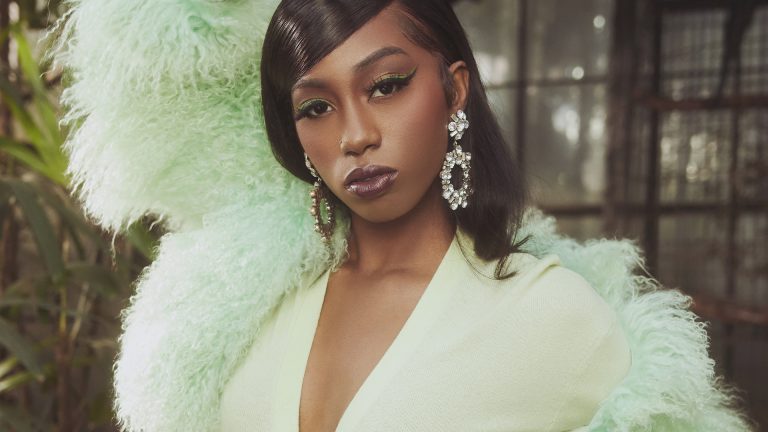
A subtle assortment of styles swirl together in the music of Lous and the Yakuza, the stage name of Marie Pierra-Kakoma. Across her first three singles, Pierra-Kakoma leans into snappy, minimalistic R&B (“Dilemme), slinky, melodic trap (“Tout est gore”), and nuanced, introspective pop (“Solo”), all of which she sings in French with equal parts age-old poise and modern swagger.

Having penned her very first songs at the same time as she learned how to read and write—around age 6 or 7—Pierra-Kakoma found her calling early on and hasn’t doubted herself since. “I started writing and never really stopped. I was writing until my wrist hurt, but now I’m more relaxed about it,” she said to For the Record.

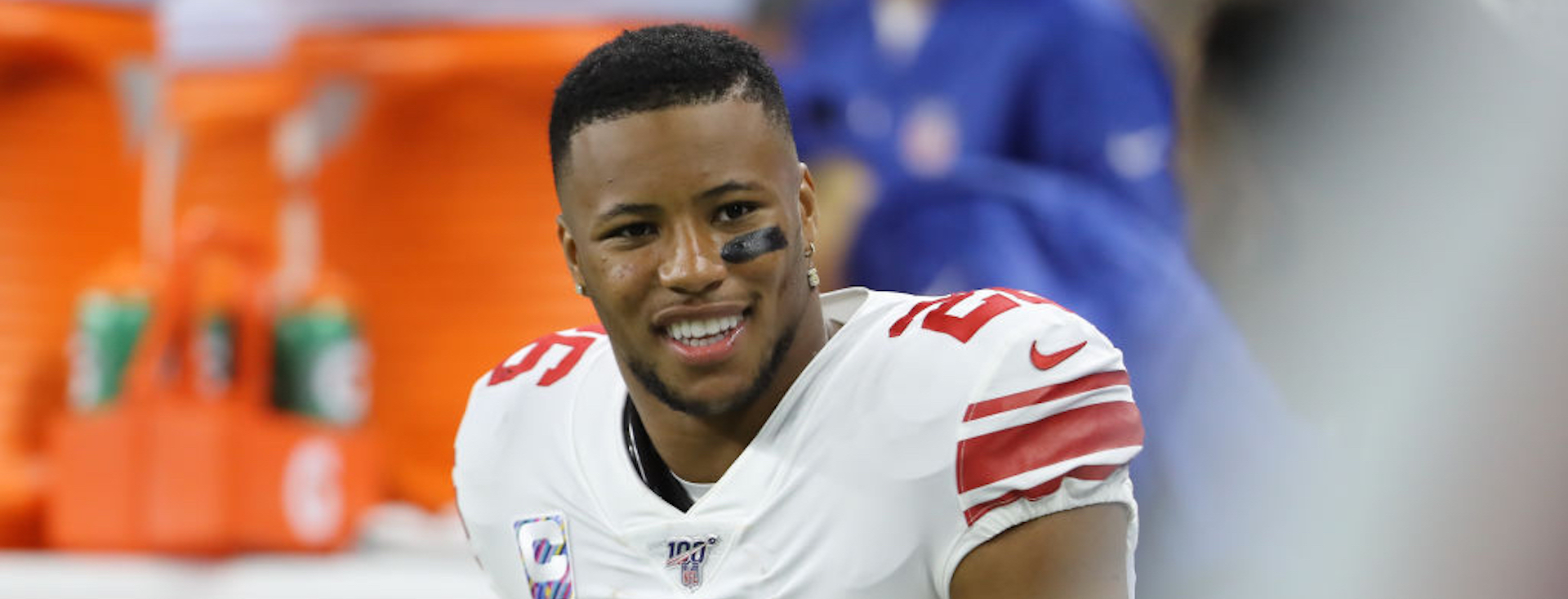
NFL Star Saquon Barkley Talks Football and His Top Sports Podcasts

Saquon Barkley knows football. Thanks to his success on and off the field, he’s become a household name—and personality—in both collegiate and professional football. He’s also expanding his talents to other areas by partnering with Spotify to curate a playlist of his favorite football podcasts. Now you can be as in the know as he is, and just in time for the season to start.

Saquon spent three seasons as an All-American running back for the Penn State Nittany Lions, breaking records and garnering acclaim as one of college football’s most promising athletes. More recently, he was chosen second overall by the New York Giants in the 2018 NFL draft, where he was awarded Offensive Rookie of the Year in 2019.

Now Saquon is hooking up fans with all the best football podcasts. We sat down with him to chat about streaming podcasts on the go, the teammate he thinks should host his own talk show, and more.

During the course of a season you’re constantly on the move. How do you keep up with the latest news around the league?

I used to be able to watch TV and listen to a few radio shows, but we’re on the go so much that plugging in a podcast is the most efficient way. I need a source that allows me the flexibility to choose when I can tune in, and podcasts allow me to do that. I usually don’t have the opportunity to listen live, so being able to go back to recorded episodes that I can catch up on at home, in the car, heading to practice, or traveling for away games is great.

Why should die-hard football fans try podcasts?

I think we’re in the infancy of podcasting, and it’s only going to gain popularity. It’s another form of information, and if you’re a die-hard fan, why wouldn’t you want more? Football shows are great for getting broad stats, updates, and news, but what’s cool about podcasts is that if you’re really into fantasy or a certain topic, there’s usually a niche podcast out there that you can find and really familiarize yourself with.

What are your favorite football or sports podcasts to listen to, and why?

I love Pardon My Take. Any time you get different opinions I like to hear both sides, and I enjoy the arguing. Also, The Pat McAfee Show 2.0 is hilarious. I think he’s great. He’s got an interesting perspective because he played football. He understands the game and also has an amazing personality. It’s a great combination.

Which of your teammates do you think should have his own podcast? Why?

Sterling Shepherd. He’s hilarious. I think it would be nonstop laughs. 

What non-football podcasts do you listen to?

The Brilliantly Dumb Show. Robby Berger is amazing. In his podcast he covers sports but also goes beyond to share funny stories and experiences he has encountered in everyday life. One of my favorite episodes is episode 31, “Bobby Baseline and the Hardwood Boys.” Gives an amazing description of when we first met. It had me dying, he’s so funny.

What’s your go-to jam to get in the right headspace before a big game?

Anything Drake really, he always gets me in my bag. 

Stream Saquon’s playlist for a podcast touchdown.

How the Story Pirates Team Uses Kids’ Imaginations to Create Audio Magic

What happens when you take story ideas straight from a child’s imagination and put them in the hands of some equally creative, fun-loving, musically inclined adults? You get Story Pirates—a children’s media company turned podcast with stories by kids, for kids.

According to creative director Lee Overtree and CEO Benjamin Salka (a.k.a. Jamie), Story Pirates started off performing children-inspired musicals in schools and theaters as a live touring group in 2004 and eventually evolved into a radio show, bringing heartwarming and engaging stories to even more listeners. More recently, the company transitioned into a podcast that has spawned several music albums.

So how does it work? Youngsters from all over the world submit their ideas to the Story Pirates website, then the creative team (comprised of world-class actors, comedians, improvisors, and musicians) selects and adapts them into podcast episodes filled with sketch comedy and musical theater. Episodes even have special celebrity guests each week.

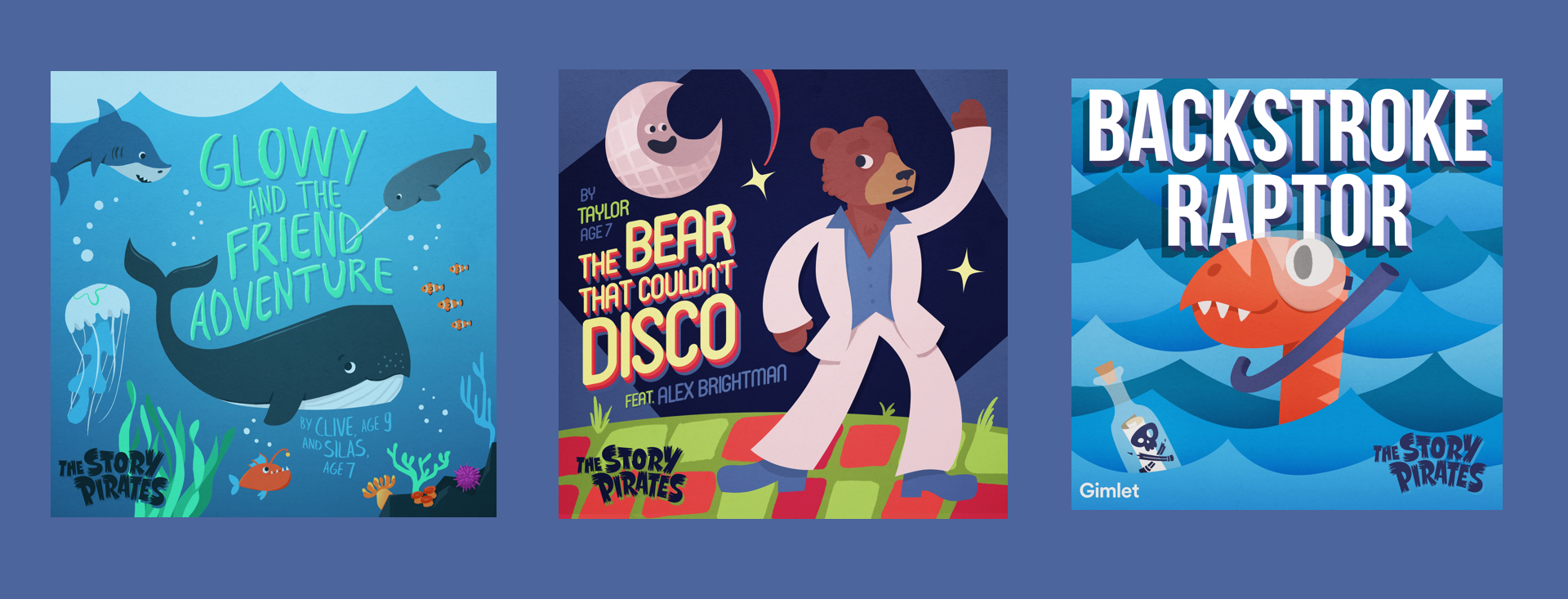
Kids (and parents!) love the original songs sprinkled throughout the show. So, to give fans more of what they love, Story Pirates released two albums—Backstroke Raptor and Nothing Is Impossible—which take the best songs and remix them into standalone versions that are easy to find and play in album format on Spotify.

We sat down with Lee and Jamie to talk about what makes the Story Pirates podcast and albums such a beloved phenomenon.

What do you think it is about podcasts that makes them a great storytelling medium for kids?

Lee: Well, audio amplifies imagination, right? It allows the listener to engage in a way that a visual medium doesn’t. You have to be involved, and for kids who are eager to live in a participatory world, a medium like podcasting is very natural for them.

What’s the most surprising thing you’ve learned since embarking on this podcast and album journey?

Jamie: The thing that surprised me most is just how authentically people are responding to what we’re putting out there. Story Pirates has been a slow, steady build—the live show started in 2004. But the last couple of years have been astronomical in terms of the growth. We hear from people who drove eight hours to see us in person or even flew in from Australia. I think it’s because families are responding to what’s different about what we’re doing. I think it feels more playful, more connected, and more joyful than what they expected.

How do you differentiate between the albums and podcast?

Jamie: One of the things people love so much about our podcast is the music. But the podcast runs anywhere between 22 minutes and a half hour, and the songs are wrapped up in the whole show. So if you get obsessed [with a song], you have to rewind and fast-forward to find your favorite part, whereas with the album, you just get right to it.

Lee: The albums that we put out through Gimlet are the best songs from the podcast remixed and remastered. So most of the songs on the album are ones you’ve heard in a different form on the podcast. For example, Lin-Manuel Miranda wasn’t on the podcast version of “The Wizard Who Could Just Go Poof,” but he was on the album version.

Speaking of Lin-Manuel, who are some of the other guests that you’ve had on the show, and who are your favorites that you’ve worked with so far?

Lee: We’ve been really lucky, and it’s sort of gone from us reaching out to our contacts in the comedy community to people reaching out to ask to be on the show because their kids listen. We’ve had lots of great people, like John Oliver, Claire Danes, Dax Shephard, and David Schwimmer. And we have some more really exciting guests coming soon.

6 Questions (And Answers) with Mia Nygren, Managing Director, Spotify Latin America

Artists who emerge in Latin America often catch fire around the Spanish-speaking world—and beyond—thanks to streaming (just look at “Despacito”). In the six years since Spotify’s launch in the region, Latin America has quickly become one of Spotify’s fastest-growing music and podcast markets. 

We sat down with Mia Nygren, our Managing Director of Latin America, to learn how streaming spread so rapidly throughout the region, transformed its music industry, and then began to influence the rest of the world. 

Tell us about your professional background, particularly your work in the music industry prior to joining Spotify. How did that prepare you for your current role?

I have seen and been a part of the massive transformation that the music marketplace has experienced in the past 20 years. After university, my first job as a market research consultant for Nordic internet companies brought me to Spain. Then in 2001, I joined a Swedish mobile music creator and distributor of ringtones. It was pretty clear that the technology would improve with time and that labels and publishers would enter the space. From there, I went to Universal Music Group (Spain and Portugal) in 2003 and lived through the sharp decline in physical sales and the consistent growth in digital distribution. After nine years at the label, I moved back to my hometown, Stockholm, to join Spotify.

My time at Universal was invaluable in so many ways, but was particularly helpful at first in driving the Spotify business forward through partnerships with labels—my primary responsibility as Business Development Director in Europe. Moving into my current role, a deep understanding of the music industry and how to identify innovative growth opportunities through content was also key—especially in a part of the world where music consumption is through the roof.  

TV Personality Charlotte Roche and Husband Hash Out Relationship in New Spotify Podcast

Charlotte Roche has been a permanent fixture of German media since she was 18, when she first appeared as a host on music video channel VIVA. She became an international sensation in 2008 after publishing her taboo-smashing semi-autobiographical novel Feuchtgebiete (Wetlands). A global best seller, the book cemented Charlotte as a feminist set on testing—and breaking—barriers of all kinds. Now she’s continuing that work on her new Spotify original podcast Paardiologie.

The show is essentially a couple’s therapy session featuring Charlotte (an open book when it comes to her private life) and her husband Martin Keß (it’s difficult to even find an image of him on the Internet). Despite Martin’s meticulous desire for privacy, few topics in the show are off-limits, and every conversation, often heated, is unplanned. 

Just after the release of the fourth episode of Paardiologie, Charlotte spoke with For the Record about what we can expect from her intimate marital conversations—and how listeners of all kinds can relate. 

You’ve worked in other media, like TV and print, and pushed the boundaries of what you can say in both—how does podcasting compare?

I tried to express myself freely on TV, but it was very difficult due to the censors. I thought writing books would provide more freedom, which it did. But now, even in comparison to writing, I feel what my husband and I can do in the podcast is absolute freedom—it’s amazing.

What inspired you to create this podcast at this particular time?

I’d been thinking about doing a podcast for a year or so. The ideas everybody else had were to put me together with younger feminists. I felt there wouldn’t be enough to discuss there because I would agree too much with the young feminists for a podcast to be interesting.

I was wondering with a friend on the phone, “Who in the whole world could I ask to do a podcast with me?” and just joked that my husband probably would be best. We laughed but, as often is the case with jokes, there was a spark of truth in there. I thought about it for a few minutes, ran to my husband, and asked if he would do a podcast for Spotify and talk about our relationship, our love, therapy, and sexuality. He had lots of reasons to say no, but he said yes.

Your first novel, Feuchtgebiete, explored several provocative themes, from relationships with one’s parents to overcoming taboo concepts. How do the topics you explore in the podcast compare? What can listeners expect?

Yes, in my books I fight against taboos concerning the body and sexuality. And I think taboos are not good for human beings—they are normal human things, and that’s exactly the same approach we take with our podcast.

If people would communicate, especially about the negative aspects and tiring aspects of relationships, they wouldn’t feel so alone and wouldn’t have to solve their problems on their own. And that’s why we’re doing the podcast—to reach out and build bridges to other people by talking about all the challenging stuff in relationships, about aggression, cheating on your partner, lying, and addiction.

How do you and Martin prepare discussion topics for an episode? Are any subjects off-limits?

In the weeks before we started the podcast, when we discussed something financial or sexual, or about how to train the dog, we’d get into a really bad fight. So we decided we wanted it to be completely freestyle and open, reacting to what the other person says in the podcast and not discussing anything before. Since then, we’ve had to tell ourselves to stop and keep the discussion fresh for the podcast.

The only off-limits topic would be intimate details about our children. We asked our two teenage kids, both 16 years old (we each have a child from previous relationships), if they’d allow us to talk about the family in public, and they said yes. But we don’t share their intimate teenage problems that we discuss at home. For example, we ask the kids, “Is it ok if we talk on the podcast about pocket money?” and they can say yes or no.

What aspect of your relationship with Martin do you think listeners of any age, anywhere, will be able to relate to the most?

I think the one thing in our relationship people will be able to relate to most is that they can hear and feel us fighting for our love with every sentence we say. Because we’ve had extreme highs and lows (we nearly got divorced a few times), I hope people understand that you have to fight for love and you have to work in a relationship to keep it. It’s like a plant: You have to feed it, water it, check the leaves sometimes, and let some light in—otherwise it will die.

Before we go, let’s talk music. What kind of music inspired you in your VIVA days, and which artists inspire or excite you now?

I had an independent rock show on VIVA, and we also aired hip-hop and music from several other styles. I did that for seven or eight years on a daily basis and was very proud that we could show music videos from artists nobody else seemed to play in the whole world. But now I’ve actually changed into a complete charts maniac. I love listening to Beyoncé and Rihanna and stuff like that—extremely female-empowering Boom Bam Bam Boom charts music. This is more like “stop listening with your brain and start listening with your guts” music.

Listen to the latest episode of Paardiologie here.

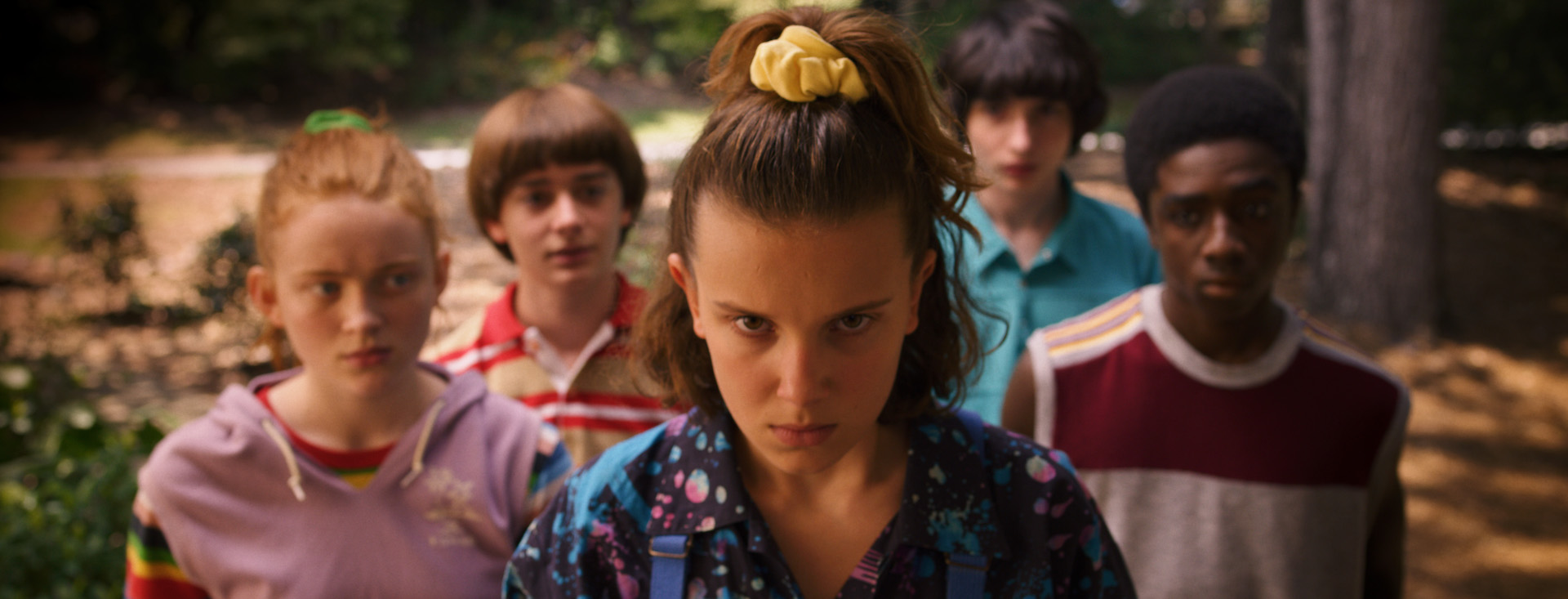
The Upside Down of Stranger Things Streaming with Actor Finn Wolfhard

When facing a demonic energy-feeding monster of unknown origin in its cold underground world, it’s best to hum The Clash. Or at least, that’s what the characters of Netflix’s Stranger Things do.

Since July 16, 2016, listeners have spent more than 17 million hours listening to music related to the show on Spotify—and yes, that includes the thematic “Should I Stay or Should I Go?” which increased 30% globally after Stranger Things premiered on July 15, 2016, compared to the two weeks before.  

The series, a true tribute to ‘80s classics, features plenty other beloved songs from the era, including Toto’s “Africa,” DEVO’s “Whip It,” and Cyndi Lauper’s “Time After Time.” Fans were quick to jump on these themes in their user-generated playlists, which include the above artists as well as The Police, New Order, and Joy Division in large numbers. 

In all, listeners have also created more than 3,500 Upside Down-themed playlists, listened to 4.6 thousand hours worth of Stranger Things podcasts (the top being The Stranger Things Podcast by Addi and Darrell Darnell), and created playlists based on the show’s characters. 

Ahead of the July 4 release of season three, For the Record talked to Stranger Things star Finn Wolfhard, who plays team ringleader Mike Wheeler, about his own take on the music from the show.

Besides being an actor, you’re the lead vocalist and guitarist for the rock band Calpurnia. Would Mike ever join a rock band? What would he play?

I don’t think Mike listens to much music, but through his dad Ted, he gets a monster dose of Perry Como, and maybe some Beach Boys when Ted cracks a cold one. I just don’t see Mike ever being in a band, but he might play around with a synth to provide soundtrack music for home movies.

How does being a musician influence your work as an actor and vice versa? When you’re making music/getting into character, what are the similarities or differences in the process?

I have a set routine that involves listening to particular songs on my way to set, and then again when I am finished work and driving home. I usually wear headphones, so this really sucks for my parents, who have to drive their silent boy home. But they get that I need this as part of my process. They know that I would go insane without it. When I make music, I often watch movies for inspiration, but I don’t think that’s come through in any songs yet—at least not released ones.

The soundtrack to Stranger Things is filled with 80’s jams. Were you a fan of the genre before working on the show? How has your listening habits changed since playing a tween in the ‘80s?

My parents introduced me to a lot of different types of music, including music from the ‘80s, and especially new wave stuff. I think the show has made me love it even more, and the ST3 (Stranger Things 3) soundtrack, supervised by Nora Felder, is incredible. She found a song my dad knows well [from that period] that still has less than 1000 listens on Spotify, yet it kills where it’s used in the show. 

Anyway, for the last couple of years, I have definitely been more indie rock driven. I don’t listen much to anything that’s too polished because it just sounds fake to me. 

Between Stranger Things and It, you’ve spent a lot of time being in the world of the ‘80s. What modern music—if any—do you listen to?

Check out my playlist for the answer to this one. My ST3 list is made up of ‘80s and ‘70s songs and a lot of modern songs that I listen to on the way to and from set.  

If you could go back in time to any time period, what would it be?

Early 1970s, because I like the style and the music and films.

Any podcasts you love listening to?

H3 with Ethan and Hila and If I Were You with Jake and Amir.

You competed on lip sync battle against your cast members. But what would be your go-to karaoke song?

Sabotage by the Beasties.

Stream Finn’s playlist for his favorite songs from the ‘70’s to now. Also check out our Stranger Things playlist, based on and inspired by music from the show.

Header image courtesy of Netflix

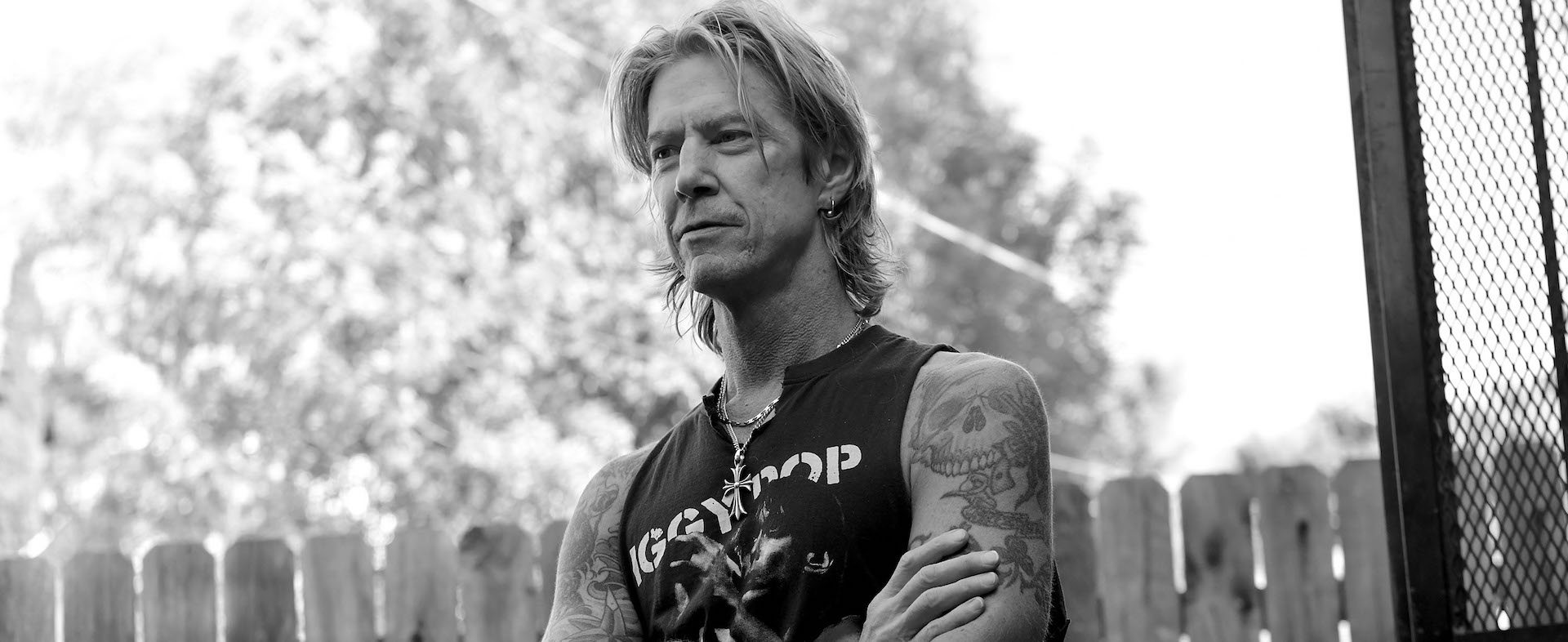
Guns N’ Roses Bassist Duff McKagan Sings a Message of Hope

Guns N’ Roses bassist Duff McKagan has spent three decades touring the globe, playing for tens of thousands of fans at a clip. But he’s always set aside time to explore, observe, and learn about the people for whom he’s strumming his strings. Their stories, situations, and struggles have often been the subjects of Duff’s articles for Seattle Weekly and ESPN.com, as well as two nonfiction books. His new solo album, Tenderness, is perhaps his most cathartic—yet hopeful—analysis of the world’s ills to date.

We caught up with Duff at Thalia Hall in Chicago a couple hours before his concert in support of Tenderness. He spoke about his writing process, artists who inspire him, the podcasts that keep him in good mental and physical shape—and the new Guns N’ Roses album in the works.

What inspired you to start writing Tenderness and to explore the topics that you do? Why this particular album now?

In late 2015, Axl, Slash, and I were getting back together and having talks and really clearing the air. We went out on tour, and I was at this intellectual ease when I turned off all the news.

Instead, I read a lot of history. I went and visited the places I read about —  such as Monticello, for example, or went with the airboat guy to see alligators. I talked to people and made observations.

I was going to write a third book about all of the noise and divisiveness in the news, and how we’re in the infancy of social media, and we have to find a better way to interact with each other. I started writing these little vignettes that eventually became songs. The album presents an overarching theme of hope, and I was careful not to point fingers since there’s enough of that going on. We’re all on the same team. It’s about us having each other’s backs and making positive change, and this little record is my attempt at illustrating that.

So what’s one thing people should know about Tenderness before listening to it?

Open your mind and take the journey. It’s a story of us, not me.

We know how ’60s and ’70s social consciousness played out in the music of the day. Are you seeing something similar now?

Some people just never stop doing it. Like Bruce Springsteen or Willie Nelson. Rock ’n’ roll has always been about rebellion. It’s beautiful, it’s love songs, it’s songs of anger, it’s all of those things.

We’re all on the same team. It’s about us having each other’s backs and making positive change, and this little record is my attempt at illustrating that.

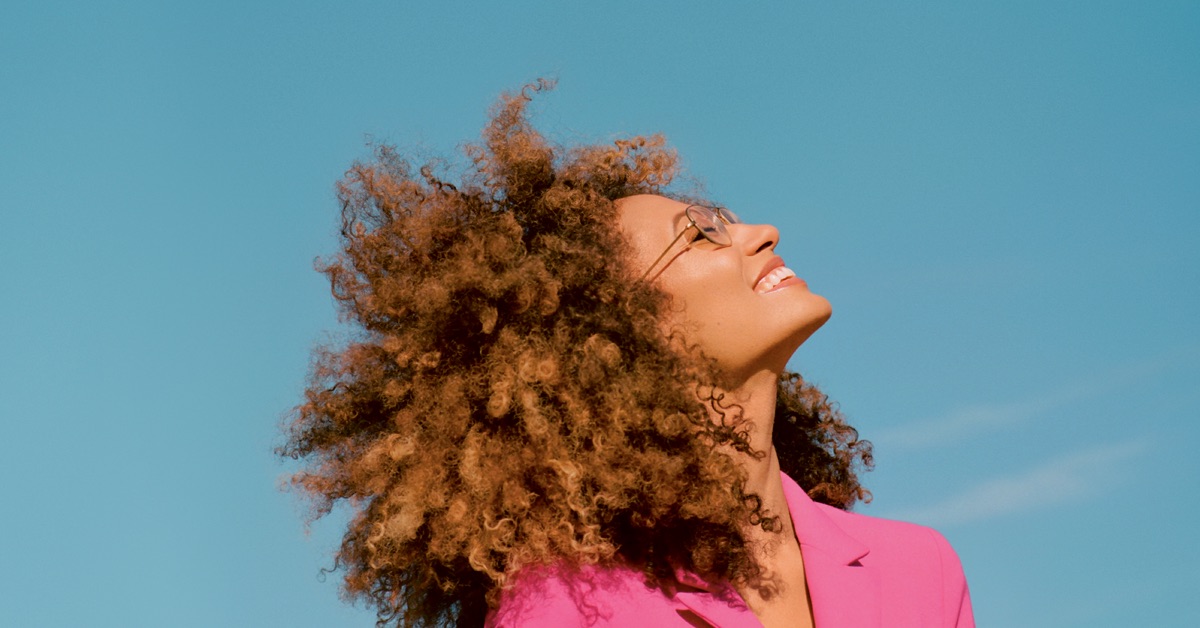
Fashion Force Elaine Welteroth Says You’re ‘More Than Enough’

You may know Elaine Welteroth from her time as editor-in-chief of Teen Vogue or, more recently, as a judge on Project Runway. The youngest Editor-in-Chief ever appointed in Condé Nast history in 2017, she’s well-known as a groundbreaking 32-year-old journalist and editor. But you can also refer to her as her lesser-known, unofficial title: Karaoke Queen.

We sat down with Welteroth—the first African American to hold the post of beauty and health director at a Condé Nast publication—to learn a bit about her role on Project Runway, the music she loves writing to, and how she hopes to inspire young women with her upcoming memoir, More Than Enough.

Oh, and her go-to Karaoke song? SWV’sWeak.” Though as you’ll read below, she’s anything but.

This week is a big one for you: Your book More Than Enough is being released and it’s the season finale of Project Runway. What has been the best part of the season?

The best part has been working alongside people that I just adore and respect. Karlie, Brandon, Nina, and Christian—I’ve learned a lot from each of them. And then of course I love being able to nurture the designers. I got really invested in all of them and ended up crying more times than I thought I would.

What are you looking forward to bringing into the next season of Project Runway?

I think what I’ll continue to bring into next season is some degree of social consciousness, trying to contextualize their work as it relates to what is happening in the world and how fashion can be a platform for speaking about issues that matter to you. My goal is to continue to push the conversations so that they are not just about the fabrication and about the colorways and about the designs, but really about what it means to be a designer and an artist at a time like this.

What was your musical upbringing like? How do you discover music now?

I grew up in a very musical family. My mom is a gospel singer, my dad is a rock guitarist, and my brother is a punk rocker, so my house was filled with music discovery. It was like the original Spotify. In one room you would have gospel, and in one room you have Rancid or Green Day, and in another you have Eric Clapton. I was all about Erykah Badu, Mariah Carey—more Top 40s, R&B, and pop music.

Now I’m engaged to a musician who has exposed me to a lot of different types of music that I probably wouldn’t listen to otherwise. One of the most recent discoveries from him has been Maggie Rogers. I am completely obsessed with her.

Do you have any other favorite young artists whose music and lyrics are really resonating right now?

Lizzo is killing it. I think she captures the spirit of this generation, and is the kind of disruptive, unapologetic, outspoken pop star we need. I love that she’s coming here to just break out of every box that women have been put in. She’s like, “I am who I am. I am expansive and I can do it all. You’re going to watch me and you’re going to love it.”

What do you listen to while writing?

Through Spotify, I discovered different types of jazz music that help me focus while I’m working. As a writer, I can’t really listen to any music that has lyrics—you wind up writing what you’re listening to, or you start singing along and you can’t think of words.

I wrote my memoir while listening to binaural beats, which is really, really relaxing and puts you in this really focused, creative mindset.

Can you tell us a little bit about the types of songs on the playlist you’re making to accompany More Than Enough?

It’s curated to evoke the emotions that the chapters take you through. I want people to listen to it while they read the book, because I think that sensorial experience will be incredible. The playlist as a whole captures the emotional journey that this book takes you on. It’s filled with highs and lows and surprises along the way. But ultimately, it ends on a really triumphant note.

There’s a lot of gospel influence because, like I said, I grew up in a household filled with gospel music. It was really important to carry that sort of thread throughout the playlist. I have the modern interpretations of that too, with Chance the Rapper.

There’s also a lot of ’90s classic R&B music. I especially love Mariah Carey. Growing up as a biracial girl, Mariah Carey was my mixed-race icon. She was the only celebrity I ever saw that I could relate to in terms of racial identity—she had curly hair, she had brown skin—she was in-between worlds in the way that I was.

I hope that in the end, you put down the book and you end the playlist sort of just feeling good. Feeling good in your own skin.

Why was it important to you to spread the message that your readers are “more than enough?”

We live in a world that tells women we are not enough. And we’ve internalized these messages over time or throughout conditioning over generations. We are made to feel like we are not beautiful enough, not smart enough, not woke enough, and not successful enough.

I want this book to be a reminder—a mantra—that pushes back against all of those messages internally and externally. Because the reality is, you can experience that liberated, empowered sense of being more than enough even when you are a work in progress. The goal is not perfection; the goal is to continue to chase the biggest, most expansive version of who you are and to be bold enough to walk away from anything that threatens to hold you back.

Pick up a copy of Elaine’s new memoir, More Than Enough, out today. And don’t forget to stream the playlist soundtrack that chronicles her incredible journey.