

Tag: genre

These Music Trends Took 2025 in Surprising New Directions

Spotify Wrapped is back, and as always, it’s powered by the billions of streams that fans around the world delivered throughout the year. From the artists who dominated the charts to the unexpected tracks that found a home in playlists everywhere, Wrapped is shaped entirely by how our listeners hit play.

In 2025, music fans made bold choices. They pushed familiar names to new heights, championed emerging voices, and turned niche sounds into global movements. Pop, K-Pop, and country surged; cross-genre collaborations flourished; and a booming live landscape with a touch of social momentum shaped what broke through. What rose to the top wasn’t just a reflection of popularity, it was a reflection of passion.

To explore the biggest shifts in sound and the global fandoms behind them, we sat down with Ronny Ho, Head of Dance & Electronic Development, and James Foley, Lead of Global Editorial Strategy, both of whom are on Spotify’s music editorial team, for a look inside the data and trends that defined 2025.

Let’s start with a surprise. Which 2025 music trend caught you off guard the most this year?

Ronny: It’s not necessarily a 2025 trend, but I’m pleasantly surprised by the globalization of K-Pop this year. We couldn’t ignore the impact of K-Pop Demon Hunters, putting groups like HUNTR/X and Saja Boys at the forefront of pop music culture. Although fictional, they’re represented by real artists from around the world, including South Korea and the U.S. In addition to the aforementioned K-Pop Demon Hunters, KATSEYE, another group that became popular from a TV show, skyrocketed to stardom in 2025 and recently kicked off their headline tour. 

James: The continued growth of Afrobeats isn’t surprising, but perhaps the ways in which it now permeates global music has caught many unawares. This year has seen it morph further out of its West African roots into a staple of mainstream culture—the sonics are being adopted by other genres and places, further accelerating its reach. It’s now firmly part of mainstream pop and rap in North America and Europe. Notably especially is the cross-pollination happening with Latin artists such Kapo and Beéle, who interpret Afrobeats through their own lens while collaborating with some of the mainstays of the genre.To that end, our ever-growing Afro-Ritmo playlist spotlights Latin-African fusions, and Global Afrobeats gives you a true sense of this amazing global cultural shift.

We saw several new genres and microscenes pick up steam in 2025. Which ones stood out, and why do you think they resonated with listeners?

James: There’s something very gratifying to witness in the remarkable rise of Copenhagen’s alternative pop scene. It’s a perfect storm of a generation of super-talented independent artistsErika De Casier, Smerz, and Astrid Sonne to name a fewthe real life spaces and institutions in the city which have nurtured and supported musical innovation and collaboration, and a supportive industry infrastructure. Why has it resonated? The music is this fearless blend of trippy, left-field, sometimes experimental textures while retaining an accessible edge. On paper it’s incongruous, but in your ears, it’s just incredible. Hear for yourself on our Cph+ playlist.

Ronny: Rock is continuing to have its moment, especially influencing country music. This new wave of country rock is about the return of rock bands to the mainstream country sound, with groups like Treaty Oak Revival and Ole 60 growing massive fan bases in just a few short years. This is the next step in the expansion of the country genre, growing from the acoustic homegrown-y Zach Bryan arm of the genre but incorporating heavier production. Think big guitar and drum sounds over more mainstream country lyrics and imagery. You can get a taste of it on our newly launched GRAVEL playlist.

I’ve been noticing a wave of heart-on-sleeve pop taking over Spotify lately—the kind that feels pulled straight from a rom-com’s big montage moment. Artists like Olivia Dean, who has seven songs on the Global Chart, Role Model, Alex Warren, and Sombr are leading the way with songs that are emotionally direct and impossible not to feel. It’s romantic pop at its purest: earnest, catchy, a little self-aware, and perfect for anyone who wants life to sound a bit like falling in love on-screen.

On a personal note, what was your favorite music trend of the year? You know, the one you couldn’t stop listening to?

Ronny: I love that U.K. garage has properly crossed over in the U.S. this year! Speed garage was amongst the fastest-growing subgenres in music this year, and that’s thanks, in part, to the internet. Artists such as Sammy Virji and Girls Don’t Sync have added a modern touch to garage while paying homage to the classic sound. When I’m not out raving, I love listening to the emerging R&B artists coming from the U.K. If you’re not on the kwn train yet, it’s time to get on!

James: The surge and increasing international resonance of talent out of Ireland has been my favorite trend. There’s been a lot on repeat—the heartbreaking and hilarious CMAT on her album EURO-COUNTRY; KNEECAP’s bilingual rap, which is laced with humor and political intention; and hard-hitting, sophisticated bangers from KETTAMA. Irish artists in all their diversity are on a roll. Their music is connecting in ever more corners of the world and personally I couldn’t be happier about it!

We know social media is a discovery engine. In 2025, how did social platforms shape music trends?

Ronny: Social platforms continue to blur the lines of what it means to be regional. Artists are finding fans all around the world and genres are crossing borders faster than ever. As James mentioned, sub-Saharan Africa continues to showcase its cultural impact, with Afrobeats merging with Latin sounds and Afro house instrumentation weaved into pop and dance production. 

We also saw the revival of trip-hop as nostalgia continues to play a massive part in culture today. Trip-hop was the soundtrack of the mid-’90s, built on smoky vocals and hip-hop–leaning beats from icons like Portishead and Sneaker Pimps. Today, we’re hearing it everywhere, from the lush, atmospheric textures of FKA twigs and PinkPantheress to the glossy downtempo R&B of Oklou. Even Addison Rae’s brand of moody pop traces back to the genre. I recommend exploring our Deep Dive: Trip-Hop Revival playlist.

Looking ahead, are there any early signs or shifts that could hint at what’s coming in 2026? Any bold predictions?

James: Connecting the dots on what our editors are seeing and hearing around the world, it’s clear that artists have many more exciting moments ahead. This momentum is driven by a new generation of truly borderless listeners who don’t care about long-held boundaries of language or location. Specifically, I think we’ll see more Asian artists breaking through globally across a broader mix of styles and sounds. You can already see hints of this in the international reception for artists like Japanese rapper Yuki Chiba and Indonesian indie soul band Thee Marloes.

Ronny: Every year, we see harder, more aggressive sounds gain popularity and I predict that in 2026, it will infiltrate the mainstream. Whether it’s gabber, rage rap, country rock, Latin trap, or punk, we’re seeing communities galvanize online as much as they are in real life. 

Explore your personalized 2025 Wrapped and learn more about this year’s campaign and experience on our 2025 Wrapped hub.

Cumbia Takes Center Stage as Spotify Celebrates Argentina’s Most-Listened-To Genre

Cumbia has long been woven into daily life in Argentina, and its popularity on Spotify continues to grow. The genre now stands as the country’s most-streamed sound, with Buenos Aires leading the world in cumbia listening.

Since 2020, local cumbia streams have surged by 237%, outpacing other popular Latin genres like reggaetón (+79%) and bachata (+155%). In 2023, cumbia grew another 73%, led by Ke Personajes becoming the first cumbia act to top the country’s most-streamed artist list. The momentum continued in 2024 with an additional 15% increase.

Today, 7 out of 10 Spotify users in Buenos Aires listen to cumbia. Midday is the genre’s peak listening time, often providing the backdrop for the city’s signature “asadito cumbiero,” an informal barbecue gathering with friends and family. Streams also spike in December, when cumbia becomes the soundtrack to Argentina’s holiday season.

A sound that keeps evolving

Cumbia’s journey in Argentina is a story of reinvention. In the 1980s and ’90s, tropical and santafesina styles flourished with Los Palmeras, Grupo Sombras, Los Charros, Antonio Ríos, and Gilda.

The 2000s saw the rise of cumbia villera (Pablo Lescano’s Flor De Piedra, Damas Gratis, Los Pibes Chorros, Mala Fama, Yerba Brava) and a melodic wave from Karina, El Polaco, and Grupo Play.

The 2010s and beyond brought viral dances, cumbia turra, and today’s Cumbia 420 and genre crossovers—think L-Gante, La Joaqui, DJ Tao, and Cazzu blending cumbia with trap and reggaetón.

Today’s cumbia soundtrack

Cumbia now dominates both playlists and charts. In 2025, some of the most-streamed cumbia tracks in Argentina include:

    1. Amor de Vago” by La T y La M and Malandro
    2. Piel” by Ke Personajes and Tiago PZK
    3. Conmigo Te Gustó” by Pinky SD, Un Poco de Ruido, and Uriel Lozano
    4. Perdonarte, ¿Para Qué?” by Emilia and Los Ángeles Azules
    5. Un Besito Más” by Diel Paris and Salastkbron

Celebrating at Casa Spotify

To mark cumbia’s rise as Argentina’s most-listened-to genre, Spotify hosted three events at Casa Spotify in Buenos Aires:

Check out photos from the events below, and stream Damas Gratis’ live session on Spotify.

Culture Through Conversations: How Comments and Livestreams Rewired Afrobeats

In the stillness of a lockdown caused by a global pandemic, Afrobeats did not stall. It recalibrated. Deprived of dance floors and festival stages, the genre’s pulse migrated online, where fans, artists, producers, and critics began talking to one another in public, sometimes all at once. What followed wasn’t just a makeshift substitute for nightlife; it was a structural shift. The work of percussion, keys, and hooks was joined by something less tangible but just as propulsive: connection, vulnerability, and a sense of community.

Before 2020, the machinery around Afrobeats looked familiar: label-led rollouts, press tours, blockbuster collaborations, and the occasional crossover hit shaping a tidy narrative arc. Fans consumed, reacted, and queued for the next show. Then the lights went out, and the comment section became the venue.

A genre reborn online

Social platforms became makeshift town halls where the gatekeepers’ grips loosened. Fans debated sequencing and sound design, argued about lineage and influence, and put artists and executives on the spot in real time. Communities including WeTalkSound and Afrobeats to the World convened listening parties and debriefs that doubled as A&R focus groups. The genre’s blend of West African rhythms with hip-hop, R&B, and dancehall didn’t change overnight, but the conversation around it did, becoming deeper, more granular, more personal.

That dialogue helped push introspective themes into the foreground. Mental health, ambition, heartbreak, and the anxieties of hustling through uncertainty threaded through early-pandemic releases. Omah Lay’sGet Layd” and Chike’sBoo of the Booless” became the kinds of records listeners dissected together, turning solitary headphone sessions into group therapy in the comments. In the absence of arenas, intimacy became an aesthetic.

The new tastemakers

As media circuits paused and stages stayed dark, a different class of tastemaker emerged: the commentator-curator with a camera, a mic, and a timeline. Fans organized online “battles,” including a widely watched face-off between Naeto C and M.I. Abaga, that weren’t just spectacles but canon-making exercises, collective memory in real time. Documenting these flashpoints, independent hosts and culture writers accrued influence by showing up, archiving, and arguing.

With proximity came fluency. Debates rarely stopped at “What’s the best song?” Listeners parsed production credits, streaming economics, and split sheets. The audience grew more informed and therefore more confident about what success should look like and who gets to define it.

Democratizing discovery

Streaming turned this energy into momentum. As discovery habits shifted decisively to digital platforms, fans could wander across regions, scenes, and moods at will. According to Spotify, Afrobeats listenership in Nigeria has grown by more than 4,000% since 2021, with tracks saved to libraries or added to personal playlists over 6 million times. The specific figures can be debated; the direction of travel cannot. Curated global playlists amplified word-of-mouth popularity, and word of mouth, newly supercharged by short-form video, could move a song across borders in days.

Rema’s “Calm Down” is the case study that has already hardened into lore. Its ascent began the way so many modern hits do: with fan-made clips and dance challenges that spread faster than any single press campaign could. The Selena Gomez remix widened the aperture, but the groundwork was laid by users who treated the song as a social object first and a chart entry second. In September 2023, “Calm Down” became the first track by an African artist to surpass 1 billion Spotify streams, and the International Federation of the Phonographic Industry later ranked the remix the world’s second-bestselling single of 2023. Today, it stands among the most-streamed Afrobeats songs with Gen Z listeners globally, proof that a captivated audience can carry a record far beyond its presumed limits.

From stans to a scene

In the past, stans used to be a genre’s tastemaker. Devotional fan bases, like Wizkid FC, shaped discourse and outcomes. But the gravitational center shifted in the 2020s. The internet’s buffet of playlists, mood mixes, and algorithmic rabbit holes nudged listeners from singular loyalty toward scene loyalty. This is reflected in Spotify’s Afrobeats playlist data, where the number of new playlists grew by an average of 41% year-on-year, and more than 200,000 playlists were made globally in 2023 alone. It’s an indicator that the thrill now often lies in discovery itself—a thread recommending a Port Harcourt crooner you’ve never heard of; a friend’s playlist that sneaks a Ghanaian drill track between two Lagos pop cuts.

That widening aperture has commercial and symbolic consequences. As listening diversified, so did the metrics that matter. In July 2020, the Billboard’s official UK Afrobeats chart launched. This was followed by the March 2022 launch of Billboard’s US Afrobeats Songs chart. These end points, the data-driven validation of a long-brewing groundswell, reflect what fans had already made true online. These dedicated charts provide tangible metrics for the genre’s commercial success, influencing investment decisions and the growth of an industry within the genre.  

The industry catches up

Labels and publicists have adjusted, if unevenly. Rollouts now assume that liftoff might happen on TikTok or in a Telegram group before a press release lands. Artists pop into their own comment sections, cohost listening sessions, or invite producers and critics onto livestreams to make the case for a track’s arrangement. The distance between studio and audience has compressed, and with it the timeline for feedback. Songs are no longer just marketed; they are workshopped in public.

If this new order dilutes some of the mystery around pop stardom, it also distributes power. Fans have become co-authors, amplifying, annotating, and sometimes course-correcting the story of Afrobeats as it unfolds.

What endures

The most durable change may be cultural rather than commercial. The pandemic years forced a kind of soul-searching that outlasted the emergency. Afrobeats emerged with a sturdier, more inclusive social architecture, a discourse built by people who gather around the music, trade stories through it, and carry it across oceans. The artists remain central, but the choruses around them have grown wiser, louder, and harder to ignore.

Afrobeats isn’t defined by stages or charts alone. It’s also the comment thread that turns a verse into a communal confession, the livestream where a producer breaks down a drum pattern for thousands, the group chat that persuades a skeptic to give a new EP a fair listen. As long as those conversations continue—curious, raucous, deeply invested—the music will keep traveling. Beat by beat, debate by debate, the genre that learned to thrive in the quiet has become one of the noisiest, most generative conversations in global pop.

Visit our full Afrobeats 2.0 experience on For the Record to discover more.

Spotify Brings Romantasy to Life With Our Dark and Mysterious Forbid-Inn Audiobooks Experience

From enemies-to-lovers banter to star-crossed soulmates battling curses, romantasy has taken over Spotify playlists thanks to Audiobooks in Premium. Blending the heart-racing tension of romance with the magic, danger, and wonder of fantasy worlds, this unique fusion has attracted a legion of loyal listeners who can’t get enough of the genre.

“Romantasy has absolutely exploded into a cultural phenomenon, largely driven by authors like Sarah J. Maas and Rebecca Yarros. Social media—particularly the BookTok community—has definitely contributed to this conversation,” says Spotify Audiobooks Editor Katie del Rosario. “But at the core of it, we think readers are really craving a lot of what romantasy delivers: intense, character-driven plots; stakes that feel like they really matter; empowered, complex female protagonists who hold real power; and romance that takes your breath away.”

Earlier this week, romantasy fans were invited to step into the Forbid-Inn as New York’s Bowery Hotel was transformed for two days into a romantasy-themed space, immersing visitors in the magical worlds of the books they love and blurring the lines between fiction and reality.

Inside the Forbid-Inn: A celebration of magic and storytelling

During the day, fans wandered through candlelit halls, velvet-draped lounges, and enchanted nooks, each space inspired by the worlds of their favorite audiobooks. At check-in, guests received ornate room keys and a single gold token to spend on one of three whimsical quests.

Some chose Drawn by Destiny, where artists sketched fantastical portraits infused with magical details. Others opted for Written in the Cards, a romantasy-themed card-reading that revealed their romantic archetype. And for the bold, The Marking Ritual offered intricate temporary tattoos worthy of any fantasy hero.

In the evening, the inn shifted into an intimate salon where guests mingled with authors, sipped themed cocktails, and enjoyed a surprise appearance from one of the genre’s most beloved storytellers, who shared behind-the-scenes insights into their creative process.

More than just an experience, the Forbid-Inn was a celebration of the stories, the voices, and the fans who’ve made romantasy a cultural phenomenon.

How South Africa’s Gen Zs Are Reshaping Maskandi Culture for a New Era

In South Africa, the rebirth and resurgence of the vibrant folk genre Maskandi has captured the attention of music fans, becoming the country’s fastest-growing sound on Spotify over the past two years.

Steeped in Zulu storytelling traditions, Maskandi has spanned generations and has typically resonated mostin rural parts of the country, including the KwaZulu-Natal province it originated from. But as artists fuse Maskandi’s sound with Amapiano, gospel, and hip-hop, urban Gen Zs are embracing the genre as a way to reclaim their heritage and express their cultural fluency. The result? A full-blown Maskandi renaissance, fueled by pride, experimentation, and authentic storytelling.

A genre reinvented for a new era

On Spotify, nearly half of Maskandi’s listeners are under 35, and many are gravitating to our Bhinca Nation playlist, which is the destination for the genre’s hottest hits. Averaging more than 2 million plays each month, the playlist has grown by more than 3,000% since 2022.

This growing spotlight has also translated into dramatic rises in streams for many of Maskandi’s biggest names:

  • Umafikizolo, Mshinwemali, and Sminofu have all seen their fusion-forward sounds resonate across demographics. Since 2023, their streams are up 897%, 495%, and 258%, respectively.
  • Genre torchbearers Inkos’yamagcokama and Mzukulu continue to lead with consistency, with their streams growing 86% and 79%, respectively.
  • Meanwhile, LIMIT NALA and MENZI MUSIC are quickly turning heads and generating buzz as newcomers to the scene.

These aren’t just stats—they’re signals. Listeners are hungry for music that’s both culturally grounded and globally fluent. More than just a streaming destination, Spotify is soundtracking a movement and reshaping what it means to be proudly Zulu in a hyperconnected world.

Capturing a generational shift

As Maskandi’s revival grows larger, we want to uplift artists and help them build deeper connections with loyal fans, while introducing them to new listeners around the world. That’s why we’ve kept an ear to the ground, and working with the Consumer Insights Agency, we recently commissioned an in-depth report uncovering the trends driving this movement.

Read on for the six key trends shaping the future of Maskandi, revealing how this age-old art form is being reinvented for a new generation.

Spotify Expands AI Playlist in Beta to Premium Listeners in 40+ New Markets

Playlists have always been at the heart of the Spotify experience. Since AI Playlist in beta launched last year, Premium users have used it to create millions of playlists, with the goal of finding music that fits any mood or moment.

Now we’re bringing this feature in English to Premium users in more than 40 new markets, including countries in Africa, Asia, Europe, and the Caribbean, helping even more users effortlessly turn their most creative ideas into playlists. 

Playlists on Spotify are great sources for discovery, fostering deeper relationships between artists and fans. AI Playlist does just that by bringing users another way to express themselves through the music they love. Just start with a simple idea like high-energy electropop that takes me to another world or “workout music to make my ex jealous.”

Here’s how it works: 

  • Go to Your Library and tap the “+” button at the top-right corner, then select “AI Playlist.” Or, head to the Search tab on Spotify and search “AI Playlist.” 
  • Then, select one of the suggested ideas or simply type your own.
  • Spotify will suggest songs for a personalized playlist made just for you based on the tracks, artists, genres, and more we think you’ll like. Have notes? It’s easy to revise and refine—just ask for what you want, like “more upbeat” or “happier songs.” 
    • Pro tip: The most successful playlists are generated through “genre,” “mood,” or “artist” requests. But animals, activities, movie characters, colors, and even emojis are all fair game too.
  • To get started, we suggest trying out: 
    • “Afrobeat tracks to heat up the dance floor”
    • “Trending K-Pop hits I need to know” 
    • “2000s reggaeton for soaking up the sun”
    • “Songs to hype me up for the football match” 
    • “Upbeat Latin songs from my top genre”
    • With AI Playlists in beta, we’re still actively learning and iterating with each exchange. We will continue to refine AI Playlist to best serve our listeners and bring the feature to even more users. 

Available markets as of April 24, 2025: Antigua and Barbuda, Australia, Bahamas, Barbados, Belize, Botswana, Burundi, Canada, Curaçao, Dominica, Eswatini, Fiji, Ghana, Grenada, Guyana, Ireland, Jamaica, Kenya, Kiribati, Lesotho, Liberia, Malawi, Malta, Marshall Islands, Namibia, Nauru, New Zealand Nigeria, Palau, Papua New Guinea, Philippines, Rwanda, Saint Kitts and Nevis, Saint Vincent and the Grenadines, Samoa, Sierra Leone, Singapore, South Africa, Solomon Islands, Tanzania, Tonga, Uganda, United Kingdom, United States, Vanuatu, Zambia, Zimbabwe.

Salsa’s Rhythmic Revival: A New Generation Discovers the Genre’s Timeless Appeal

Salsa is making a comeback, captivating new listeners with its infectious energy and compelling narratives. Spotify data underscores this trend, revealing a global surge in salsa streams of more than 140% over the past five years, with U.S. consumption nearly doubling.

What’s driving the resurgence? Look no further than Gen Z. Listeners aged 18 to 24 are now the second-largest demographic streaming salsa worldwide, demonstrating a clear embrace of its unique sound.

While mainstream stars like Bad Bunny and Rauw Alejandro have introduced salsa to wider audiences, artists like Christian Alicea, Luis Figueroa, Moa Rivera, Luis Vázquez, and Jonathan Moly are taking the music in new directions. They’re blending tradition with modern sounds, keeping salsa fresh and exciting.

Of course, the classics endure. Tracks like “Lloraras” by Dimensión Latina and Oscar D’León and “Ven Devórame Otra Vez” by Lalo Rodríguez continue to resonate with listeners, consistently ranking among the top-streamed salsa songs.

Salsa’s growing footprint

The genre’s rising popularity is evident across the U.S. In 2024, several cities experienced remarkable growth in salsa consumption on Spotify, including:

    • Reno, NV (124%)
    • Virginia Beach, VA (123%)
    • Midland, TX (114%)
    • Columbia, SC (102%)
    • Baltimore, MD (101%)

Top tracks and shared favorites

Here’s a glimpse into what listeners are currently enjoying on Spotify:

Most-streamed salsa songs (past year, globally)

    1. BAILE INoLVIDABLE” by Bad Bunny
    2. Lloraras” by Dimensión Latina and Oscar D’León
    3. Una Vida Pasada” by Camilo and Carin Leon
    4. Virgen” by Adolescent’s Orquesta
    5. Tu Con El” by Frankie Ruiz

Most-shared salsa songs (past year, globally)

    1. BAILE INoLVIDABLE” by Bad Bunny
    2. Tú Con Él” by Rauw Alejandro
    3. Oh Que Sera” by Willie Colón
    4. Vivir Mi Vida” by Marc Anthony
    5. Virgen” by Adolescent’s Orquesta

Take a dip into Spotify’s Salsa Nation playlist to discover the diverse sounds the genre has to offer, from classic anthems to contemporary hits.

Celebrate Five Years of Corridos Tumbados With Our New Spotify Single

Since the Mexican Revolution at the beginning of the 20th century, one particular style of music has served as a form of cultural storytelling for the Mexican people: the corrido. And while its popularity has endured, those accordion-laced ballads have evolved as modern influences began taking the genre in new and interesting directions.

Today, corridos tumbados are one of the most popular sounds under the Música Mexicana umbrella. Fusing trap and hip-hop with the traditional sounds of a corrido, a new wave of artists that includes Natanael Cano, Peso Pluma, Junior H, Fuerza Regida, and Eslabon Armado has been topping the global charts. And it was Natanael himself who gave the subgenre its name five years ago this month with the release of his album Corridos Tumbados under the Rancho Humilde record label.

“Corridos tumbados have transformed the vision of Mexican music and have connected with an unexpected audience globally. We had this idea since 2009, when we started Rancho Humilde,” said Jimmy Humilde, founder of Rancho Humilde. “For those of us who grew up between Mexican and American culture, we wanted to create something of our own, something that represented our identity. Today, thanks to this music, the new Mexican American generations are recovering Spanish, and our culture is more alive than ever. It was my dream, along with JB [José Becerra] and Roque Venegas.”

To celebrate this milestone anniversary, we’re releasing a new Spotify Single from Belinda, Kevin AMF, and Neton Vega. The trio teamed up to record an original song titled “Ni Fiestas, Ni Flores.”

While inspired by the sonic hallmarks of the earliest corridos tumbados, the track still carries a modern flair that you’d expect from three rising stars. Pop star Belinda only recently ventured into the world of corridos tumbados with hits like “Cactus” and “300 Noches.” Kevin AMF, meanwhile, is a young singer-songwriter known for fusing corridos tumbados with electro and dembow sounds. Last but not least, Neton Vega has made a name for himself as a producer of the genre. Together, these three Mexican artists offer a sense of the rich evolution of this sound and its impact on the industry.

“I love this new generation of Mexican music because it’s a generation unafraid to say what it thinks and what it feels,” said Belinda. “With this Spotify Single, we’re celebrating five years of corridos tumbados and building the future of this genre that is making history around the world.”

The rise of corridos tumbados

“Corridos tumbados were born in Los Angeles among a group of young artists who sought to express their experiences without disconnecting from their Mexican roots,” said Gerardo Mora, Senior Editor, Spotify Mexico. “But the genre has evolved a lot—today, it has become the anthem of a whole generation and a symbol for a community that identifies with its sound and its message.”

Let’s take a look at some of our top insights from the past five years of corridos tumbados.

Spotify has been proud to support Música Mexicana and its many flavors, including corridos. On our platform, fans can find a number of variant-specific playlists to explore the multifaceted genre. And last year, we teamed up with Fuerza Regida, Los Tucanes De Tijuana, and Eden Muñoz to release “La Tierra del Corrido,” a Spotify Single celebrating three generations of corridos artists.

Stream our Corridos Tumbados playlist to celebrate half a decade of the hit sound.

Our New Playlist juniper Cultivates a Space for the Next Generation of Folk Music

In every generation, folk music captures the hearts, minds, and souls of its listeners. From Bob Dylan and The Mamas & the Papas to Simon & Garfunkel, Leonard Cohen, and Tracy Chapman, the genre has maintained a strong and comforting presence throughout the ages, one that introduced a capacity for experimentation and innovation. The early 2000s showcased the works of Sufjan Stevens, Fleet Foxes, Sharon Van Etten, and Bon Iver. The 2010s saw the rise of The Lumineers and Mumford & Sons. Now listeners have Noah Kahan, Lizzy McAlpine, Joy Oladokun, and Searows

juniper is Spotify’s new home for budding and popular folk and acoustic songs from the latest crop of contemporary artists making the genre their own. It’s a space for handcrafted tracks that rise to the top through both organic cultural conversations and our Fresh Finds ecosystem. 

“While folk music has always maintained its presence, there is a fresh wave of relevance sweeping through Gen Z right now that is hard to ignore,” says Carla Turi, Editor, Folk & Acoustic Programming. “At the heart, folk is rooted in raw authenticity and storytelling, which feels vital in a post-pandemic digital age. It’s always been music for the people, by the people. There is such a timeless nature to the space and its ability to provide a sense of peace to listeners when they need it most. Whether it’s ‘Suzanne’ by Leonard Cohen or ‘Growing Sideways’ by Noah Kahan, listeners are finding their own story within these songs.”

Named for a young green juniper tree, the playlist’s title evokes the cycle of life and the natural environment. Folk’s inherent connection to nature and tradition paired with the genre’s DIY ethos serves as a place for amplification and representation of this budding community.

“This current era of folk music is swiftly growing, thanks to the likes of Noah Kahan breaking boundaries and opening up the funnel for new Gen Z folk artists,” says Jackie Augustus, Lead, Country & Folk, Artist Partnerships. “We’ve seen folk continue to evolve as more and more artists are utilizing elements of the folk sound through fusion with other genres. Artists right now are perpetuating a tradition that’s been alive for centuries, and now they’re driving the narrative with their own experiences that center around personal struggles and navigating the world around them. We are seeing Gen Z react in a big way to relatability and honest songwriting, which is a huge driver for why listeners resonate so hard with Mitski, Lizzy McAlpine, Chance Peña, and other artists included in the juniper playlist.”

To launch the playlist, we hosted a dinner bringing together the emerging Gen Z folk music community that’s leading the resurgence of folk music. Artists Sierra Ferrell, Briston Maroney, John Vincent III, Izzy Heltai, and Odie Leigh joined in for a family-style dinner and a fire pit under the stars.

Brazilian Hitmakers Play With Genre for Latin America’s First Spotify Singles Series

Summer is in full swing in Brazil, and now, so is Latin America’s first-ever Spotify Singles series. As Brazilians soak up the sun, buzzy artists Os Barões Da Pisadinha, LUDMILLA, Matheus & Kauan, and more are inviting listeners to stream seven new Spotify Singles songs exclusively on Spotify. From January 26 to February 16, fans will see new tracks debut on Spotify Brazil’s official summer playlist Vem, Verão!

The Spotify Singles program launched in 2016 as a creative outlet for artists as they revisit their songs, engage their fans, and connect with new listeners. More than 5 billion streams later, Spotify Singles continues to surprise audiences around the world. This special summer release is no different. It marks an innovative moment in the program as Spotify challenged Brazil’s artists to explore rhythms and genres outside their usual sound.

“This Singles series was created as a place to highlight and celebrate the summer through Carnival, all while catering to genre listening trends we have been identifying in the market. We brought the idea to our partners and found artists who were eager to be a part of it. The artists then took the idea into their own hands and created all these amazing representations of the rich culture Brazil has to offer,” said Carolina Alzuguir, Artists and Label Partnerships Lead for Spotify in Brazil.

The singles take inspiration from the most-listened-to genres in Brazil during the summer, including pisadinha, Brazilian funk (also referred to as funk carioca), and brega funk. Pisadinha is an offshoot of the popular Brazilian genre forró, a rhythmic music style that features the accordion and triangle. Inspired by Miami’s flourishing hip-hop scene, Rio de Janeiro’s Brazilian funk music pulls from a number of different genres to create a uniquely local sound made for dancing. And brega funk, which originated in Northern Brazil, is a branch of Brazilian funk known for its heavy bass and offbeat rhythms.

Follow along as beloved Brazilian artists embrace genre fluidity and try their hands at a fresh sound. Here are the songs making every day feel like a summer celebration, no matter where you listen:

Released in January

Releasing in February

  • Next, on February 7, Brazilian funk and pop queen LUDMILLA promises a surprise with her trap version of “Fora de Si.”
  • MC Hariel, who is known for his impact on the São Paulo funk scene, will push the boundaries this summer with a reggaeton version of “Pirâmide Socialon February 9.
  • PEDRO SAMPAIO has a sweet surprise in store for February 14. He teamed up with Anitta once again to reenvision the catchy hitNO CHÃO NOVINHA” as a techno brega bop.
  • And Rebecca will close the summer Spotify Singles series by introducing a new brega funk version of the techno pop hit “Barbie” with the help of Mexican singer Dulce María, the Colombian rapper Farina, and Mc Danny on February 16.

Want more? Keep up with the latest releases and the soundtrack of the season on Vem, Verão!

In Honor of Black Music Month, ‘Spotify: For the Record’ Explores Go-Go, Hyphy, and Chopped and Screwed

There are certain types of music essential to the identities of the San Francisco Bay area, Houston, and D.C.—something fans in these cities know well. But for music lovers in other pockets of the world, genres like hyphy, chopped and screwed, and go-go music are likely completely new sounds.

This week, as we continue to celebrate Black Music Month, the Spotify: For the Record podcast hits the road to explore all three styles, each of which is created by Black artists. Shanon Cook, Spotify’s Culture and Trends Expert, and Xavier “X” Jernigan, Host of Spotify’s daily morning show The Get Up, explore the culture and history of each city-specific sound with help from musical guests Saweetie, OG Ron C, Wale, Spotify editor Domo Wells, and D.C. Mayor Muriel Bowser. The show also looks at Spotify’s Frequency program, which aims at celebrating and supporting Black creators.

First, to understand hyphy music, we chat with Bay Area royalty, artist Saweetie, who breaks down the sound’s California origins and its slang.

Next, Domo Wells, a Black Music and Culture Editor at Spotify who is part of the Frequency team, dives into the program’s importance. She also highlights the Ripple Effect playlists, which feature emerging talents and breakthrough artists across genres.

The podcast then visits Houston, Texas, the birthplace of chopped and screwed music. Chopstar OG Ron C joins the show to share the history of the genre and its namesake, DJ Screw

Over in the DMV (the D.C., Maryland, and Virginia area), D.C. Mayor Muriel Bowser and popular DMV artist Wale champion the official music of the capitol: go-go.

Listen to our savvy guests and their insights on hyphy, chopped and screwed, and go-go music on “Celebrating Local Genres: Chopped & Screwed, Go-Go, and Hyphy.”

All About A Cappella: The Who, the Why, and the Puns

As you may expect, a cappella has a niche—yet vocal—fan base. The instrument-less singing genre racked up more than 150 million streams in the last three months alone. No longer exclusive to college campus cliques, a cappella is now becoming better known in the mainstream music scene. And for the most part, that’s thanks to pop culture.

A cappella saw a jolt in popularity after 2012’s Pitch Perfect and 2015’s Pitch Perfect 2, both of which tell the story of competing a cappella groups at a U.S. college. When Pitch Perfect 2 came out in May 2015, a cappella streaming on Spotify spiked 72.9%.

Three of the movie’s fictional groups—The Barden Bellas, The Treblemakers, and Das Sound Machine—even have Spotify pages. And what’s more, they rank among the top 10 most-streamed a cappella groups.

But as always, it’s the fans—enthusiastic for multilayered, harmonic, acoustic takes on everything from R&B to Broadway to barbershop—driving the genre’s streaming.

Who are these aca-fans? We beatbox broke it down.

Who’s listening?

The genre is streamed the most in the U.S., followed by Australia, Great Britain, Canada, and Germany. Since a cappella’s stronghold is still U.S. college campuses, it tracks that the genre is most popular on Spotify among American men and women ages 18 to 24. Following them are female listeners of all ages. All the more intriguing is that the top groups are largely made up of men—with one exception.

Who’s singing?

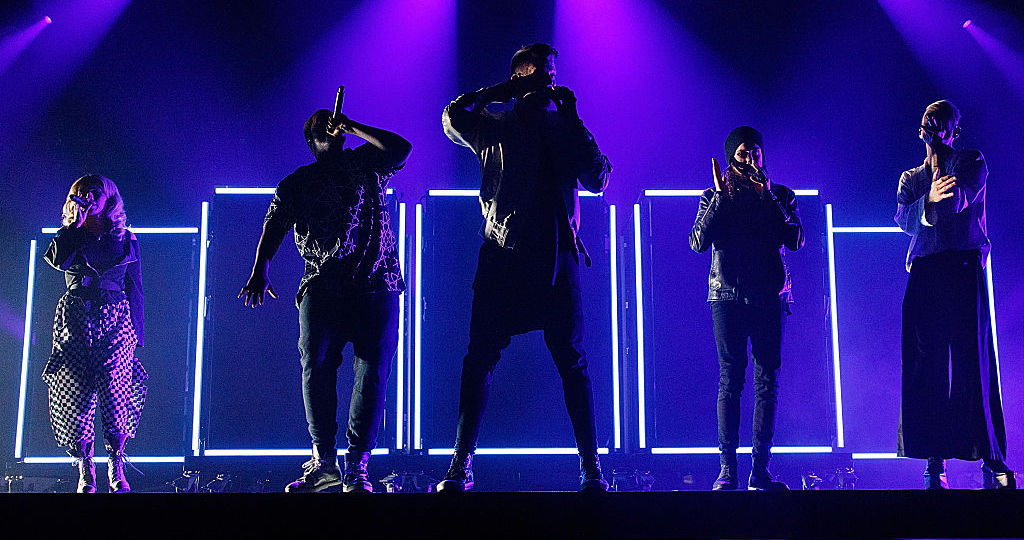
The runaway top a cappella artist on Spotify is mixed-gender group Pentatonix, which clocked 60 million streams over a three-month period. They’re followed by two solo male acts, Peter Hollens and Bobby McFerrin. Two all-male groups, Home Free and BYU Vocal Point round out the top five.

Expect more female voices to crack the upper aca-lons soon, however. The oldest collegiate a cappella group, the Yale Whiffenpoofs, recently welcomed its first woman singer and announced that new members will be accepted regardless of gender. (The traditionally all-male group, founded in 1909, did not welcome female voices after Yale went coed in 1968).

Some of the other top-streamed college a cappella groups include all-male Penn Masala, Tufts Beelzebubs, coed Harvard Opportunes, all-male University of Rochester YellowJackets, and coed SoCal VoCals.

Timing is everything:

A cappella is streamed the most in December around the Christmas holiday. This makes sense—seasonal concerts are a big draw with these harmonic groups, and many have released holiday albums. Additionally, one of the largest subsections of the genre include college a cappella, followed by Christian a cappella (so consider adding some to the mix when it’s time to start making your holiday playlists).

Note-able:

A cappella groups aren’t just dramatists on stage—they’re also crowd-pleasers with name-based wordplay. Some of the highly streamed pun-based a cappella groups include Take 6, Voice Male, On the Rocks, The Clef Hangers, Pitch Slapped, and Note-oriety. We dare to say it’s all aca-perfect.

Tune in to some a cappella favorites from college, fictional, and professional groups below—and just try not to sing along.