Tag: LGBTQIA+

‘Girlish’ Cohosts Name Gainesville, Florida-Based Curia on the Drag as Spotify and Anchor’s Next Making Space Podcasting Location

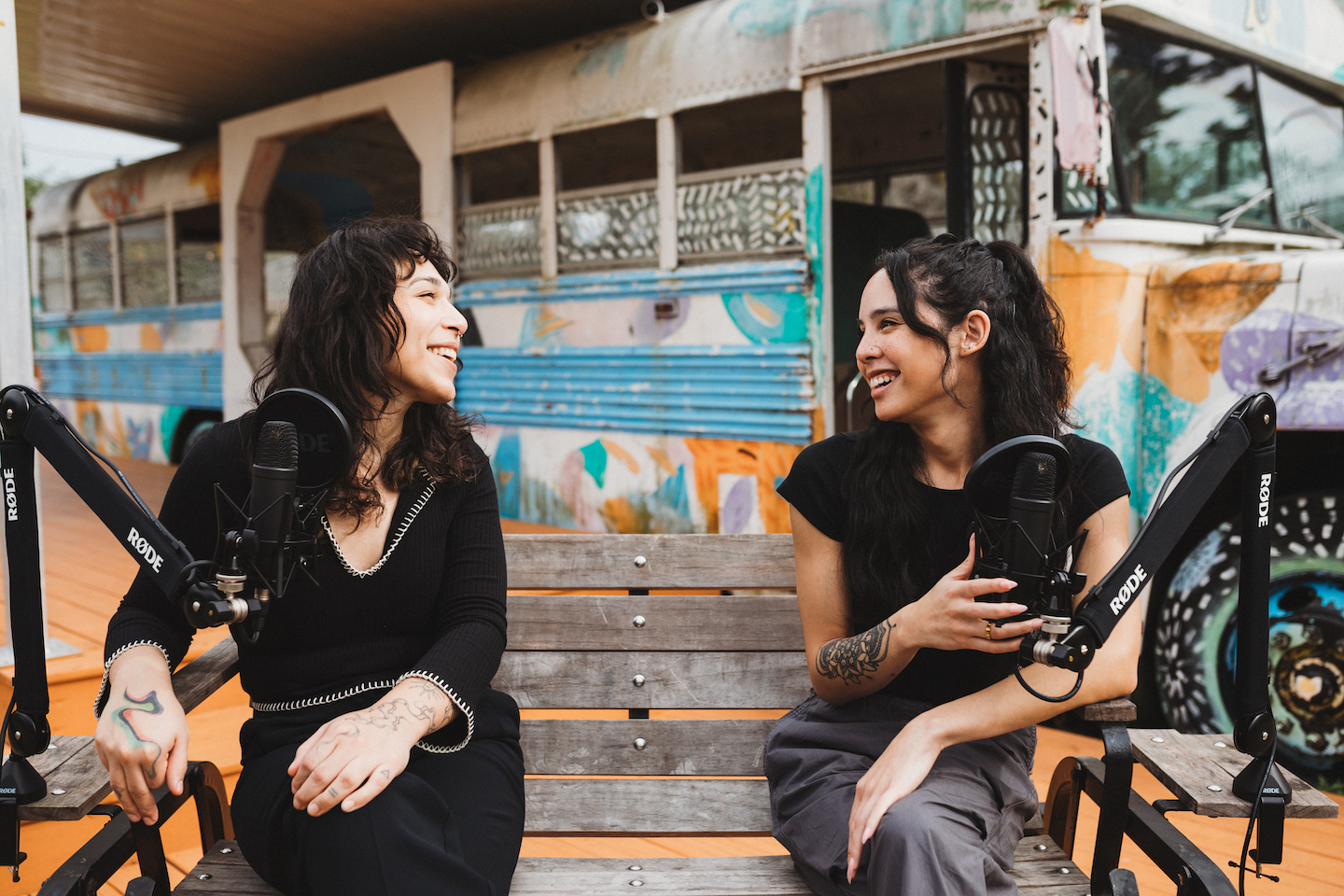
Olivia Noel and Gage Adkins, hosts of Girlish, outside curia on the drag - Rhyme&Reason-LexiRead-10

Photo credit: Lexi Read

As trans content creators, Gage Adkins and Olivia Noel know firsthand the power of storytelling in digital spaces. Around 2015, both women started separately producing video content on YouTube about their transitions. They each slowly built up online support networks, and then found each other. But when they started searching for podcasts on trans identity, they couldn’t find any. So they created Girlish in 2019 as an attempt to tell their stories, create space for trans listeners and creators, and bring awareness to their experiences. 

Over three years later, Girlish is still holding strong, and the number of LGBTQIA+ podcasters has grown. But it’s still not enough. “When we first started our podcast, it was really overwhelming because we lived on opposite coasts of the U.S. and had no equipment to make a professionally recorded podcast,” Gage told For the Record. “I think our first episode was recorded using our phone audio, so it was pretty bad. But there are so many people out there with really good ideas who want to share their voice, but just don’t know how to go about it.”

Spotify believes that the audio industry has a responsibility to increase access to podcasting knowledge, equipment, and materials for marginalized creators. We are continually looking for ways to nurture and develop emerging voices through tools and programs that make podcasting possible for anyone, anywhere. Making Space, our latest creator program, aims to elevate underrepresented voices by providing free, studio-quality podcasting gear to communities. We started by setting up South Carolina-based plant shop Savereign with an in-house podcasting studio. Next, we’re outfitting Curia on the Drag, a café close to Olivia’s heart, in Gainesville, Florida.   

“Curia defines itself as an urban oasis,” Olivia explained. “The experience you have there feels very much like a community-centric business. They have a plot of two-and-a-half acres of land where they have a plant-based coffee shop along with a plant-based food truck. They have a little retail store with local artists’ jewelry, clothing, art, and stickers. Overall, it has an ambiance that gives you the feeling of being safe. You can tell the community means a lot to them when you walk in and see flyers stapled to a cork board at the register with local resources for the LGBT community and marginalized groups. If you told me when I was 15 that a drag brunch was going to be a thing that was popular at a coffee shop near where I lived, I would have laughed. But I’m so thankful that this place exists, because it’s crucial.”

Rhyme&Reason-LexiRead-8 with Olivia Noel and Gage Adkins of Girlish

Oliva Noel and Gage Adkins at Curia on the Drag

Curia stands to prove itself as a comfortable and reliable podcasting studio for new and existing creators, but its promise of safety and security for members of the Gainesville and surrounding area community makes it the perfect hub for stories of all kinds to be shared.

“When you’re queer or trans in the South, you find safety in the smallest things—whether that’s Pride flags on storefronts or a friend of a friend of a friend with a trans aunt,” said Olivia. “Curia stands out because they provide security through their messaging and actions. Making Space further highlights an area to those around in the neighboring towns so that people like newly out college freshmen can find a community that supports them. It’s silly, but Florida really is like that—you have to find these little pockets and areas where you can go and be yourself.” 

The Making Space launch also marks a moment of transition for Olivia, who has been living in Seattle for the last few years and is now returning to uncertainty in her home state of Florida. “Within the South, it’s important to try to locate your community near you, whether that’s support groups or local organizations trying to fight for your cause. It’s super important and we have to bring attention to it. You are not alone in this. There are so many of us, and we’re going to fight for our rights.”

Gage grew up in Seattle and now lives in LA. “I had a really different experience,” she explained. “It was really easy for me to access health care, and people around me were not outwardly trying to harm me. Making Space enables us to support those who want to find community in a state or area where there doesn’t seem to be one. Even if people aren’t necessarily interested in podcasting, I think it’s always important to try to find a safe space.” 

As important as Gage and Olivia both know that Curia will be for LGBTQIA+ podcasters in Florida, they also want to encourage queer podcasters everywhere to take to the mic without hesitation. “You’ll get there if you put in the work and you’re consistent,” explained Gage. “That takes precedence over what type of microphone you have, or what type of camera you have. It’s more about the passion and the direction and the way you’re using your voice.” 

“I’m hoping this initiative highlights an area where people can go to be themselves,” added Olivia. “I hope one day the entire state can be our oasis, and not just Curia.”

Check out Gage and Olivia’s Anchor podcast, Girlish, and look out for future podcasts coming from Curia on the Drag soon.

Spotify Debuts GLOW, an Equity Program for LGBTQIA+ Creators

Glow header

The LGBTQIA+ community has greatly influenced music, and both music and culture have long been moved by the community in return. As more and more artists feel empowered to share their authentic selves onstage and off, the power and influence of queer creators grow as guiding forces across culture.

Today, Spotify introduces GLOW, a new global music program celebrating and amplifying LGBTQIA+ artists and creators. It’s our latest initiative to support people of this historically marginalized community of voices and reassert our commitment to equity in audio. It ensures that queer creators, and their contributions to music and culture, are heard and honored year-round.  

Putting LGBTQIA+ artists front and center

GLOW is supported by an on- and off-platform ecosystem where LGBTQIA+ artists and users are authentically represented and meaningfully included. 

All in, GLOW will streamline and heighten the support Spotify has provided through our annual global Pride activations. It will be available in 50+ markets across Europe, India, Asia, Africa, North America, Latin America, the Nordics, and Southeast Asia. 

To launch, we’re hosting LGBTQIA+ artists and songwriters at the Spotify At Mateo office in LA, including jesse saint john, who has written for Britney Spears, Lizzo, and Kim Petras; JHart, who has written for Troye Sivan, 5SOS, and Little Mix; Ilsey, who has written for Panic! at the Disco, Miley Cyrus, Mark Ronson, and Harry Styles); and INK, who has written for Beyoncé, Leon Bridges, and Lil Nas X. The attendees will participate in three days of writing sessions aimed at celebrating and inspiring collaboration among creators in the LGBTQIA+ community. 

We recognize the power of our platform to elevate, uplift, and spotlight voices that have been historically marginalized, and we’re committed to using it to drive cultural change. GLOW is supported by Spotify’s Creator Equity Fund as the latest part of our ongoing commitment to fostering equity in the audio space. By providing equitable resources to queer artists on a global level, GLOW is another way we’re working to create greater equity, empathy, and representation for the LGBTQIA+ community. We work closely with our partners at GLAAD and others to ensure GLOW best represents LGBTQIA+ artists and listeners in authentic and meaningful ways.

Meet the team behind GLOW

The backbone of GLOW is Spotify employees who are passionate about music, artist empowerment, and above all else, their queer community. 

Lisa Ritchey, she/her, Manager, Artist Partnership Team
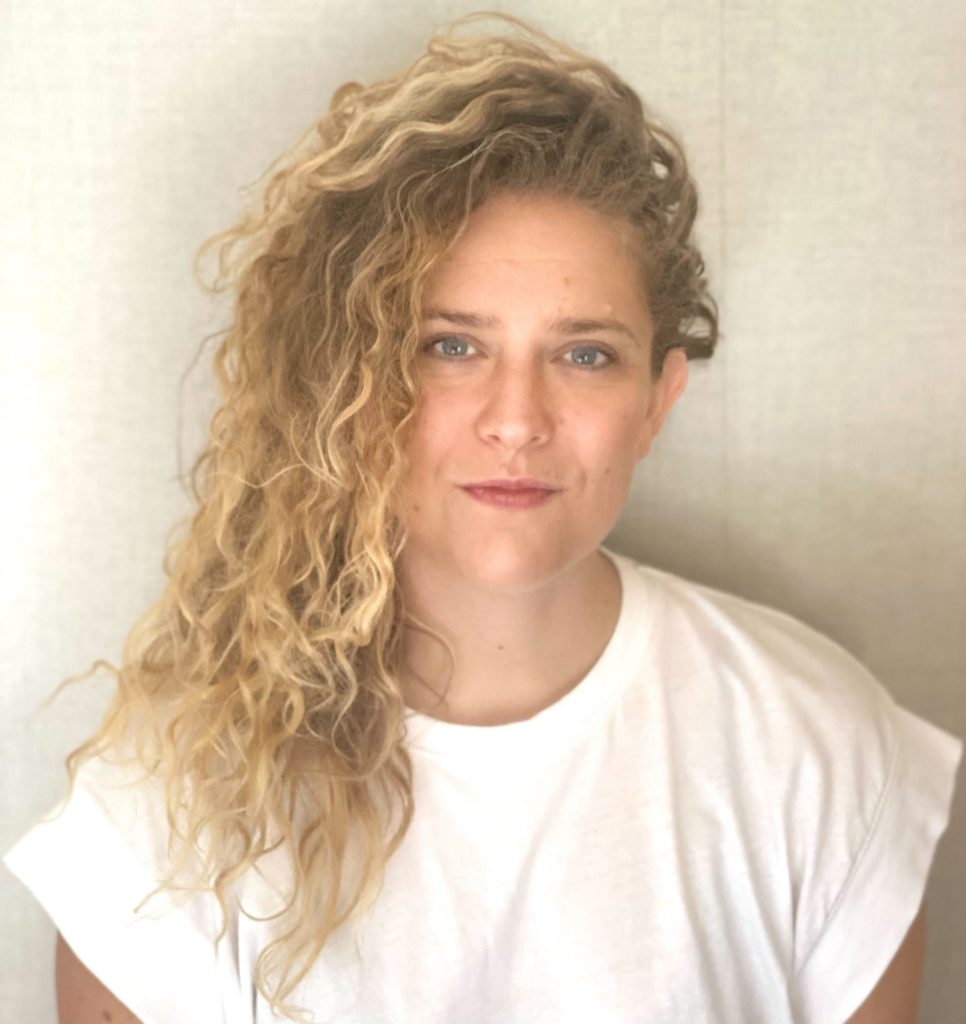
Lisa Ritchey

What is your role in bringing GLOW to life?

I am a manager on our newly formed Artist Partnerships Team, but I’ve been in this type of role for the past three years. I currently work across pop, dance, and indie, finding ways that we can bring Spotify into the entirety of an artist’s career outside of a record cycle—touring, festivals, merchandise, integrating artists into campaigns within those genres and our playlists—finding new and creative ways to partner together with artists. 

I’ve worked on Spotify’s Pride campaign for the past three years. I came in and was very, very passionate about LGBTQIA+ artists and how we can better serve that community and the fan base. After working on Pride, I started working on what would be an evergreen program very similar to Frequency or EQUAL with a colleague (the Head of Rock on our Editorial Team, Laura Ohls). We started working on this probably two years ago and in that time, the team has grown exponentially, become more robust, and received a lot of support company-wide.

Why is GLOW important to you?

I, along with the majority of the community, am very weary and skeptical of corporatized Pride. If a company is going to show up in June, they have to show up throughout the year. Where this program is amazing is that its sole purpose is to support the community on- and off-platform year-round. The way that we are showing up in this program also feels different—we’re supporting these artists because of who they are holistically. These are artists who are doing incredible things and they just so happen to be queer.

Who are some queer artists or cultural icons who have inspired you?

In the ’90s it was hard to find robust queer representation, and you had icons like Elton John and George Michael, so when The xx showed up and I found out that Romy and Oliver from The xx were both queer, it kinda blew my mind and it was the first time that I felt seen. St. Vincent was pretty huge for me and really made me understand myself more in college. Frank Ocean—truly, his tumblr coming-out letter, I want to get it framed and put it up in my house because that was so huge not only to me, but to music and culture in general—I think that was around the time that I was truly figuring myself out, so it meant a lot.

And the beautiful thing that we’re seeing now is just, more. The floodgates have opened and we have so many artists to choose from. 


Cahleb Derry, he/him, Associate Manager, Music Marketing
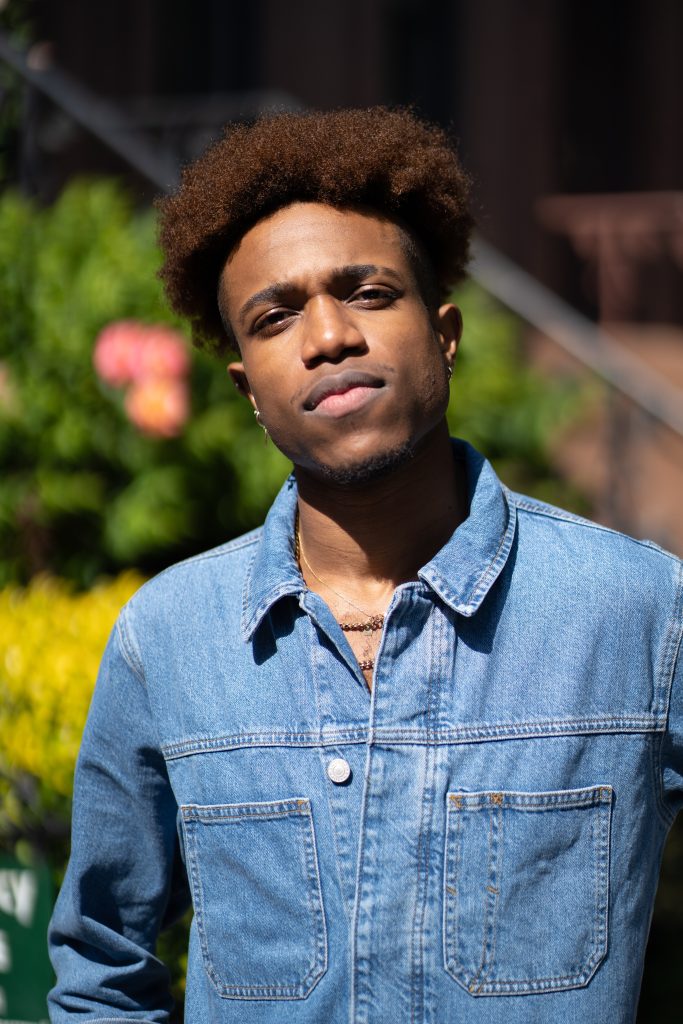
Cahleb Derry

What would you say is the ethos of GLOW?

We always go back to this commitment to amplify LGBTQIA+ artists. So while there’s a lot of other flashy aspects of GLOW, and there’s billboards and there’s editorial support, behind all of that, the question we go back to is, ‘How do we tangibly influence the resources that LGBTQIA+ artists have?’ We know in the industry that there are hurdles that marginalized artists face in creating and putting out music that other artists don’t face. 

We know that a lot of artists only get hit up in June during Pride to do campaigns. And then July 1 hits and there’s no work to be found again. Performative support wittles down an artist to their identity. If you only ask artists to activate during Pride, you ask them to give this boxed-in, performative version of themselves. For some artists, their identity is crucial to their work, right? It drives their writing, their artistry. For other artists, they’re just artists who happen to be LGBTQIA+ and they still should receive the support that LGBTQIA+ artists need. And we know that we, at Spotify, have a responsibility as the largest music audio platform in the world to fill in these gaps.

Why is GLOW important to you?

I am gay, so as someone who’s in the community, this program means so much to me. For example, Sam Smith, one of our 11 launch artists, their sophomore album, The Thrill Of It All, was my coming-out album and it saved my life in so many ways. I know firsthand how important LGBTQIA+ artists are for representation, but also for validation, and it just means a lot to see a company like Spotify really doing the amplification work. And to be helping lead the charge? I kind of have to pinch myself a lot and realize like, yeah, this isn’t just a campaign.

LGBTQIA+ culture is the culture. LGBTQIA+ artists, since the beginning of time, have shaped  some of the biggest genres that we have—from disco to jazz to pop—and unfortunately, with the way our industry functions, artists aren’t given the proper tribute, support, or platform that matches the effect and impact of LGBTQIA+ artists’ contributions. 

How does music empower queer communities? 

To me, it’s survival. Literally, “I Will Survive” by Gloria Gaynor being a gay anthem is an example, but it’s about connecting people, and it’s about safe space. We know that in New York and Chicago and Detroit and LA, the ballroom space was where Black and Latine queer folks who were shunned were able to go and shine. And music was the soundtrack to this. Even when queer culture and queer people were relegated to basements, to spaces deemed “unused” or in “disarray,” music kept those spaces alive.

Music is how I made sense of my emotions growing up. It gave me language to describe how I felt and gave me validation to feel confident in those emotions. Music is the soundtrack to our lives and to our survival, and it’s the soundtrack to our joy. Music is this creative playground where you’re allowed to imagine anything. Music is the most tangible thing we have to imagine queer futures that are happier and brighter and better and freer. 

Bel Aztiria, she/her, Equity Global Music Programs Lead
Bel A

What is your role in bringing GLOW to life?

I lead our Equity Global Music Programs, such as GLOW and EQUAL. I am in charge of bringing our equity principles to life within Spotify’s 360 programs, which elevate and celebrate artists for who they are, around the world. I lead the go-to-market strategy through ideation, launch, and adoption. My role is focused on the vision of contributing to a music industry where everyone is fairly represented and included for who they are, and wherever they are from. 

Within GLOW, my role is to take the program from ideation to launch and beyond, setting the overall strategy towards the mission of celebrating and elevating LGBTQIA+ creators and serving users all year round and beyond cultural moments. By bringing together my expertise in equity programs and in international strategy and in music, I have the privilege of being the connector of experts in over 20 different company functions and music representatives for the 50+ countries where GLOW is live, to ensure that this program utilizes Spotify’s resources as best as possible to serve the community and honor its immense contribution to music and culture. 

Why is GLOW important to you?

I grew up in a small town in rural Argentina, where I didn’t have any positive examples of people being accepted, included, and celebrated for who they were. I migrated at a young age, which exposed me to more expansive experiences around sexual orientation and identity, but also to a new way of feeling different, of living within another culture. When I started working in music, which was always my passion, I had more positive experiences of inclusion through seeing colleagues from the community thrive and be inspired by the music itself, and I made it my mission to contribute to a world where we can all feel included and valued for who we are.

Today, I feel safe to be who I am in most places I inhabit, and I have the chance to put my experience, resources, and skills back in service, for more people to hopefully feel included and represented, too. To me, GLOW represents the opportunity and privilege to work within a company that is well positioned to drive social change, where people are passionate about equity and gather to take steps in that direction.

What do you see as the future of the program?

I know we live in a world that is far away from equity for all of us, that the issue is bigger than music, and that we can’t do it alone. But I also believe in the power of music, and I hope that GLOW can inspire and uplift more of our voices to the narrative, contributing to a future world where people are free to be.

Tune into GLOW to hear the latest, hottest songs coming from LGBTQIA+ artists around the world.

Pride Month Kicks Off on Spotify With Custom Podcasts, Playlists, Passion, and Purpose

Raise Your Voice pride logo on yellow background

Representation of LGBTQIA+ individuals in audio continues to increase and improve. Stories once considered taboo now play out in podcasts around the world, and LGBTQIA+ musicians continue to light up listeners’ playlists. However, this progress is not universal, and many queer stories still go untold around the world. 

Pride Month, which kicks off in select markets in June, is an annual opportunity to shine a light on those untold stories and increase knowledge of the issues LGBTQIA+ communities still face globally. On Spotify, we aim to use the power of our platform to provide a source for LGBTQIA+ storytelling, solidarity, and inspiration, and to increase awareness of the pressing issues—during Pride Month and year-round. This Pride Month, we’re celebrating these voices.

At the heart of this campaign is the desire to tell new stories from within the LGBTQIA+ community and to leverage our platform to uplift and shine a light on historically marginalized communities. We’ll center conversations around the importance of community, particularly for mental health and well-being, by focusing on a diverse group of traditionally underrepresented queer activists from the U.S., Sweden, the U.K., Japan, and Mexico. On our platform, we’ll be elevating, uplifting, and spotlighting these voices in an effort to drive cultural change. And we’ll be putting our money where our mouth is by donating directly to key partners that are focused on supporting the LGBTQIA+ community. 

The activists you’ll hear from Spotify

Head to our refreshed Pride Hub to hear from a diverse group of historically underrepresented activists, including Jonathan Lykes, Phyll Opoku-Gyimah (aka Lady Phyll), Karolyna Pollorena, and Fumino Sugiyama. Each one has curated a playlist that celebrates their work and their community, and they’ll be sharing short-form “a day in the life” videos across social. We’ll also be unveiling an audio series entitled RAISE YOUR VOICE from these activists, who are using sound, voice, and music as part of their work.

Jonathan Lykes

New Book by Nashville Broadcast Personality Cody Alan Uses Country Songs To Tell the Story of His Life

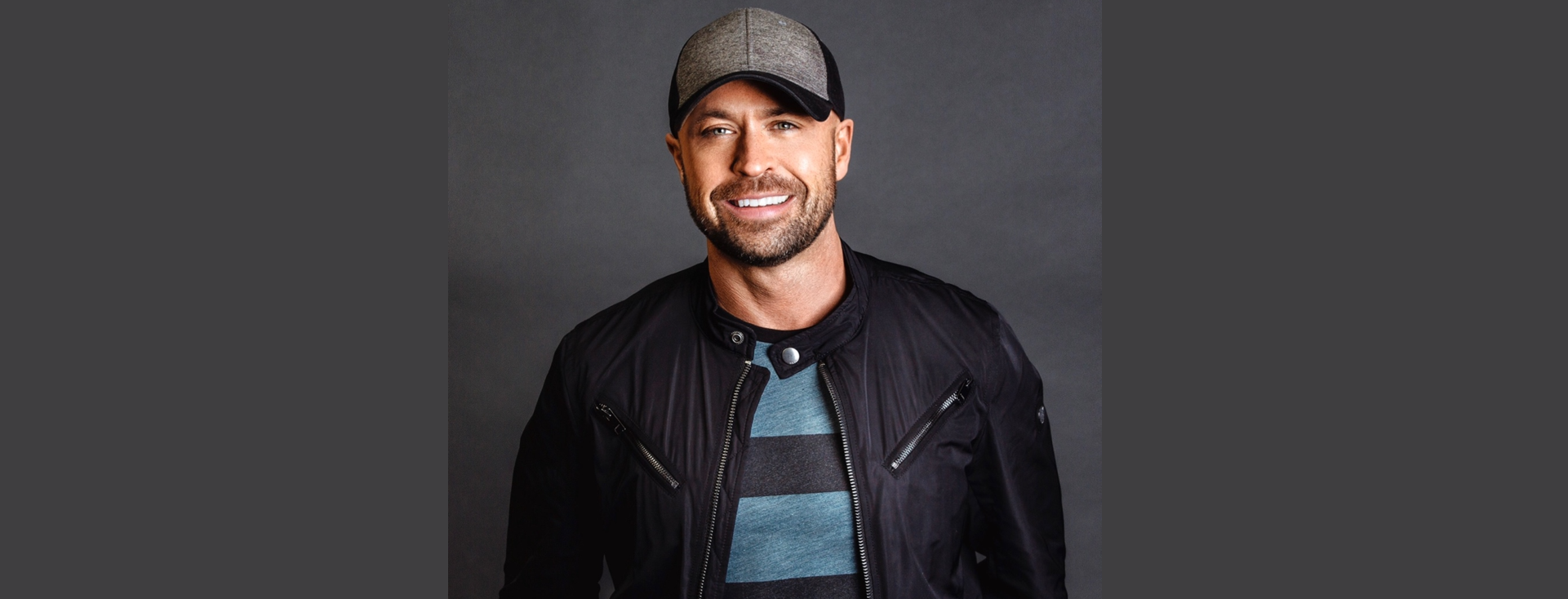
CMT producer and host Cody Alan is used to being behind the mic, interviewing the country genre’s top artists about their shared passion—country music. But next week, the South Carolina native will be turning the focus on himself, using his words in a new way and telling his own story in his music-infused memoir, Hear’s The Thing.

“I can’t help but think how much better the world would be if we were to listen to each other, listen to ourselves, and listen to our hearts and our intuition,” he explained. “That has guided my life. One of the main points of the book is that this can guide yours too.”

Ahead of Hear’s The Thing’s release on November 9, For the Record heard from the soon-to-be author about the book, his life’s journey, and the passion for country music that threads the two together. 

How did you get inspired to write your memoir, Hear’s The Thing?

I’ve been able to interview, I think, almost every country music artist simply because of the work I have done for CMT for so long on television and radio. I get to do the kind of interviews that still blow my mind with people like Dolly Parton and some of the greats like Loretta Lynn and George Strait, Garth Brooks—and then with the new crop of country artists, from Luke Bryan to Carrie Underwood, to Keith Urban, Luke Combs, and beyond. So having these stories over the years with so many of these people made me think, oh, maybe I could share these stories. They might be fun for people to read about. 

And then I came out [as gay] in 2017 and I realized that I had sort of an interesting spot in country music, being different than most everybody else. And that perspective could also be helpful for people to hear or read about or learn from.

You’ve hosted so many interviews and conversations with people from across country music. How did that experience translate into writing?

Writing is a lot more difficult for me. I’m much better on air. If I have bullet points rather than sentences, I don’t have to read word for word. On the radio, you learn to think on your feet and everything happens spontaneously. So that has helped me as a conversationalist. But when it comes to writing a book, of course, we all know it’s words and punctuation marks and paragraphs and getting all of that right. 

And so that was challenging because it just wasn’t my usual way of doing things. But over time I got a little better at it. And like I said, it took years and years and years to turn the book into what it is now. And with all those challenges came a lot of learning and growth to create a book that I’m so thrilled with. It has not only been a labor of love for me, but it’s made up of words that I’m really proud of that I think are gonna help a lot of people.

How did music come into your creative process? Was there anything in particular you played while planning or writing the book? 

Country music is a soundtrack to so much of my life. I can relate back to my earliest memories of hearing country music played at my house in South Carolina growing up. My mom made breakfast every single morning—every single morning!—while country music was coming out of the speakers on the radio in the kitchen. And so I completely relate the smells of breakfast being made to the sounds of country music. And then throughout my life, it’s always been one of those things I fell back on.

When I divided up the chapters for the book, I wanted each to have the lyric of a song that related to that chapter. So for one chapter you have Carrie Underwood’sLove Wins,” and it says that “through anything that love can conquer.” And another chapter where I talk about coming out a little more poignantly, I quote from a Luke Bryan song, which says that we should all “love who we love.” And throughout the book there are moments like that where I’ve got songs leading the way as you’re diving into the chapter.

I’m a pure music person; I love music. It drives everything that I do and certainly was a driving factor in the book.

In our recent Spotify: Discover This episode on Country music, BRELAND and Lily Rose spoke about being minorities within the genre. How have you noticed the country scene change in recent years to open to more types of individuals?

I love Lily Rose. What a great musician and artist. I’ve had a couple conversations with her myself and I dig her stuff so much. There has been, over the past couple of years, just a new openness and inclusivity that didn’t exist before. I came out in 2017. There’s been tremendous change since then. When I came out there just weren’t a lot of people who were gay and making country music. And so it was a bit scary to speak up, to be completely honest. But since then, there’s been this flurry of people, including chart-topping artist TJ Osborne of Brothers Osborne finding his way and speaking his truth. And how powerful is it when you have someone with his success represent? 

And I’ve seen more of that happening—and not just among the LGBTQ individuals but also with African Americans. There’s BRELAND, there’s Mickey Guyton, Jimmie Allen. You see this flurry of activity where diversity is being celebrated in country music, and I think it’s an awesome thing. There’s a real outcry now among many people to show that country music is not what you think it is. It is open. It is free. And it’s more diverse than it ever has been. And it’s I think opening doors for a lot of people who are different; I think that’s a beautiful thing and I invite it and I love it.

Tell us about the playlist you made to support your book launch. There’s country music—but also Madonna, Panic! At The Disco, Lizzo, and other surprises. 

Every song means something to my life. For example, Keith Urban wrote the forward for my book, which was a big freaking deal for me because, like, it’s Keith Urban! I could make you a playlist complete of Keith Urban songs and each one would have meaning to me—that’s the type of impact he’s had on my life. So I knew I needed to include a few songs from him, including “Somebody Like You.”

“High Hopes” by Panic! At The Disco—no one can not smile when they hear that song. It’s a jam. It’s probably one of my most-played songs on Spotify. Anytime I need a lift up, I play that song and feel better. And it reminds me where I came from and that if you believe in something, it can come to pass. I talk about that in the book. I believed a kernel of truth that I could be on TV, and that somehow blossomed into reality. That song reminds me of that.

I grew up in the ’80s so Madonna was the ’80s to me. I can’t not have Madonna on a playlist of my life. The video for “Express Yourself” . . . there were men hammering, like in a factory or something. As a questioning gay boy trying to understand myself, that helped me understand that I wasn’t like the other boys. There’s something groundbreaking about that video. 

I wanted to include The Chicks and “The Long Way Around” because they had so much to do with my Texas time. I feel like so much of my life has been taking the long way around and making the choice that other people would not. When I left South Carolina, I was the first in my family to leave the zip code. I decided to go my way differently and take the long way around, and it certainly led to lots of great things. But at first it was a little scary. 

But making those different choices led me to lots of happiness and led my family to eventually see that taking a long way around is not a bad thing. It’s actually often the way you have to go in order to find yourself and your dreams.

Dive into the songs that have meant the most to Cody’s life in his “Hear’s The Thing” playlist.

LGBTQIA+ Spotify Employees Share How They Claim Their Space

Spotify kicked off June by announcing this year’s Pride campaign, CLAIM YOUR SPACE. The experience, complete with playlists, podcasts, and permanent in-person murals, served to celebrate the commitment and resilience of LGBTQIA+ creators. It also recognized the ways audio and art have always been avenues for LGBTQIA+ expression. We encouraged the queer community of creators and listeners to continue to make noise, make their presence known, and make their own rules. 

We also used Pride Month as a time to encourage, empower, and amplify the voices of LGBTQIA+ Spotifiers within our own community. So as Pride Month comes to a close, our Life at Spotify social channels shared how several queer employees “claim their space” in the workplace, as well as the songs and aritsts that help them live their identities loud and proud. 

Jordan (he/him)

This Pride, Spotify Encourages LGBTQIA+ Creators to CLAIM YOUR SPACE

Throughout their lives, LGBTQIA+ creators, cultural figures, and activists have fearlessly demanded to be seen, heard, and recognized as who they authentically are. They’ve carved out space for themselves and their communities to thrive, ultimately creating a richer, more vibrant world. This year, Spotify’s Pride campaign is a celebration of that commitment and resilience, and a recognition of the ways audio and art have always been avenues for LGBTQIA+ expression.

This Pride, Spotify is encouraging the queer community to make noise, make their presence known, and make their own rules with a single rallying cry: CLAIM YOUR SPACE. With a series of activations, this global campaign is aimed at creating permanent space, both physical and digital, for the LGTBQIA+ community. 

For too long, there have been glaring gaps in the traditional historiography of music, gaps that often served to minimize or completely erase LGBTQIA+ creators’ indispensable contributions to the development of entire music genres and modern audio culture as a whole. And so, for this year’s Pride, we focused on harnessing the full power of our platform to highlight iconic as well as more emerging queer artists and podcasters, asserting this community’s rightful place within the canon and within the culture. 

Today, we’re kicking off a full month of on- and off-platform programming. Make sure to check out: 

Spotify Celebrates LGBTQIA+ Creators and Fans With Our 2020 Pride Campaign

Let’s face it: Pride looks a little different this year, with cities around the world unable to host celebrations in honor of LGBTQIA+ community, representation, and progress. But although queer folks and allies can’t take to the streets with flags, floats, and festivals this summer, we can all celebrate the feelings of pride and togetherness that come from streaming LGBTQIA+ artists and creators.

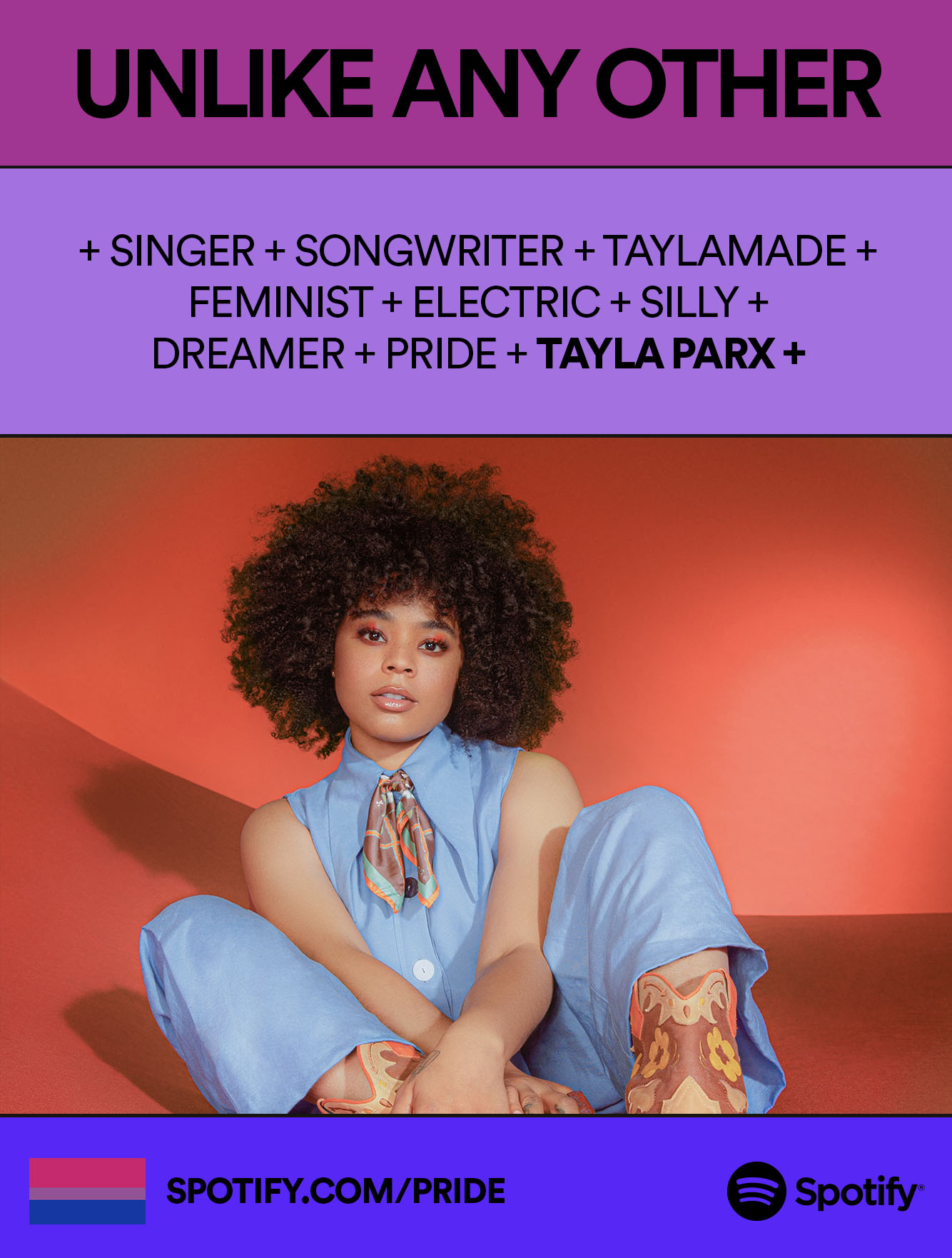
Spotify has the unique ability to inspire and drive positive change through the power of audio. At this time, we know that feelings of togetherness and shared experiences have never been more important, which is why today we’re unveiling Unlike Any Other—Spotify’s 2020 global Pride campaign celebrating LGBTQIA+ creators and connecting them to fans around the world.

 Unlike Any Other is all about empowering LGBTQIA+ creators to embrace their uniqueness and connect to new and existing audiences through the power of music and podcasts. The Unlike Any Other marketing campaign, which will live in 38 countries where Pride is celebrated, includes a key element—the Progress Flag—designed by Daniel Quasar in 2018. The Progress Flag adds five stripes to the traditional rainbow Pride flag to better include trans and non-binary individuals, marginalized communities of color, those we have lost to AIDS, and those living with HIV today within queer representation.

Plus, our Pride 2020 campaign features new content and experiences on platform, all available in the Amplify: Pride hub on Spotify. Each playlist, song, and podcast is as unique as the individual who created it—which means there’s a little something for everyone. Check out what’s available within the Amplify: Pride hub.  

The House of… Ballroom Playlists

From Kiki to Pose and now Legendary, the house and ballroom community has made a lasting mark on modern pop culture. This playlist series, in partnership with Pose runway choreographer Twiggy Pucci Garcon, celebrates the iconic movement with curated playlists by top figures of ballroom culture, including Jason Ozzie Ash, Byrell The Great, Jack Mizrahi Gucci, and Jonovia Chase.

Pride-Themed Playlists

The hub will include a variety of curated Pride-themed playlists for every listener, such as Pride Classics, Latin Pride, Alternative Pride, Queer as Folk, Disco Fever, queer-themed Cosmic playlists and more. Additionally, our flagship queer playlist Out Now: Unlike Any Other further emphasizes the dynamism of emerging and established queer voices in music.